
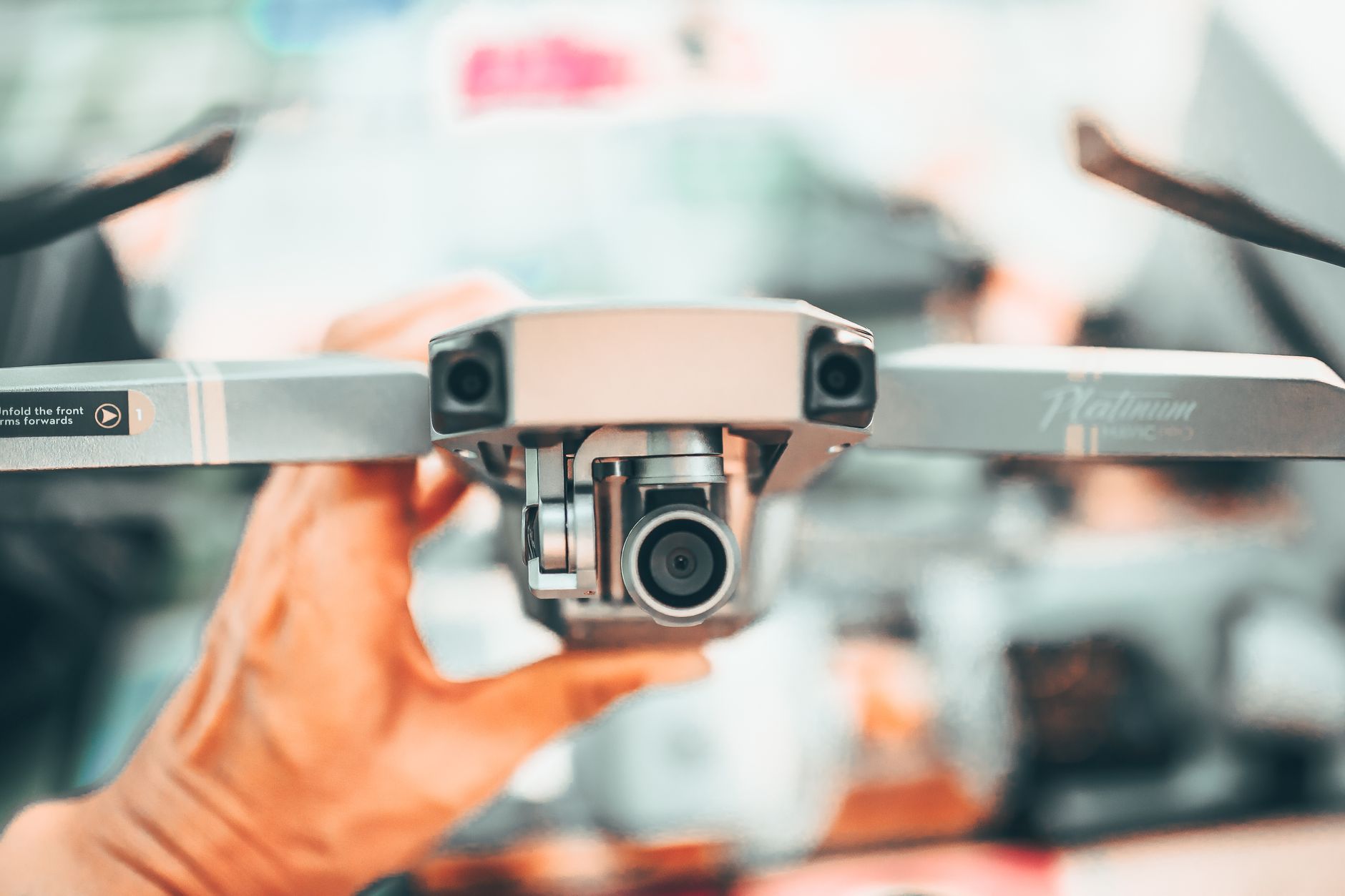
In 2006, a 26-year-old Hong Kong University of Science and Technology graduate named Frank Wang founded a small electronics company in a Shenzhen apartment with roughly 400,000 RMB in seed capital. His company, Da-Jiang Innovations — better known as DJI — made flight controller systems for radio-controlled helicopters. By 2023, DJI held an estimated 70–80% share of the global consumer and prosumer drone market, generating over $4.4 billion in annual revenue. No company in recent consumer electronics history has so completely dominated a hardware category from a standing start.
Understanding how DJI achieved this is not merely a case study — it is a roadmap for how Chinese technology companies translate manufacturing proximity, R&D intensity, and ecosystem thinking into global dominance.
From Flight Controllers to the World’s Dominant Drone Platform
DJI’s earliest product was the XP3.1 flight controller, released in 2006 — a gyroscopic stabilization system for helicopter enthusiasts. Frank Wang’s real breakthrough came in 2013 with the Phantom 1, a ready-to-fly quadcopter at $679 requiring no assembly. It was the first drone a non-engineer could unbox, power up, and fly within minutes.
The timing was precise. GoPro cameras had just popularized the concept of aerial footage for consumers. DJI essentially created the market for accessible aerial cinematography before any Western competitor recognized the opportunity existed. By integrating camera mounts, GPS stabilization, and return-to-home safety features into a single consumer-friendly package, DJI leapfrogged the hobbyist market entirely and addressed a new category: professional-grade tools at consumer prices.
The Phantom was followed by the Inspire series in 2014 (professional filmmakers), the Mavic Pro in 2016 (the first pocketable folding drone), and the Matrice industrial platform serving agriculture, infrastructure inspection, and surveying. Each product line targeted a different price tier while sharing the same underlying technology stack — platform thinking that Western competitors consistently underestimated.
Why Shenzhen Made DJI Possible
DJI’s story is inseparable from its geography. Shenzhen’s electronics ecosystem — component suppliers, PCB fabricators, motor manufacturers, sensor producers, and contract assemblers within a 30-kilometer radius — gave DJI an iteration speed that no competitor in San Jose, Tokyo, or Munich could match.
When DJI’s engineers needed a new brushless motor specification, prototypes arrived in days rather than weeks. When a new Sony sensor became available, DJI’s procurement team could lock in supply before Western startups had finished their investor decks. This structural advantage in hardware velocity is why DJI consistently ships new product generations 12–18 months ahead of any competitor.
The same principle enabled Foxconn to scale iPhone production at volumes no other region could support. The Pearl River Delta’s hardware ecosystem functions as a force multiplier for any company embedded deeply in its supply chain.
The Regulatory Battleground: NDAA and US Security Restrictions
DJI’s global success has not come without significant friction with US authorities. In 2017, the US Army banned DJI drones from operational use following cybersecurity concerns. In 2020, the US Department of Defense placed DJI on its list of “Chinese military companies,” and in 2021, the US Treasury added DJI to its Entity List, restricting US investment in the company. The 2023 National Defense Authorization Act (NDAA) Section 1260H codified restrictions that effectively prohibit US federal procurement of DJI products.
The Federal Communications Commission has also cited DJI in its reviews of communications equipment posing national security risks. The Department of Homeland Security issued an advisory in 2019 warning that DJI drones were “collecting and transferring potentially sensitive data to accessible servers within China.”
DJI has consistently denied these allegations, publishing transparency reports, launching a Local Data Mode (which prevents internet connectivity during flight), and commissioning independent security audits. The company’s rebuttal, detailed on DJI’s Trust Center, argues that its data handling practices meet or exceed industry standards and that the restrictions are commercially motivated rather than security-driven.
For Western companies sourcing or partnering with DJI, these regulatory dynamics are material. Any organization receiving federal contracts should understand the NDAA compliance implications before deploying DJI equipment. That said, DJI’s dominance in commercial and non-government applications — real estate photography, filmmaking, agriculture, insurance inspections — remains largely unaffected by these federal restrictions. This mirrors the pattern seen with Huawei’s experience navigating US sanctions: government procurement and commercial markets operate under fundamentally different risk frameworks.
The Competitive Moat: Software, Ecosystem, and Data
DJI’s hardware margins matter far less than its software ecosystem. The DJI Fly and DJI Pilot 2 apps, the SkyPort enterprise SDK, the FlightHub fleet management platform, and the Zenmuse camera payload system create a closed-loop ecosystem that makes switching to a competitor extraordinarily costly.
Consider what enterprise migration actually means: a construction company that has trained 15 pilots on DJI’s interface, integrated FlightHub into its workflow, and built a library of orthomosaic maps using DJI Terra does not simply swap out its drones when a competitor offers equivalent hardware. Switching costs are measured in months of retraining, not unit economics.
This ecosystem lock-in mirrors Apple’s model in consumer electronics — and it is deliberate. DJI’s open SDK has attracted third-party software companies including Skycatch, DroneDeploy, and Pix4D, creating a developer community that further entrenches DJI’s infrastructure position. For foreign businesses evaluating DJI as a supplier or partner, this ecosystem depth is the key variable to assess — not hardware specs. The same platform-first thinking increasingly shapes China’s approach to AI regulation and technology policy.
Market Share Breakdown: Where DJI Leads and Where It Doesn’t
DJI’s 70–80% market share figure refers to consumer and prosumer drones. Breaking it down provides a more nuanced picture:
- Consumer drones (under $2,000): DJI holds roughly 75–80% globally. Competitors Autel Robotics, Parrot (France), and Skydio (US) account for the remainder.
- Professional cinema drones: DJI’s Inspire 3 and Zenmuse X9 system dominate high-end film production.
- Agricultural drones: DJI’s Agras series leads in Asia-Pacific. In the US, competitors like Yamaha and AgEagle offer government-compliant alternatives.
- Defense and government: DJI is effectively excluded from US federal procurement. Skydio has emerged as the primary NDAA-compliant alternative.
The US International Trade Administration estimates the global commercial drone market will reach $54 billion by 2030, with industrial applications growing at roughly 25% annually.
What Competing Companies Should Learn From DJI’s Strategy
DJI’s trajectory offers several strategic lessons that extend well beyond the drone industry:
1. Product-Market Timing Beats Technology Leadership
DJI did not invent drone technology. Brushless motors, lithium polymer batteries, MEMS gyroscopes, and GPS modules were all commercially available by 2010. DJI integrated them into a product addressing an unmet consumer need at exactly the moment action cameras were catalyzing appetite for aerial footage. First-mover advantage in category creation outweighs technological primacy.
2. Vertical Integration Creates Defensible Margins
DJI designs its own flight controllers, gimbals, image processors, and transmission systems in-house. Unlike competitors assembling from third-party components, this gives DJI cost advantages and performance differentiation that commodity assembly cannot replicate. The same logic underpins China’s export control strategy around critical components — control at the component layer translates into leverage at the product layer.
3. Regulatory Risk Is Structural, Not Temporary
Western companies partnering with or sourcing from DJI should treat the regulatory environment as a permanent feature, not a disruption pending resolution. DJI has survived multiple rounds of restrictions without losing commercial market share outside government procurement. Structuring partnerships around known constraints — rather than waiting for clarity that may never arrive — is the mature strategic posture.
The Path Forward: Autonomy, AI, and Industrial Applications
DJI’s next competitive front is autonomous operation. Its 2024 integration of obstacle avoidance AI, combined with the Dock 2 remote charging station, enables fully autonomous inspection workflows — a drone lands, recharges, re-launches, and continues without human intervention. For operators running transmission lines, wind farms, or pipelines, this is a step-change in inspection economics.
DJI’s R&D headcount grew from roughly 1,000 engineers in 2015 to over 14,000 globally by 2024. The company remains majority-owned by Frank Wang, who has declined acquisition offers and rejected the IPO path — a deliberate choice that insulates DJI from short-term pressure that has constrained Western rivals.
For businesses in any sector where aerial data collection or inspection is becoming a competitive factor, DJI is not simply a vendor decision. It is a strategic question about where your operational infrastructure sits in a world where the technology layer and the geopolitical layer are increasingly the same conversation.
GreatHandshake.com covers US-China business strategy, trade dynamics, and cross-cultural operations for professionals navigating both markets.