
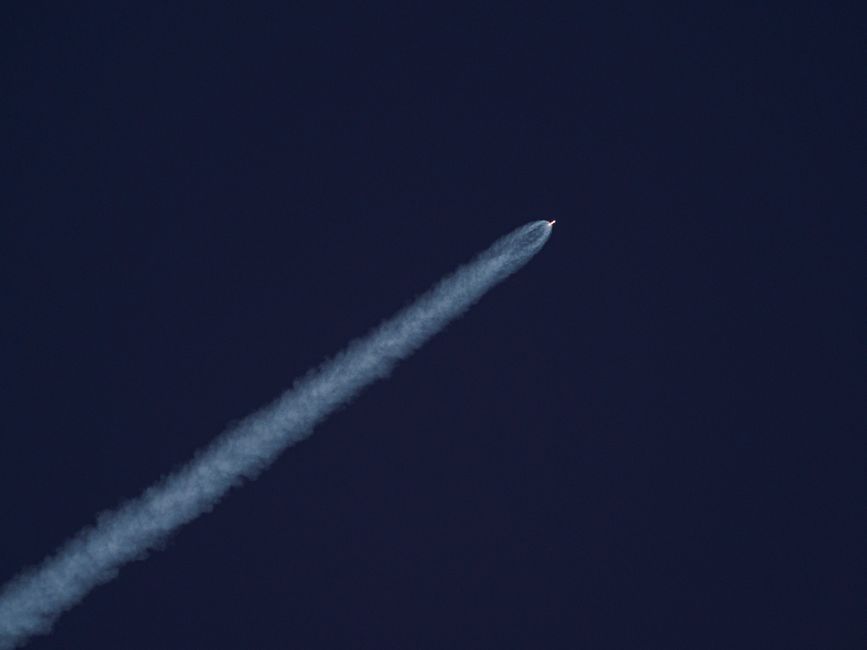
For decades, the phrase “space race” conjured images of American astronauts and Soviet cosmonauts. By 2026, that framing is obsolete. China’s National Space Administration (CNSA) and its constellation of state-owned and private aerospace enterprises have transformed the country into a genuine tier-one space power, with capabilities in launch vehicles, crewed spaceflight, lunar exploration, satellite navigation, and commercial launch services that compete directly with both NASA and SpaceX. For Western businesses, this is not merely a geopolitical curiosity. It represents a shifting technology ecosystem, emerging commercial opportunities, dual-use compliance pressures, and a realignment in how space-derived data and infrastructure will shape global trade for the next generation.
The Foundation: From Project 921 to Tiangong
China’s modern space program traces its roots to 1956, when rocket pioneer Qian Xuesen returned from the United States and established the country’s first aerospace research institute. The Long March rocket family, first flown in 1970 when China became the fifth nation to independently launch a satellite, laid the technical groundwork for everything that followed.
The strategic pivot came with Project 921, approved in 1992, which designated crewed spaceflight as a national priority. Yang Liwei became China’s first taikonaut in October 2003, making China only the third country in history to independently achieve human spaceflight. By 2011, China had launched the Tiangong-1 space lab — just as NASA was retiring the Space Shuttle. The full China Space Station (also called Tiangong, meaning “Heavenly Palace”) achieved its permanent three-module configuration in 2022 with the docking of the Mengtian and Wentian laboratory modules. Tiangong now operates continuously with rotating three-person crews, making China one of only two nations with a permanent human presence in orbit. The station includes a robotic arm, optical telescope mount, and life science research facilities that are attracting interest from developing-nation space agencies seeking collaboration opportunities.
Launch Vehicles: Long March and the Commercial Sector
The Long March 5 heavy-lift vehicle, capable of delivering 25 metric tons to low Earth orbit, is broadly comparable to United Launch Alliance’s Vulcan Centaur. It powered both the Tianwen-1 Mars mission and the Chang’e-5 lunar sample return mission. China’s state-owned China Aerospace Science and Technology Corporation (CASC) handles approximately 40 launches per year, placing China in direct competition with the United States on annual launch frequency. Launch pricing for Long March medium-lift vehicles is estimated at $3,000-$5,000 per kilogram to sun-synchronous orbit, competitive on commercial satellite deployment missions.
The more commercially significant development is the rapid growth of China’s private launch sector. LandSpace’s Zhuque-2 rocket, which achieved orbit in July 2023, was the world’s first liquid methane-fueled rocket to reach orbit — beating both SpaceX’s Starship and ULA’s Vulcan to that technical milestone. Companies including iSpace, Galactic Energy, and Deep Blue Aerospace have each conducted successful launches. LandSpace raised over 2.4 billion RMB in Series C funding by early 2024, reflecting deep domestic investor confidence. Collectively, China’s commercial launch startups are attempting to replicate the SpaceX model of reusable launch vehicles to dramatically lower per-kilogram costs over the coming decade.
BeiDou: The Navigation System Reshaping Commercial Data Flows
No aspect of China’s space infrastructure has more immediate relevance to everyday cross-border business than the BeiDou Navigation Satellite System (BDS). Completed in July 2020 with 45 operational satellites, BeiDou provides global positioning, navigation, and timing services with approximately 1.5-2 meter accuracy for standard civilian users, and sub-meter precision in the Asia-Pacific region through augmentation signals. According to the China Satellite Navigation Office, over 1,000 product types from more than 100 countries now incorporate BeiDou chips.
The Belt and Road Initiative has aggressively promoted BeiDou integration across participating countries. BeiDou receivers are now standard equipment in Chinese-manufactured smartphones, vehicles, agricultural machinery, maritime vessels, and logistics tracking systems across Southeast Asia, Africa, the Middle East, and Latin America. A supply chain manager sourcing from or shipping through any of these regions may be receiving positioning data derived from BeiDou without realizing it. The rare earth materials underpinning satellite electronics — in which China holds dominant global reserves — add a further layer of strategic interdependence to the BeiDou ecosystem. For logistics tech companies, fleet management platforms, and agricultural technology providers operating in these markets, verifying BeiDou compatibility and data-routing practices is a growing operational priority.
Lunar, Mars, and Deep Space
China’s Chang’e lunar program achieved the first-ever soft landing on the far side of the Moon in January 2019. Chang’e-5 in 2020 returned 1.73 kilograms of lunar soil to Earth, the first lunar samples retrieved by any nation since the Soviet Luna 24 mission in 1976. The International Lunar Research Station (ILRS), announced jointly with Russia in 2021, has attracted formal participation from Venezuela, Pakistan, South Africa, the UAE, and several other developing nations. This positions China as an alternative pole to the NASA-led Artemis Accords framework, which had 43 signatories by mid-2026 but excludes China and Russia. The result is a bifurcating global space governance landscape that mirrors broader geopolitical divides — and could influence which nations’ commercial firms get preferential access to lunar resource exploitation agreements in the decade ahead.
The Tianwen-1 Mars mission successfully deployed the Zhurong rover in 2021, demonstrating China’s capability for complex deep-space operations. A Tianwen-2 asteroid sample return mission targeting near-Earth asteroid Kamoʻoalewa was in preparation as of 2025.
Commercial Earth Observation and Satellite Internet
China operates one of the world’s largest fleets of Earth observation and remote sensing satellites. The Jilin-1 constellation, operated by private firm Chang Guang Satellite Technology Company, surpassed 100 operational satellites in 2023 and offers imaging and video services that compete directly with Planet Labs and Maxar. Chinese satellite internet constellations are also moving forward: the state-backed Guowang network is approved for 12,992 satellites, while commercial competitor SpaceSail (Qianfan), backed by Shanghai municipal government and SAIC, plans over 14,000. If either achieves meaningful deployment, they could erode Starlink’s first-mover advantage in African and Southeast Asian markets, with significant implications for the digital platforms that depend on connectivity infrastructure and that are central to China’s broader technology expansion.
Dual-Use Concerns and Export Controls
Western governments have flagged China’s space sector as a major dual-use concern. The U.S. Department of Commerce has placed CASC subsidiaries and several private space firms on the Entity List, restricting exports of American components, technology, and software to those entities. International Traffic in Arms Regulations (ITAR) govern virtually all American space hardware and prohibit most transfers to China. The U.S. Commerce Department’s Bureau of Industry and Security maintains updated guidance on space sector export controls at bis.doc.gov.
Chinese companies operating in launch or satellite joint ventures should simultaneously verify compliance with China’s Export Control Law (ECL), which has expanded its extraterritorial reach since its 2020 enactment. European component suppliers must also conduct careful ITAR due diligence even when no American-made parts are directly involved, because ITAR can apply to products incorporating American technology at any stage of manufacturing. The default posture for any Western company with aerospace or dual-use exposure: verify compliance obligations before initiating commercial engagements, and retain specialized counsel familiar with both BIS and ITAR frameworks.
What This Means for US-China Business
China’s space sector intersects with cross-border commerce in ways that many non-aerospace businesses miss. Semiconductor supply chains are directly implicated because space-qualified chips sit at the frontier of China’s domestic semiconductor ambitions. BeiDou penetration means logistics data in Belt and Road markets is increasingly routed through Chinese-controlled infrastructure. The US Trade Representative (USTR) maintains updated policy positions on technology trade with China, including space-related dual-use goods. Remote sensing data from Chinese satellites is used in agriculture, mining, urban planning, and environmental monitoring across markets where Western firms operate. The satellite internet constellations, if successful, will reshape broadband connectivity in the developing world — with downstream effects on digital commerce platforms, fintech infrastructure, and media distribution.
For trade professionals, the conclusion is actionable: China’s space program is no longer a national prestige project. It is an integrated pillar of China’s technology economy, feeding into commercial data services, dual-use supply chains, and infrastructure exports that touch cross-border business at multiple points. Understanding the full landscape — including how technology restrictions cascade through Chinese tech sectors — is now essential literacy for anyone doing serious business across the Pacific. The 21st-century space race runs on commercial rails, and China is accelerating.