
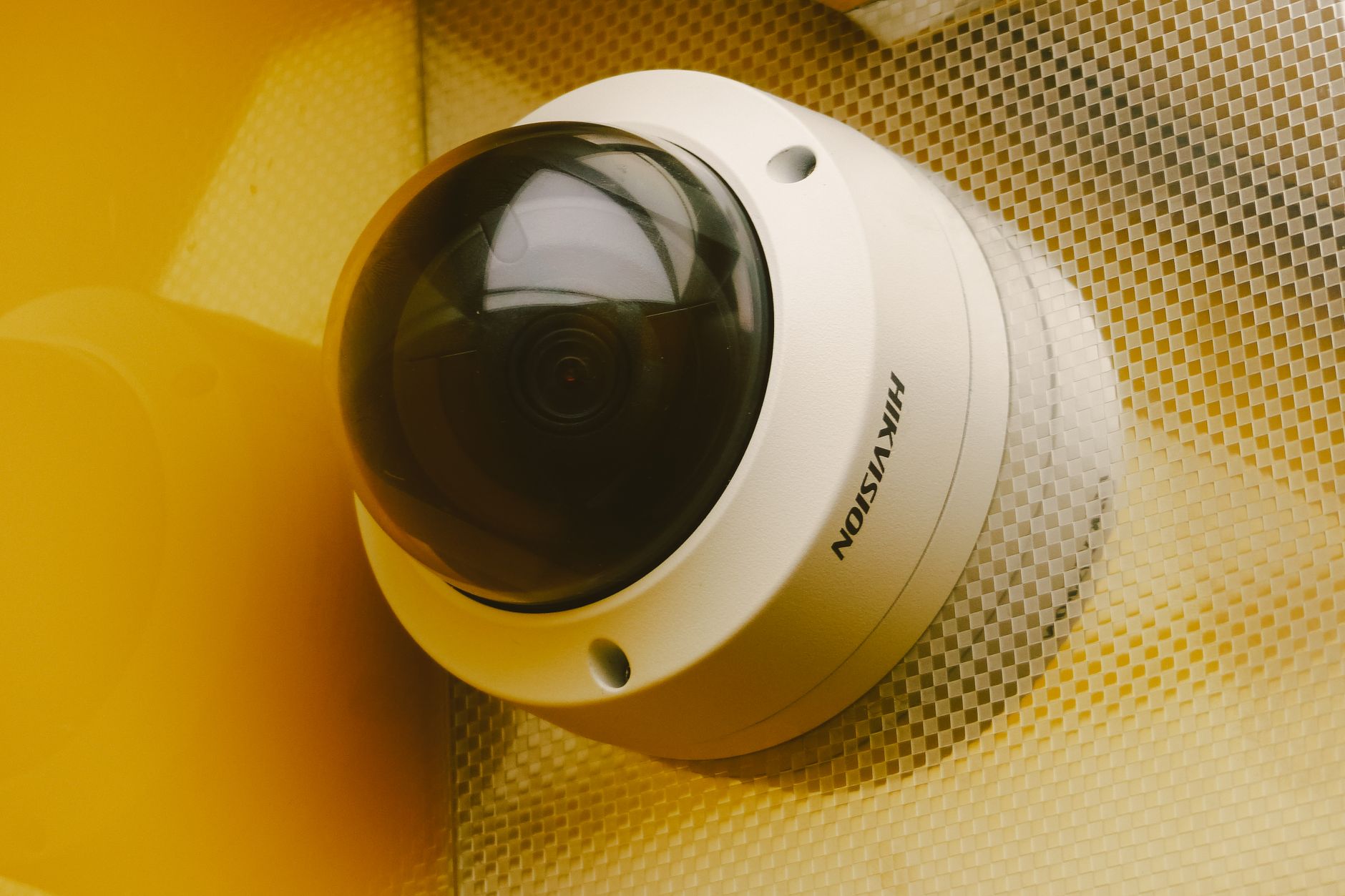
In 2019, the U.S. Department of Commerce added two Chinese companies to its Entity List, effectively blocking them from purchasing American components without government approval. Those companies — Hikvision and Dahua Technology — were not chip designers, smartphone makers, or telecoms giants. They made security cameras.
That a pair of camera manufacturers could trigger one of Washington’s most consequential export control actions speaks to the extraordinary scale these companies had reached. Together, Hikvision and Dahua supply an estimated 45 to 55 percent of the global video surveillance market. Their cameras monitor airports, seaports, factories, retail chains, government buildings, and city streets across more than 150 countries. Understanding how they got there — and what the regulatory turbulence means for buyers, integrators, and competitors — is essential reading for any business operating in the US-China tech space.
From State-Owned Roots to Global Dominance
Hikvision was founded in 2001 in Hangzhou as a spin-off of the China Electronics Technology Group Corporation (CETC), a major state-owned defense electronics conglomerate. The company’s full name — Hangzhou Hikvision Digital Technology Co., Ltd. — understates its ambition. By 2010, it had become the world’s largest video surveillance manufacturer by revenue. By 2018, its annual revenue exceeded 49.8 billion RMB (approximately $7.2 billion USD), with products sold in over 155 countries.
Dahua Technology, also headquartered in Hangzhou, was founded in 2001 by Fu Liquan, who had studied electronics at Zhejiang University. Dahua took a slightly different path — remaining privately controlled — but benefited from the same ecosystem of government procurement, domestic infrastructure buildout, and deep engineering talent that made Zhejiang Province a hub for hardware manufacturing. By the mid-2010s, Dahua had secured the position of the world’s second-largest surveillance manufacturer, with revenues exceeding 26 billion RMB in 2022.
Both companies grew in tandem with China’s massive public safety and smart city infrastructure programs. China’s “Safe City” and “Skynet” initiatives deployed hundreds of millions of cameras across urban and rural areas throughout the 2010s. This domestic base gave Hikvision and Dahua economies of scale that no Western competitor could match. Axis Communications of Sweden, the previous global leader, found its market share steadily eroded despite strong brand recognition in Western markets.
The Technology Edge: AI, Deep Learning, and the Hardware-Software Stack
Hikvision and Dahua did not merely compete on price. Both companies made significant investments in artificial intelligence and computer vision during the 2010s, embedding these capabilities directly into their camera hardware.
Hikvision’s DeepinView camera line, launched in 2017, integrated neural processing units into the hardware, enabling real-time face detection, license plate recognition, and behavioral analytics without a central server. The company invested over 10 percent of annual revenue in R&D from 2015 onward, employing more than 20,000 engineers at its Hangzhou campus.
Dahua’s equivalent product family, marketed under the WizMind brand, offered comparable AI capabilities at competitive price points, complemented by video management systems and cloud storage solutions that created platform lock-in with enterprise customers.
This combination of affordable hardware, embedded AI, and integrated software gave both companies a formidable value proposition for cost-sensitive markets in Southeast Asia, Latin America, the Middle East, and Africa.
The Regulatory Reckoning: Entity List, NDAA, and What It Means for Buyers
The US government’s concerns about Hikvision and Dahua center on two distinct but related issues: national security implications of Chinese state-linked technology in sensitive infrastructure, and human rights concerns related to surveillance deployments in Xinjiang.
The 2019 Entity List designations by the U.S. Bureau of Industry and Security (BIS) prohibited the companies from purchasing components subject to the Export Administration Regulations (EAR) without a specific license — which is rarely granted. This forced both companies to accelerate domestic substitution of American components, particularly image sensors and certain processing chips.
More consequential for the US market was Section 889 of the National Defense Authorization Act (NDAA) of 2019, which prohibited federal agencies from procuring Hikvision and Dahua products and, in a second phase, barred contractors working with the federal government from using equipment from either company. The U.S. Federal Communications Commission (FCC) further designated both companies as posing unacceptable national security risks in 2021 and 2022, placing them on the Covered List and barring new FCC authorizations for their equipment.
For enterprise and government buyers in the United States, the practical implications are significant:
- Federal contractors at all tiers must verify their camera infrastructure complies with NDAA Section 889
- State and local governments receiving federal grants face increasing pressure to avoid covered equipment
- Publicly listed companies face disclosure risk if material portions of their security infrastructure rely on designated vendors
- Insurance carriers have begun incorporating technology provenance into cyber and physical security underwriting criteria
Importantly, millions of Hikvision and Dahua cameras installed before these regulations remain in operation across the US, creating a long-tail replacement market that competitors like Axis, Hanwha Vision, and Motorola Solutions are actively pursuing.
How Both Companies Have Responded to US Pressure
Neither Hikvision nor Dahua has accepted the regulatory landscape passively. Both companies have pursued multi-pronged strategies to maintain international competitiveness despite US restrictions.
Component diversification was the immediate priority. American image sensors from companies like ON Semiconductor were replaced with domestic alternatives from suppliers such as SmartSens Technology and Gpixel. Processing chips from US-linked suppliers were substituted with domestically designed alternatives, leveraging the broader ecosystem of China’s semiconductor self-sufficiency drive.
Brand separation has been another key tactic. Hikvision created the EZVIZ consumer brand specifically for Western retail markets, positioning it as a distinct entity focused on home security rather than government infrastructure. EZVIZ cameras are sold through Amazon, Best Buy, and major European retailers, though they share underlying technology with Hikvision’s commercial products.
Geographic pivot has also been decisive. Both companies have deepened their presence in markets where US regulatory influence is limited: ASEAN countries, the Gulf Cooperation Council, Sub-Saharan Africa, and Latin America. Dahua in particular has made strong inroads in Brazil and India, markets with large urban populations and growing smart city programs.
Hikvision has also been listed on the Shenzhen Stock Exchange and remains one of China’s most valuable technology companies, with a market capitalization that has at times exceeded 400 billion RMB, underscoring that the business has remained fundamentally robust despite US headwinds.
The Competitive Landscape: Who Fills the Gap?
The regulatory restrictions on Hikvision and Dahua have opened significant commercial opportunities for alternative vendors. Axis Communications (acquired by Canon in 2015) has reclaimed market share in North America and Western Europe, emphasizing its Swedish engineering heritage and GDPR-aligned data handling. Hanwha Vision (formerly Samsung Techwin) offers full NDAA compliance at competitive price points, while Motorola Solutions — through its Avigilon acquisition — targets enterprise and government segments with strong AI analytics capabilities.
For US-based security integrators and procurement teams, viable NDAA-compliant alternatives exist across every product tier, though total cost of ownership is typically higher than Chinese-made equivalents.
Implications for US-China Business Strategy
The Hikvision and Dahua case illustrates patterns that repeat across the US-China technology relationship. Chinese companies can achieve genuine technological leadership through sustained R&D and domestic market scale — not simply through price. Regulatory risk is now a first-order consideration in procurement decisions, not an afterthought. And the global market beyond the US and Europe remains largely open to Chinese technology vendors, meaning “Western restrictions” do not equate to “global exclusion.”
For Western companies evaluating Chinese technology vendors, the surveillance sector offers a cautionary case study. The path from dominant global market position to US market exclusion took less than five years, following a trajectory shared by companies in semiconductors, drones, and telecoms. Managing this regulatory risk has become a core competency in cross-border procurement and investment.
For Chinese companies in security, AI, or other dual-use technology categories, the lesson is clear: international expansion must account for the distinct regulatory environments of target markets. The companies that navigate this successfully invest in compliance architecture early — not after a designation has occurred.
The surveillance sector is ultimately a microcosm of the broader US-China technology relationship: technically impressive, commercially vast, and politically consequential. For more context on how US export controls shape Chinese technology companies, see our analyses of Huawei’s experience with US sanctions, ZTE’s regulatory crisis and recovery, and China’s evolving export control framework. For context on the tech ecosystem from which both companies emerged, our piece on Shenzhen as a global innovation hub is essential reading.