
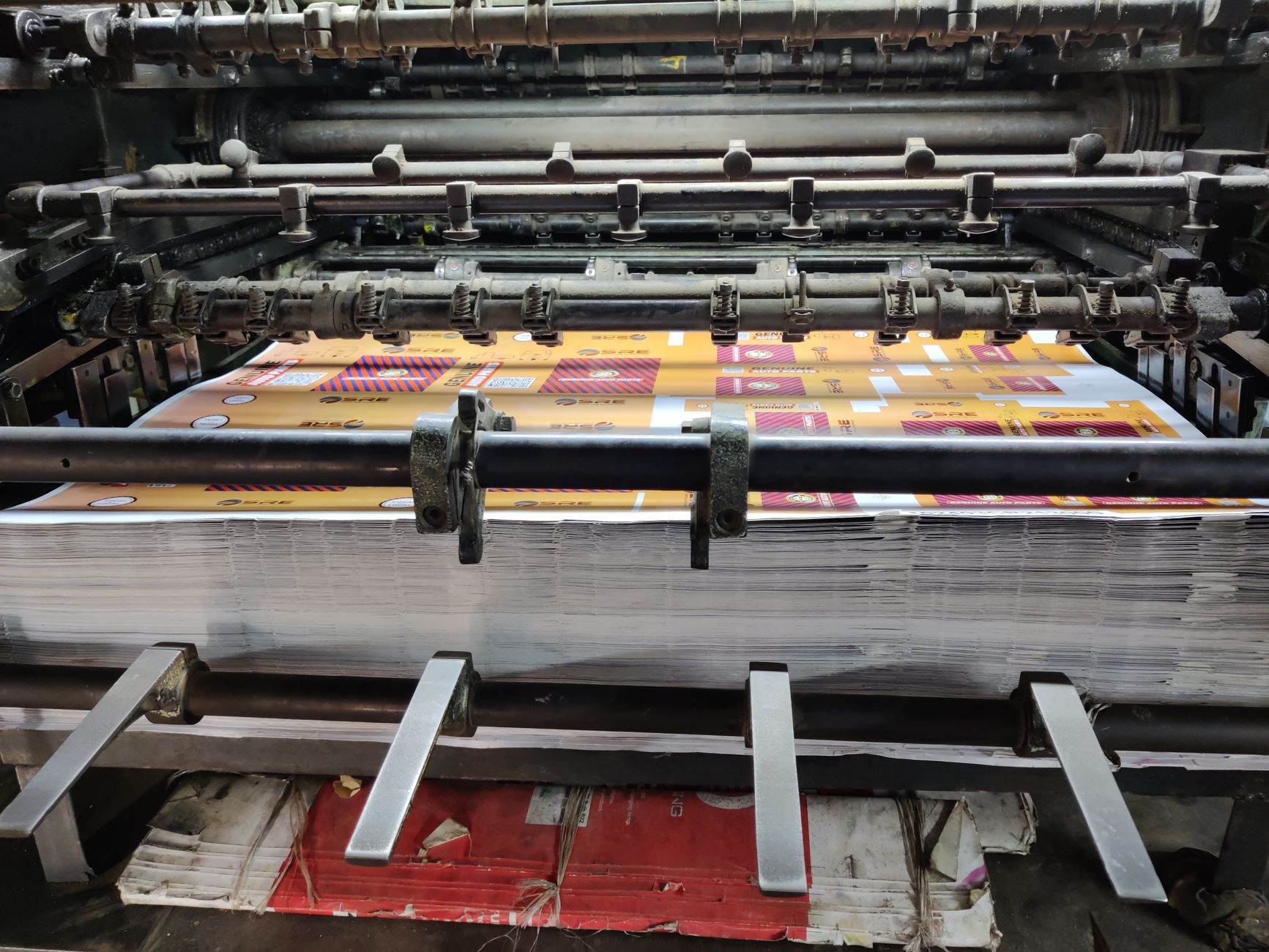
Walk into any Walmart, Target, or high-end boutique in the United States and pick up a product. There is a better than even chance the packaging — the box, the label, the printed insert, the shrink-wrapped sleeve — was produced in China. The Chinese printing and packaging industry is the world’s largest, generating over $230 billion in annual output and employing more than five million workers. Yet compared to more glamorous sectors like electric vehicles or semiconductors, it receives almost no coverage in Western business media. For any brand selling physical goods, understanding this industry is a prerequisite for cost control, quality management, and supply chain resilience.
The Scale and Key Players
China accounts for roughly 25% of global packaging production by volume — the single largest national share by a significant margin. According to data compiled by China’s State Council, the industry spans corrugated paper boxes, flexible plastic packaging, glass and metal containers, printed labels, luxury rigid boxes, and industrial packaging. That breadth means it underlies virtually all of Chinese manufacturing.
The sector’s flagship companies are not yet household names in the West, but they are giants by any standard. Shenzhen Jinjia Group (founded 1999, listed on the Shenzhen Stock Exchange, 2023 revenue exceeding RMB 7.5 billion) is China’s dominant cigarette and FMCG label printer. Shanghai Zijiang Enterprise Group is one of the country’s largest flexible packaging producers. In the paper segment, Nine Dragons Paper Holdings — founded by Zhang Yin in 1995 and listed in Hong Kong — operates 47 production lines across 16 Chinese mills, making it one of the world’s largest paper and corrugated producers with 2023 revenue near HKD 58 billion.
Geographically, the Pearl River Delta — centered on Guangzhou, Foshan, and Dongguan — is the industry’s undisputed capital. An estimated 40% of all printed packaging exported from China originates within 150 kilometers of Guangzhou. The Yangtze River Delta (Shanghai, Suzhou, Wuxi) is the second major cluster, with particular strength in pharmaceutical packaging and high-end cosmetics boxes.
Why China Dominates: The Structural Advantages
China’s rise to packaging supremacy rests on interlocking advantages that took decades to build and that competitors in Southeast Asia, India, and Eastern Europe have not yet replicated at equivalent scale.
Vertical integration with manufacturing. A toy factory in Dongguan or an electronics assembler in Suzhou can typically source custom-printed packaging from a supplier within 30 to 100 kilometers. Lead times for standard orders run 7 to 15 days. Digital printing technology — particularly UV inkjet and laser finishing — has reduced setup costs so dramatically that a brand launching in the US with an initial order of 3,000 units can now get professionally printed, custom-die-cut retail boxes at a unit cost impossible to match domestically.
Deep competition drives quality up and prices down. Unlike sectors dominated by state enterprises, Chinese packaging is predominantly private-sector and intensely competitive. This is especially visible at the Canton Fair, where packaging suppliers are among the most represented categories — a direct reflection of consistent global demand.
Technology investment. Chinese packaging manufacturers have invested heavily in Heidelberg and Bobst printing and die-cutting equipment alongside proprietary Chinese-built equivalents from companies like Beiren Group. The result is output quality frequently comparable to European production at 30% to 60% lower cost. Luxury rigid box production — for Apple, Dyson, and scores of Western cosmetics brands — has become a Chinese speciality centered in Dongguan and Shenzhen.
Key Segments for Western Buyers
Corrugated and Paper Packaging
The highest-volume segment: shipping boxes, e-commerce mailers, retail display packaging. Nine Dragons Paper is the anchor company. Notably, American waste paper has historically been a major Chinese import used to make corrugated boxes that return to the US filled with goods — one of the more circular bilateral trade flows in any industry.
Flexible Packaging
Pouches, films, and wraps for food, pharmaceuticals, and consumer goods. Guangdong and Zhejiang manufacturers dominate this segment. For US food brands, the FDA’s Foreign Supplier Verification Program (FSVP), enacted under the Food Safety Modernization Act, requires importers to verify that food-contact packaging from Chinese suppliers meets US safety equivalents. This is a compliance obligation, not a recommendation.
Rigid and Luxury Packaging
Custom rigid boxes, magnetic closure boxes, and premium cosmetic packaging. Minimum orders typically run 500 to 1,000 units. Turnaround is 20 to 30 days on first orders. Finishing options — hot foil stamping, embossing, UV spot coating, soft-touch lamination — allow Western brands to create unboxing experiences that exceed what domestic US production delivers at equivalent price points.
Navigating Tariffs
Packaging is not a primary target of US Section 301 tariffs, but it is not exempt. Printed materials (HTS Chapter 49) and paper packaging (HTS Chapter 48) face tariff rates that have ranged from 7.5% to 25% depending on classification and the current schedule. Flexible plastic packaging (HTS Chapter 39) carries higher rates in certain subheadings.
Three strategies have emerged among experienced US buyers. First, bonded warehousing: storing packaging inventory in US customs bonded facilities and drawing it down as needed, deferring duty payment until actual consumption. Second, diversification to Vietnam and Cambodia: both have seen significant Chinese packaging FDI, providing tariff-advantaged alternatives while maintaining Chinese operational expertise. Third, volume commitment negotiations: US buyers with consistent order volumes have successfully renegotiated pricing with Chinese suppliers on high-volume corrugated and flexible packaging where margins accommodate adjustment.
The Office of the United States Trade Representative (USTR) maintains the current tariff schedule, and any brand making multi-year sourcing decisions should treat USTR classification guidance as required reading. The landscape has shifted repeatedly since 2018.
ESG and Environmental Compliance
China’s packaging industry is under increasing domestic environmental pressure. The revised Solid Waste Pollution Prevention Law (2020) and the National Development and Reform Commission’s Plastic Pollution Action Plan (2021) restrict single-use plastics and mandate recycled content minimums in specified categories. Alibaba’s Tmall and JD.com both enforce green packaging standards as conditions of preferred supplier status.
For Western brands with sustainability commitments, Chinese manufacturers who have retooled for recyclable, compostable, or reduced-plastic packaging can now produce ESG-compliant packaging at a cost advantage over domestic US production. Evaluate suppliers for ISO 14001 environmental management certification and FSC chain-of-custody certification for paper products. This ESG evolution parallels trends in China’s logistics sector, where major carriers are investing in reusable packaging and reverse logistics infrastructure.
Sourcing Framework: What Experienced Buyers Do Differently
Match factory type to order profile. A factory optimized for 100,000-unit Walmart orders will not serve a DTC brand running 2,000-unit batches. Factories with digital print capability are built for small-to-medium runs; high-volume operations use offset or flexographic printing with much higher setup minimums.
Sample in sequence. Request structural samples (dieline only, no artwork) before printed samples. This confirms dimensions, material weight, and construction quality without design investment. Follow with a full printed prototype and destructive testing — drop tests for corrugated, seal integrity for flexible — before approving production.
Protect intellectual property. Packaging carries brand identity. Include a non-disclosure agreement in every supplier contract, and register your trademark in China through China’s National Intellectual Property Administration (CNIPA). For high-value brand packaging, consider splitting die-cutting and printing between two suppliers to protect design confidentiality.
Standard payment terms: 30% deposit, 70% before shipping for new relationships. Never pay 100% upfront regardless of incentives offered.
The Bilateral Dimension
The US-China packaging relationship is not purely one-directional. American companies — including packaging machinery makers Barry-Wehmiller, ProMach, and Sealed Air — have significant business in China, supplying equipment and materials to factories that serve both domestic and export markets. The pattern mirrors what we documented in our analysis of Foshan’s furniture industry: industries that appear purely Chinese in origin are frequently built on imported machinery, specialty raw materials, and technical expertise from the US and Europe.
For procurement directors, brand managers, and supply chain executives operating in 2026, China’s printing and packaging industry is not a problem to be managed around. It is a capability to be leveraged — with precision, proper compliance protocols, and a clear understanding of where the risks and the opportunities actually sit.