
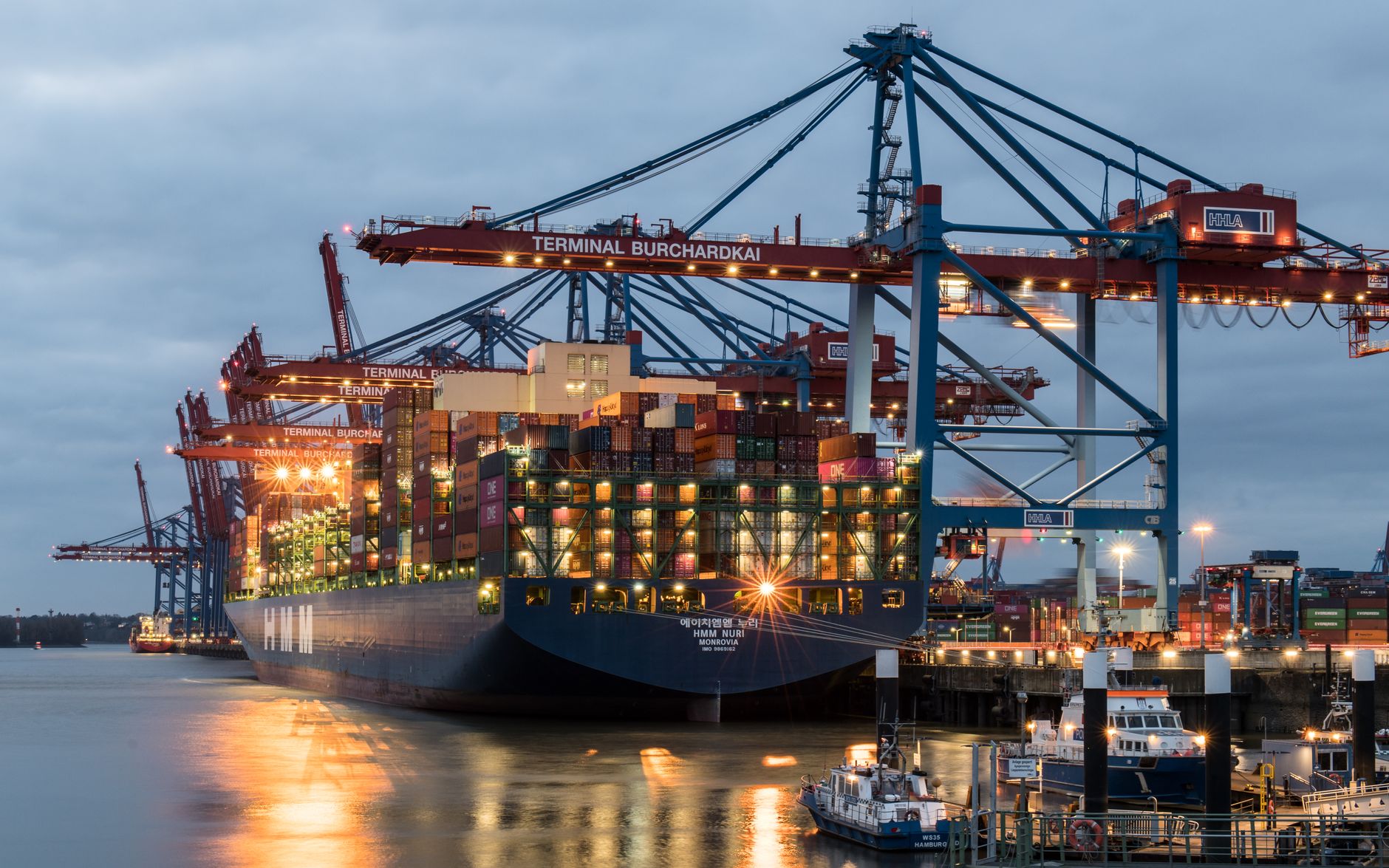
When a container ship departs the Port of Ningbo-Zhoushan carrying auto parts bound for Detroit, consumer electronics heading to Rotterdam, or raw steel en route to Mumbai, it participates in a commercial ecosystem that moves more cargo than any other port complex on earth. In 2023, Ningbo-Zhoushan handled 3.77 billion metric tons of total cargo throughput — a record it has held for fifteen consecutive years. For any professional importing from, exporting to, or investing in China, understanding this port is not background knowledge. It is operational necessity.
From Fishing Village to Global Hub
Ningbo has been a trading city for more than a thousand years. It was one of the original five ports opened to Western trade under the Treaty of Nanking in 1842, and by the Song Dynasty it already served as a departure point for ceramic and silk exports reaching the Arab world. Zhoushan, an archipelago of 1,390 islands off Ningbo’s coast, provided a natural deepwater anchorage. The formal merger of the two ports into Ningbo-Zhoushan Port was completed in 2006. Zhoushan’s Beilun deepwater channel could accommodate ultra-large container vessels, while Ningbo’s industrial hinterland and rail links provided the cargo volumes to fill them. Together they created a port capable of handling every major cargo category simultaneously: containers, bulk commodities, crude oil, LNG, vehicles, and break-bulk cargo.
Scale That Reshapes Global Shipping Economics
Ningbo-Zhoushan’s 3.77 billion metric tons dwarfs every competitor. Rotterdam, Europe’s largest port, handled approximately 435 million metric tons in 2023. The Port of Houston, the busiest in the United States by cargo tonnage, processed around 275 million metric tons. Ningbo-Zhoushan is not somewhat larger; it is categorically different.
Container throughput tells a complementary story. In 2023, the port processed 35.3 million TEUs, placing it third globally behind Shanghai (49.2 million TEUs) and Singapore (38.8 million TEUs). Roughly one in every sixteen container boxes moving anywhere in the global maritime system passes through Ningbo-Zhoushan in a given year.
The port’s crude oil handling capacity is equally significant. The Cezi Island terminal can accommodate Very Large Crude Carriers of up to 300,000 deadweight tons. China imported 563 million metric tons of crude oil in 2023 according to the General Administration of Customs, and Ningbo-Zhoushan handles approximately 25 percent of that national crude import volume. For Western energy companies managing Chinese supply chains, this port is the primary physical gateway through which oil moves from the Middle East, Africa, and Russia into China’s refining system.
The Zhoushan Free Trade Zone: Policy Advantages for Foreign Business
In 2017, Beijing approved the Zhoushan Free Trade Zone as part of the broader China (Zhejiang) Pilot Free Trade Zone, specifically targeting the oil and gas trading sector. The zone offers three concrete advantages for foreign companies.
First, it permits yuan-denominated oil futures trading connected to the Shanghai International Energy Exchange (INE), which launched China’s crude oil futures contract in 2018. Foreign institutional investors can access this market through the FTZ without the restrictions that apply to onshore Chinese markets generally. Second, the zone provides bonded storage for crude oil and petrochemical products, allowing foreign traders to hold inventory in China without paying import duties until goods are sold domestically. Third, the FTZ has streamlined foreign exchange settlement for commodity trades. Commodity traders, refiners, and shipping companies evaluating a regional presence in China’s coastal energy market should assess the Zhoushan FTZ as a credible Singapore alternative for certain transaction types.
Industrial Hinterland: Why Ningbo Generates the Volume
Ports process the cargo that industrial activity generates in their hinterlands. Ningbo-Zhoushan’s throughput reflects the extraordinary manufacturing density of the Yangtze River Delta, a region producing approximately 24 percent of China’s GDP across Shanghai, Zhejiang, and Jiangsu provinces.
Ningbo itself hosts major clusters in petrochemicals, auto parts, textiles, and electrical equipment. Ningbo Joyson Electronic, a tier-1 automotive safety supplier serving Ford, BMW, and Toyota, uses the port’s container terminals daily. The Ningbo Export Processing Zone houses more than 200 foreign-invested enterprises. For manufacturers in inland Zhejiang and Anhui provinces, Ningbo-Zhoushan has increasingly displaced Shanghai as the preferred export outlet where road freight cost is a meaningful margin factor.
The COSCO Connection and China’s Maritime Strategy
Understanding Ningbo-Zhoushan requires understanding the broader ecosystem of Chinese state maritime assets flowing through it. China’s shipbuilding sector, led by CSSC and COSCO, has reshaped the economics of global container shipping in ways that amplify Ningbo-Zhoushan’s role. COSCO Shipping Lines is one of the world’s three largest container carriers, and its mega-vessels are among the highest-frequency callers at Ningbo-Zhoushan’s Meishan terminal. Those vessels are loaded with containers manufactured domestically by CIMC, the Shenzhen company producing roughly 80 percent of the world’s shipping containers. This vertical integration across ship manufacturing, container production, port operations, and liner services gives China a structural advantage in global maritime trade no Western competitor currently matches.
Ningbo-Zhoushan Port Group Co., Ltd., the state-owned enterprise managing the complex, reported revenue of approximately RMB 18.2 billion (roughly $2.5 billion) in 2022. The company is listed on the Shanghai Stock Exchange and has made strategic investments in ports across Southeast Asia and Europe. Its internationalization reflects Beijing’s broader interest in embedding Chinese port operators into global logistics infrastructure.
Operational Realities for Foreign Importers and Exporters
Berth Scheduling and Peak Season Pressure
During peak export seasons (August through November ahead of the Western holiday retail cycle), berth availability at Beilun and Meishan terminals tightens significantly. Companies relying on just-in-time shipping should build an additional three to five days of buffer into Ningbo departure schedules during this window.
Customs Clearance
Ningbo Customs has piloted China’s electronic clearance system since 2013. Declaration-to-release times for standard export shipments now average less than four hours for pre-approved exporters under the Authorized Economic Operator (AEO) program. The US Customs-Trade Partnership Against Terrorism (C-TPAT) has a mutual recognition arrangement with China’s AEO program, reducing inspection rates for qualifying cross-border shipments.
Emergency Closures: The Meishan Lesson
In August 2021, a COVID-19 case at the Meishan terminal triggered a two-week partial closure that sent shockwaves through global supply chains and spiked trans-Pacific shipping rates within days. Supply chain professionals sourcing from China should maintain active relationships with freight forwarders at alternative ports (Shanghai Yangshan, Qingdao, Tianjin) and build contractual flexibility with carriers to reroute in disruption scenarios. Walmart, Target, and Amazon have since built explicit multi-port redundancy into their China logistics frameworks for precisely this reason.
Belt and Road Integration
Ningbo-Zhoushan serves as the eastern anchor of China’s Maritime Silk Road, with direct shipping services connecting it to more than 200 ports across 100 countries. China’s Belt and Road Initiative has created concrete business opportunities for Western companies willing to engage with the logistics and infrastructure investments flowing through these corridors. Ningbo-Zhoushan Port Group’s overseas stakes include projects in Greece, Sri Lanka, and Tanzania, each a waypoint on trade routes ultimately anchored at Ningbo-Zhoushan. European logistics companies including DB Schenker, DHL Supply Chain, and Kuehne+Nagel have established formal collaboration agreements with the port group to coordinate inland European distribution for cargo originating here.
What Western Businesses Should Do Now
The strategic importance of Ningbo-Zhoushan is not a future possibility; it is an operating reality shaping shipping costs, lead times, and supply chain resilience decisions for thousands of companies today. China’s broader ports and logistics infrastructure gives context to how Ningbo-Zhoushan fits within a national system that is the most comprehensively developed on earth.
Companies sourcing from Zhejiang or neighboring provinces should evaluate whether their freight forwarding relationships and carrier contracts are optimized for the port’s specific terminal configurations. Importers bringing goods into China should assess whether the Zhoushan FTZ’s bonded storage provisions create tax or cash flow advantages worth pursuing. And any company building resilience into a China-heavy supply chain needs a clear Ningbo-Zhoushan contingency protocol.
For authoritative data on China’s port throughput and customs procedures, the Ministry of Transport of the People’s Republic of China publishes monthly port statistics and policy updates. For the US side of cross-border trade compliance, the US Customs and Border Protection Trade portal provides current guidance on C-TPAT mutual recognition and import procedures affecting goods moving through Chinese ports.