
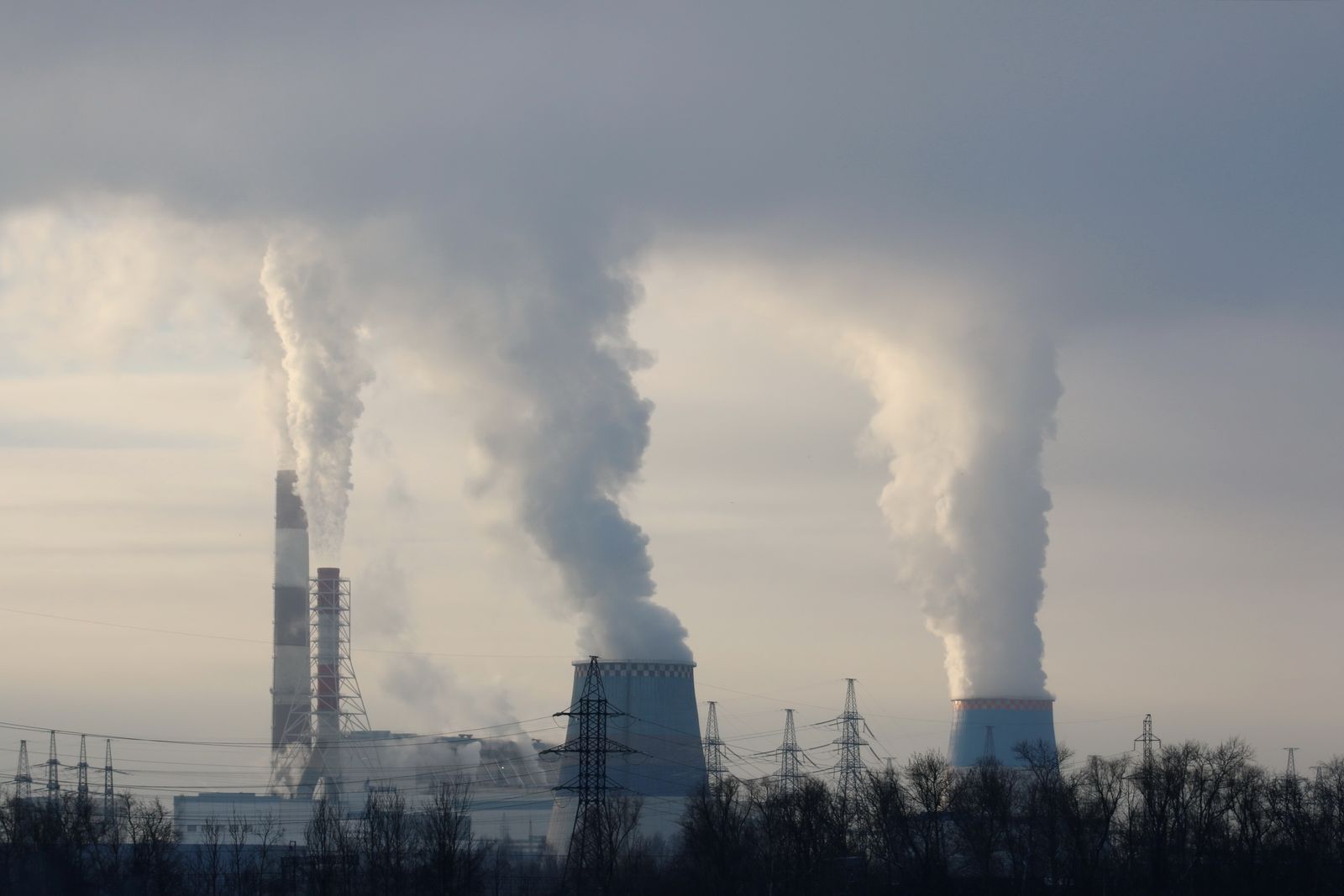
Shanxi Province rarely appears on the shortlist when foreign executives think about China’s most strategically important regions. That’s a mistake. Shanxi holds the largest proven coal reserves of any Chinese province, and for most of the past four decades its identity was simple: dig coal, sell coal, burn coal. By 2010 the province was producing more than 700 million metric tons per year, supplying roughly a third of China’s total output and fueling the industrial miracle that made China the world’s factory.
That era is being deliberately dismantled and rebuilt. Understanding how Shanxi navigates this transition offers a precise window into China’s energy policy, industrial restructuring ambitions, and the trade opportunities it is actively creating for foreign partners.
The Scale of Shanxi’s Coal Legacy
To appreciate the transformation underway, start with the numbers. Shanxi accounted for approximately 26 percent of China’s total raw coal output in 2023 — around 1.3 billion metric tons — according to the National Energy Administration of China. The province’s coal underpins steel mills across Hebei and Liaoning, cement plants in Henan, and power generation across the North China grid. Taiyuan, the provincial capital, grew into a heavy industrial city anchored by Taiyuan Iron and Steel Group (TISCO), one of China’s oldest integrated steel producers, founded in 1934. Datong, in the north, gave its name to “Datong coal” — a brand synonymous with high-quality thermal coal traded internationally for decades.
Coal dependence came at a price. Shanxi consistently ranked among China’s worst provinces for air quality, and its GDP per capita lagged significantly behind coastal peers despite its resource wealth — a classic resource curse that Beijing’s central planners recognized as requiring structural intervention.
Beijing’s Directive: Consolidation, Then Transformation
The restructuring of Shanxi’s coal sector began in earnest after 2008, when a wave of mine accidents triggered a sweeping nationalization campaign. By 2010, the provincial government had forced the closure of thousands of small private mines and consolidated the industry into seven state-controlled groups, led by Shanxi Coking Coal Group, Datong Coal Mine Group (now merged into Jinneng Holding), and Yangquan Coal Industry Group.
By 2020, Jinneng Holding had become one of the largest coal enterprises on Earth, with assets exceeding 700 billion yuan (approximately $97 billion). This consolidation phase is effectively complete. What has followed is more consequential for foreign business: the pivot toward clean energy, advanced materials, and high-value manufacturing.
Coke, Chemicals, and the Materials Economy
Shanxi’s transition is not a clean break from its industrial past — it is a sophisticated upgrade. The province has leaned into coking coal and used that position to anchor a downstream chemicals and materials industry. Shanxi accounts for roughly 20 percent of China’s coke production, and provincial enterprises have built integrated coal-to-chemicals complexes producing methanol, synthetic ammonia, and polyethylene — feedstocks that compete with petrochemical derivatives.
Hualu-Hengsheng Chemical, listed on the Shanghai Stock Exchange (ticker: 600426) and originally a coal-chemical spinoff, now produces fertilizers, nylon intermediates, DMF, and acetic acid at industrial scale, exporting to Southeast Asia, South Korea, and Europe. Its integrated coal-to-chemicals model — achieving costs well below naphtha-based competitors — reflects a broader Shanxi industrial logic: use embedded energy advantage to build value-added chemistry rather than sell raw coal. For US companies in specialty chemicals, polymers, and agrochemicals, Shanxi’s coal-chemical complex represents both a competitive supplier base and a potential joint venture partner.
The Renewable Energy Pivot: Wind, Solar, and Pumped Storage
The more dramatic transformation is in power generation. Shanxi’s plateau geography — high elevation, strong winds, and ample solar irradiance — makes it well-suited for renewables. By end of 2024, Shanxi had installed approximately 45 gigawatts of wind and solar capacity, with a target of 100 GW by 2030 under China’s dual-carbon framework.
Three state-owned utilities — State Power Investment Corporation (SPIC), China Energy (formerly Shenhua Group), and Datang International — have committed large capital programs to Shanxi wind and solar. More interesting for foreign investors is the pumped-hydro story. Shanxi’s mountainous terrain makes it ideal for pumped-storage hydropower — giant batteries that store excess renewable energy by pumping water uphill. China has announced a national target of 120 GW of pumped storage by 2030, and Shanxi is expected to contribute a disproportionate share. The Yungang pumped-storage project near Datong, with a planned capacity of 1,200 MW, is one of more than a dozen such projects approved for the province. This creates procurement opportunities across the turbine, civil engineering, and power electronics supply chain.
Advanced Manufacturing and the Hydrogen Economy
Shanxi is also positioning itself as a hydrogen economy hub, building on existing industrial gas infrastructure and coal-to-hydrogen expertise. The province produces significant “grey hydrogen” via coal gasification and is investing in the shift toward “green hydrogen” produced via electrolysis powered by its expanding renewable fleet. The State Council’s 2022 Hydrogen Industry Development Plan identified Shanxi as one of four priority regions for grey-to-green hydrogen transition, alongside Inner Mongolia, Xinjiang, and Shandong.
Taiyuan Heavy Industry (TYHI), listed in Shanghai, manufactures hydraulic presses, wind turbine components, and mining equipment — and has begun pivoting toward hydrogen storage and transportation equipment. For US industrial companies with hydrogen technology, TYHI and its local ecosystem represent a potential licensing or co-development target. This connects to GH’s coverage of China’s green hydrogen supply chain, which maps the national policy driving Shanxi’s provincial investments.
The US-China Trade Angle: What American Companies Should Know
Shanxi sits at the intersection of several US-China trade tensions and opportunities. US Section 232 and Section 301 tariffs have effectively blocked most Chinese steel and aluminum from American markets, and Shanxi’s TISCO — a major stainless steel producer — has felt those barriers. The US International Trade Administration maintains active antidumping and countervailing duty orders on Chinese steel products that any American importer must navigate carefully before sourcing from Shanxi-linked suppliers.
On the opportunity side, American firms in several sectors have active engagement with Shanxi’s industrial base:
- Mining equipment: Caterpillar and Komatsu both have distribution relationships with Shanxi coal operations. As mines modernize, demand for precision equipment, sensors, and safety systems — where US firms hold strong positions — continues to grow.
- Environmental technology: Shanxi’s air quality remediation programs have created procurement demand for flue-gas desulfurization equipment, carbon capture feasibility studies, and environmental monitoring systems.
- Energy storage and grid technology: As Shanxi installs renewable capacity at scale, US firms with advanced battery management systems, grid software, and power electronics have active procurement channels through provincial grid operators.
As documented in GH’s analysis of China’s national carbon market, Shanxi’s heavy industrial base is now subject to mandatory carbon compliance — creating additional pressure to accelerate the transition and additional demand for low-carbon technology partners.
Entering Shanxi: Practical Business Context
Shanxi has a distinct business culture rooted in the province’s merchant tradition — the Shanxi Piaohao, or “Shanxi Bankers,” who operated China’s first proto-banking network from the 17th to early 20th century. Shanxi businesspeople tend to be conservative, relationship-driven, and focused on long-term reliability. The typical entry path involves a local state-owned partner or provincial trade bureau introduction rather than cold outreach.
Taiyuan hosts the annual China (Taiyuan) Coal Industry Expo, one of Asia’s largest energy-sector trade fairs. For foreign firms seeking market exposure, this October event is a more efficient first entry than direct outreach to individual enterprises. The provincial government’s “Shanxi Open Economy” initiative has streamlined foreign investment approvals, though timelines remain longer than in coastal hubs.
The Strategic Takeaway
Shanxi is not a market to enter casually or quickly. Its industrial transformation is real but uneven — coal revenues still dominate the provincial budget and the infrastructure for foreign business services remains thinner than coastal equivalents. But for companies with patient capital, technical expertise in energy transition technologies, or specialty chemical supply chain needs, Shanxi represents a genuine emerging opportunity.
The province’s trajectory carries a broader lesson: resource-dependent regions across China’s interior are not declining — they are being deliberately restructured by a central government with the capital, authority, and long planning horizons to execute industrial transformation at scale. Understanding Shanxi is, in that sense, understanding something fundamental about how China’s economy works.
For further context, GH’s analysis of China’s SOEs going global and China’s aluminum industry commodity dynamics provide essential complementary reading for anyone building a China industrial strategy.