
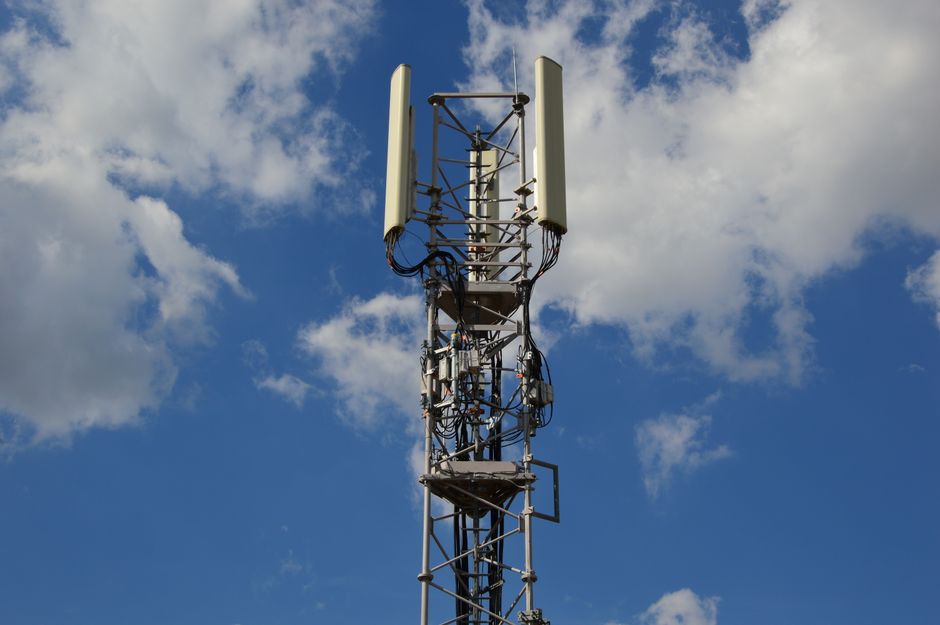
Huawei Technologies is the most consequential company in the history of the global telecom industry — and the most controversial. Founded in 1987 in Shenzhen with roughly $3,000 in registered capital, it grew into a firm that supplies wireless network infrastructure across more than 170 countries, generates over $99 billion in annual revenue, and employs more than 207,000 people, nearly half of whom work in R&D. No other company has been simultaneously celebrated as a symbol of Chinese technological ambition and targeted as a national security threat by the world’s most powerful economies. Understanding Huawei’s arc — its rise, the US-led sanctions campaign, and the restructured global supply chain that resulted — is essential context for any professional navigating international technology trade.
From Telecom Reseller to Global Network Builder
Ren Zhengfei, a former PLA engineer, established Huawei as a reseller of Hong Kong telephone switches. Within a decade the firm had pivoted to domestic R&D, targeting rural Chinese markets that state operators overlooked. By the mid-1990s it was designing its own circuit-switched exchanges. By 2000 it had begun winning contracts in Africa, Southeast Asia, and Eastern Europe — markets where disciplined pricing and willingness to serve remote locations gave it an edge over Ericsson, Nokia, and Nortel.
The 2000s were transformational. Huawei won its first major European contracts (British Telecom supplier approval in 2005), built a world-class handset division, and invested 10 to 15 percent of annual revenue in R&D each year. Revenue climbed from $5.6 billion in 2003 to $107 billion in 2018. That R&D commitment produced the world’s largest portfolio of 5G essential patents when the next-generation wireless standard arrived.
For context on the organizational culture and engineering philosophy behind this rise, see our profile of Ren Zhengfei and the Huawei founding story.
The 5G Lead — and Why It Triggered a Geopolitical Crisis
By 2017, Huawei held roughly 28 percent of global telecom equipment market share, ahead of Ericsson at 27 percent and Nokia at 23 percent. Its 5G advantage crystallized political opposition in Washington. Huawei had filed more than 3,000 5G standard-essential patents and was offering end-to-end 5G infrastructure at prices 20 to 30 percent below European competitors.
The core concern raised by US intelligence agencies was architectural: if Huawei equipment formed the backbone of allied nations’ wireless networks, China’s government theoretically had a mechanism for surveillance or disruption. Whether that risk was operational or theoretical has been debated at length — no Western government has publicly produced evidence of a Huawei-enabled state interception. But in national security analysis, theoretical capability is itself a concern, and Huawei’s ownership structure left legal ambiguity about its obligations under China’s 2017 National Intelligence Law.
The US moved in May 2019, adding Huawei to the Commerce Department’s Entity List. The 2020 amendment extended the restriction to any chip fabricated anywhere using American equipment or intellectual property — an extraterritorial measure that cut Huawei off from advanced semiconductor manufacturing globally. For a detailed look at how Huawei and ZTE compete within China’s 5G buildout, see our analysis of China’s 5G infrastructure rollout.
The Supply Chain Fracture
The financial impact was severe. Huawei’s consumer device revenue fell from $66.9 billion in 2020 to approximately $38 billion in 2022 as the company could no longer source advanced application processors. The Kirin 990 chipset, manufactured on TSMC’s 7nm process, was the last high-performance chip its HiSilicon subsidiary could obtain. Huawei’s global smartphone market share collapsed from roughly 19 percent in early 2020 to under 3 percent by mid-2021.
The telecom infrastructure division proved more resilient. Huawei maintained component stockpiles, and its 4G base station products — which require less advanced chips — continued shipping. Network contracts across Africa, Latin America, the Middle East, and most of Asia held firm. The restrictions also damaged US suppliers: Qualcomm alone lost approximately $1.8 billion in Huawei revenue in 2020; Skyworks, Qorvo, and dozens of smaller component makers faced similar disruptions.
How HiSilicon’s IP assets are now being leveraged across the Chinese chip ecosystem is covered in our analysis of China’s semiconductor design industry.
The Mate 60 Pro: Defying the Sanctions Ceiling
In August 2023, Huawei quietly launched the Mate 60 Pro. TechInsights analysis confirmed it used a 7nm-class Kirin 9000S processor manufactured by SMIC — the first domestically produced advanced chip to reach a commercial flagship device, achieved without access to ASML’s export-controlled extreme ultraviolet lithography machines. The Kirin 9000S is not competitive with Apple’s A17 Pro, but it demonstrated that Chinese chipmakers could produce 7nm-equivalent silicon through multi-patterning techniques on older deep ultraviolet equipment. Huawei’s China smartphone share climbed back above 15 percent in Q4 2023 and continued recovering through 2025.
Four Structural Changes Every Global Business Must Understand
The Trusted Supplier Certification Regime
The UK, Australia, Sweden, France, Germany, and Canada have adopted restrictions or exclusions on Huawei in 5G core networks. Operators in these markets are spending an estimated $50 to $60 billion collectively to replace Huawei infrastructure with Ericsson or Nokia alternatives. The UK’s mandate for full Huawei removal by 2027 illustrates the scale. This replacement cycle is creating multi-year demand for non-Chinese telecom vendors.
Entity List Risk as a Business Continuity Factor
The speed of the Huawei restrictions demonstrated that a single regulatory action can sever a company from its global supply chain within months. Risk managers across the industry now treat Entity List exposure — for both customers and their own firms — as a scenario requiring active contingency planning, not a theoretical tail risk.
Accelerated Semiconductor Sovereignty Investments
China responded with the largest state-directed semiconductor investment program in history. The National Integrated Circuit Industry Investment Fund disbursed approximately $47 billion across its first two rounds, with a third round of similar scale launched in 2024. This will not close the leading-edge gap with TSMC within this decade, but it is creating a self-sufficient ecosystem for mature nodes (28nm and above) that supply the vast majority of the global chip market by volume.
Infrastructure Bifurcation
The most consequential long-term outcome may be the fragmentation of global digital infrastructure. The International Telecommunication Union estimates that over 70 countries have Huawei as a primary telecom infrastructure supplier. Nations that deployed Huawei 4G and 5G networks face a difficult choice: continue within the Huawei ecosystem at competitive prices, or shift to Western vendors at significantly higher cost. Many are choosing continuity — creating two largely non-interoperable technology ecosystems with implications for cybersecurity standards and regulatory coordination for decades.
Compliance and Policy Resources
The US Commerce Department’s Bureau of Industry and Security maintains the Entity List at bis.doc.gov — the essential compliance reference for any company with US-origin technology in its supply chain. China’s Ministry of Industry and Information Technology publishes its semiconductor and telecom development guidelines at miit.gov.cn, offering the official policy framework behind China’s domestic technology push.
For a detailed look at Huawei’s current chip supply chain recovery and its regained market position, see our dedicated analysis of Huawei’s comeback.
Neither the US nor China benefits from critical technology infrastructure fragmented along geopolitical lines. The Huawei case is the clearest illustration of what that fragmentation costs — and why businesses operating across both markets must build compliance frameworks, contingency supply chains, and geopolitical risk monitoring capabilities that simply were not necessary a decade ago. Huawei’s R&D spending in 2023 reached 164.7 billion yuan (approximately $22.7 billion), roughly 23 percent of revenue. That number reflects the company’s long-term intent — and the scale of the challenge facing any competitor or policymaker hoping to contain it.