
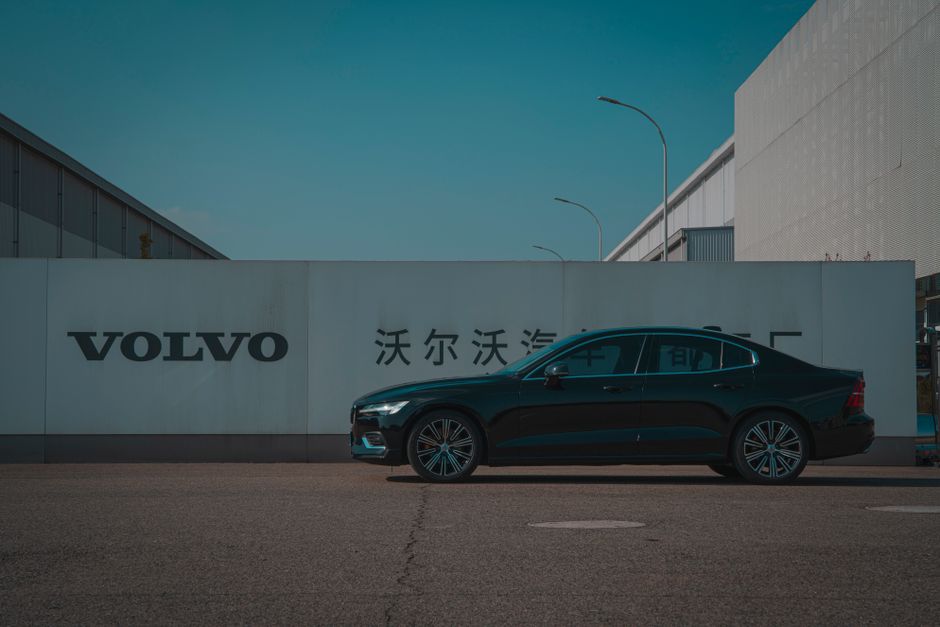
In March 2010, a little-known Chinese automaker paid $1.8 billion to buy one of Sweden’s most beloved industrial icons. Li Shufu, founder of Zhejiang Geely Holding Group, had been pursuing Volvo Cars for nearly a decade. When he finally closed the deal with Ford Motor Company, the global automotive and finance community greeted the announcement with barely concealed skepticism.
Sixteen years later, that skepticism looks badly misplaced. The Geely-Volvo acquisition has become the defining case study in Chinese outbound M&A — not because it was the largest deal, but because it worked. It worked in a way that forced Western analysts to reconsider nearly every assumption they held about Chinese acquirers.
The Deal That Almost Didn’t Happen
Li Shufu first expressed interest in Volvo Cars in 2002, when Geely was still a small domestic automaker best known for cheap, low-margin vehicles. Ford had paid $6.45 billion for Volvo in 1999, at the peak of an industry consolidation wave. A decade later, the global financial crisis had upended that calculus. Ford needed cash, and Volvo — which had lost more than $1 billion between 2008 and 2009 — was consuming resources the parent could no longer afford.
Geely submitted a binding offer of $1.8 billion in January 2010. The transaction closed in August 2010, marking the largest acquisition of a foreign company by a Chinese automaker at that time. Critically, the deal included all intellectual property, global distribution rights, and manufacturing facilities in Gothenburg and Ghent — not just the brand name.
The Integration Playbook: Autonomy, Not Absorption
What made Geely’s approach distinctive was what it chose not to do. Unlike some Chinese acquirers who immediately installed domestic management teams or extracted technology to replicate at home, Geely gave Volvo Cars near-total operational independence.
The Gothenburg headquarters remained intact. Håkan Samuelsson was appointed CEO in 2012 and given latitude to execute a turnaround on his own terms. Swedish workers kept their jobs. The brand’s identity — safety, Scandinavian design, environmental responsibility — was deliberately preserved and amplified rather than subordinated to Geely’s priorities.
Li Shufu articulated the philosophy publicly and repeatedly: “Geely is Geely. Volvo is Volvo.” This was not merely a press release talking point. Geely and Volvo maintained separate engineering teams, separate dealer networks, and separate balance sheets for years after the acquisition — a structure that addressed the central Western fear that Chinese ownership would hollow out the brand.
What Geely Actually Got From the Deal
The acquisition was not philanthropy. Geely extracted substantial value — it simply did so with patience and strategic sophistication that surprised observers trained to expect short-term extraction.
First, there was China market access. Under Ford, Volvo Cars had minimal presence in China. By 2023, China accounted for roughly 26% of Volvo Cars’ global sales, with the company selling over 160,000 vehicles annually in the market. Volvo built plants in Chengdu, Daqing, and Luqiao to serve domestic demand.
Second, there was technology collaboration. Geely co-developed a shared architecture called the Compact Modular Architecture (CMA) with Volvo, which now underpins vehicles under both brands. It is also the foundation of Polestar, the electric performance brand that listed on Nasdaq in 2022 with a peak valuation exceeding $20 billion.
Third, there was managerial learning. Volvo’s engineering culture and safety testing protocols served as a living curriculum for Geely’s domestic brand development. Geely’s domestic models have improved markedly in quality and safety ratings since 2010 — a trajectory difficult to explain without the Volvo effect on the parent organization.
Volvo’s Turnaround by the Numbers
Volvo Cars had been losing money when Ford sold it. By 2015, it had returned to sustained profitability. By 2019, it generated operating profit of approximately 14 billion Swedish kronor on revenues of 274 billion SEK. Annual sales grew from approximately 370,000 units in 2010 to a peak of 698,000 in 2021.
In October 2021, Volvo Cars completed an IPO on the Nasdaq Stockholm exchange, raising approximately $2.9 billion and establishing a market capitalization that at peak exceeded $25 billion. Geely retained a majority stake. The IPO was a direct vindication of the acquisition thesis — Ford had sold the asset for $1.8 billion; a decade later it was worth more than fourteen times that at market peak.
What It Meant for Chinese M&A Credibility
The Geely-Volvo outcome landed at a pivotal moment in the history of Chinese overseas investment. Chinese outbound M&A activity peaked at approximately $220 billion in 2016 according to data from the Ministry of Commerce of the People’s Republic of China. Many of those deals did not go well. Acquisitions in Western real estate, entertainment, and financial services attracted regulatory scrutiny and in some cases were blocked or reversed.
Geely-Volvo became the counter-narrative. Here was a Chinese acquirer that had not stripped its target, not displaced its workforce, not degraded the brand. The deal influenced how subsequent Chinese companies structured industrial acquisitions. The Haier acquisition of GE Appliances in 2016 featured explicit commitments to operational independence modeled partly on the Geely playbook. For more on that strategy, see our analysis of Haier’s global brand acquisitions.
Geely’s Continuing Expansion
Geely did not stop at Volvo. In 2017, Geely acquired a 49.9% stake in Proton of Malaysia and a 51% stake in Lotus Cars of the United Kingdom. In 2018, Li Shufu personally acquired a 9.7% stake in Daimler AG — at the time the largest single shareholder position — in a transaction valued at approximately $9 billion.
The logic in each case follows the Volvo template: buy a brand with heritage and engineering capability that has underperformed financially, provide capital and access to the Chinese market, preserve the brand identity, and extract value through structured collaboration rather than unilateral extraction. This pattern of patient integration has become a defining feature of China’s most sophisticated private-sector multinationals.
Lessons for Western Companies
For Western executives evaluating a potential acquisition, investment, or joint venture from a Chinese counterpart, the Geely-Volvo case yields practical guidance. The quality of the acquirer’s operational philosophy matters more than its headline financials. An acquirer willing to commit — in writing and in practice — to brand independence and local management retention is structurally different from one seeking rapid extraction.
Western boards should also note the role of Chinese capital in funding transformation that domestic owners could not have financed. Volvo’s shift to an all-electric lineup by 2030 requires capital investment that would have been inaccessible under the previous ownership structure. For comparative context on how Chinese investors approach cross-border finance, see our coverage of China’s investment banks going global.
The private equity model — buy, cut costs, exit — is one template. The Geely model — buy, invest, integrate slowly, build together — is another. Sixteen years of results suggest the second can generate outcomes the first cannot.
Regulatory Context and the Road Ahead
These realities mean that not every deal structured like Geely-Volvo will be permitted to proceed in every jurisdiction. The US Committee on Foreign Investment in the United States (CFIUS) has expanded its review scope significantly since 2018, and the European Union has introduced its own foreign investment screening mechanisms affecting Chinese bids in sensitive sectors.
The sectors that remain open — consumer goods, non-sensitive manufacturing, automotive, services — are still large. Acquirers who demonstrate the Geely operating philosophy are more likely to navigate political scrutiny successfully than those who do not. Official Chinese guidance on outbound investment procedures is maintained by the Ministry of Commerce of the People’s Republic of China (MOFCOM).
The Geely-Volvo story is ultimately about what bilateral industrial partnership looks like at its best: a Chinese acquirer bringing capital, market access, and long-term commitment; a Western target bringing brand equity, engineering culture, and global distribution. Neither side needed the other to become something it was not. For context on how China’s automotive supply chain continues to evolve, see our analysis of China’s tier-1 automotive suppliers going global.