
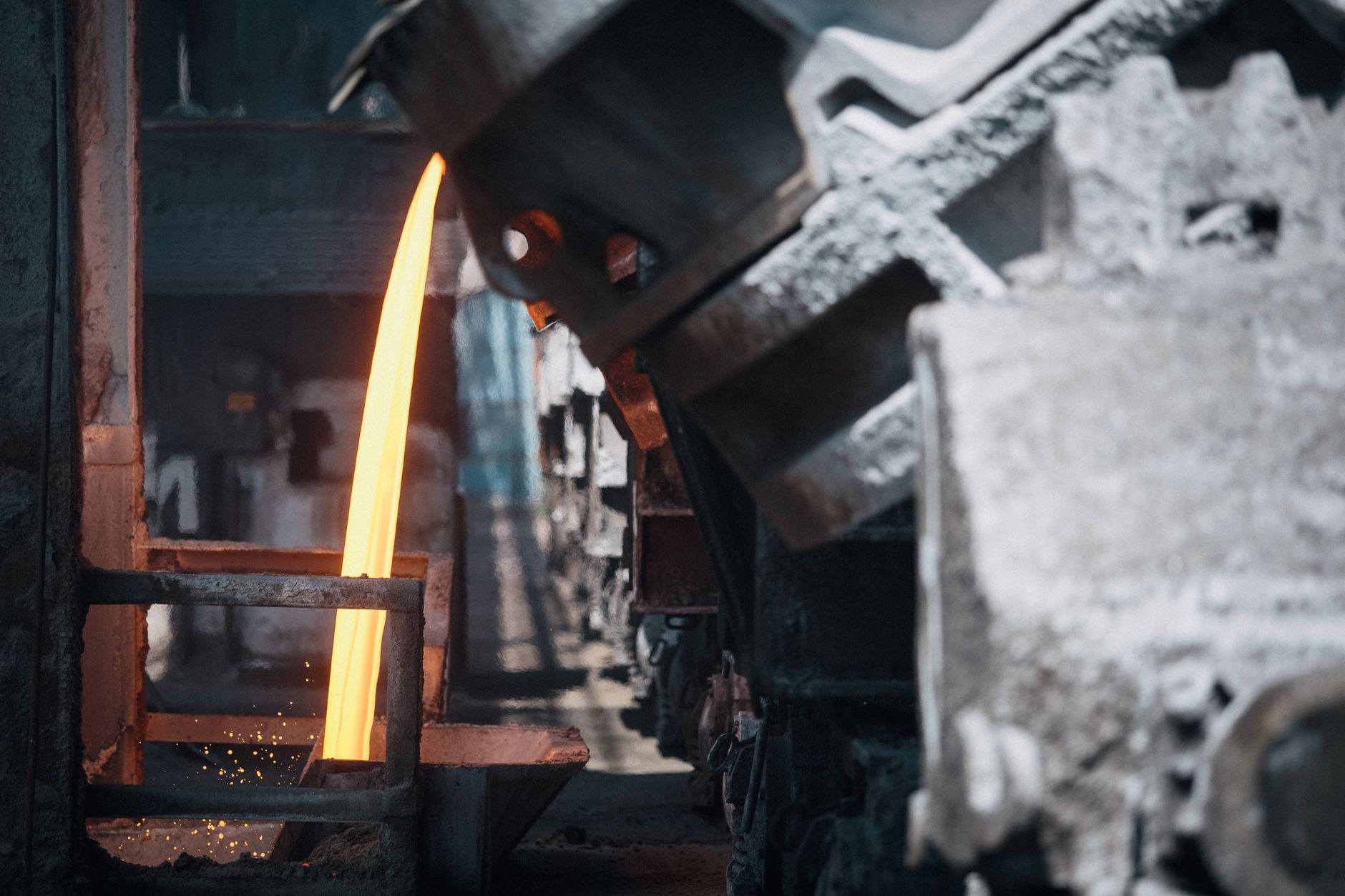
China produces more steel than the rest of the world combined. In 2023, Chinese mills output approximately 1.019 billion metric tons of crude steel — roughly 54% of global production, according to the World Steel Association. No single country has ever dominated a major commodity market to this degree in recorded industrial history, and the downstream effects reach every sector from automotive to construction to shipbuilding.
Understanding how China built this position — and what it means for global sourcing, trade policy, and competitive strategy — is not optional for anyone in manufacturing, capital goods, or international trade.
From Backyard Furnaces to Billion-Ton Output
China’s steel modernization began in earnest only after Deng Xiaoping’s late-1970s reforms, when the country imported integrated steelworks technology from Japan and Germany. By 1990, output stood at around 66 million metric tons — significant, but still behind Japan, the Soviet Union, and the United States. What followed was driven by three engines: explosive infrastructure demand from urbanization, state-directed credit through policy banks, and export competitiveness across a manufacturing economy that needed cheap, abundant steel as a feedstock.
Between 2000 and 2015, China’s steel output grew fivefold. The 2008 RMB 4 trillion stimulus package — directed primarily at infrastructure — supercharged capacity expansion that was already running at an extraordinary rate. By 2014, analysts estimated 200–400 million metric tons of excess capacity, a structural overhang that would become a primary source of global trade friction for the following decade.
The Consolidation Giants: Baowu and HBIS
The modern industry is organized around state-directed consolidation. China Baowu Steel Group — formed in 2016 from the merger of Baosteel and Wuhan Iron and Steel Corporation (WISCO) — is now the world’s largest steelmaker by a significant margin, with 2023 production exceeding 130 million metric tons. That is more than the entire annual output of the United States or Japan. Baowu operates advanced flat-rolled facilities in Shanghai and throughout multiple provinces, and has committed to carbon neutrality by 2050 — a decade ahead of China’s national target.
HBIS Group (Hebei Iron and Steel), headquartered in Shijiazhuang, represents a different model: overseas expansion through acquisition. HBIS acquired Serbian steelmaker SMBS (formerly Smederevo) in 2016 and holds stakes in South African operations, giving it direct access to European and African markets that anti-dumping duties would otherwise constrain. Hebei Province alone produces more steel annually than the United States — a concentration of industrial activity that shapes regional logistics, energy policy, and air quality in ways that have no equivalent in any other country.
Other major players include Ansteel Group, Shagang Group (the largest private producer), Shandong Iron and Steel, and Jianlong Group. Government five-year plans have consistently targeted consolidation of the top ten producers to 60% or more of national output.
Trade Friction and the Global Price Effect
When Chinese domestic demand slowed after 2015 — as the property sector began its long correction — excess steel was redirected toward export markets. Chinese steel exports peaked at 112 million metric tons in 2015, causing global steel prices to collapse and triggering facility closures from the US Rust Belt to British Wales to South Korean coastal cities.
The US response was Section 232 tariffs — a 25% tariff on steel imports under national security provisions — signed in 2018 and maintained under successive administrations. The European Union implemented safeguard measures capping imports at historical quota levels with tariffs above those thresholds. The USTR’s 2023 Report on China’s WTO Compliance specifically identified steel subsidies, state-owned enterprise preferences, and below-market-rate financing as ongoing structural trade issues — language that signals continued regulatory pressure regardless of broader diplomatic cycles.
Critically, Chinese steel continues to reach Western markets indirectly — through automotive parts, appliances, and industrial hardware manufactured in third countries using Chinese-origin steel. Import compliance teams that only monitor direct steel purchases are missing most of the exposure.
The Green Steel Transition and What It Creates
Steel production generates roughly 7–9% of global CO2 emissions. China, producing more than half the world’s steel primarily through blast furnace/basic oxygen furnace routes (the most carbon-intensive method), faces a structural decarbonization challenge that will reshape the industry over the next 15–20 years.
Baowu and other major producers are investing in hydrogen-based direct reduced iron (DRI) technology, expanded electric arc furnace (EAF) capacity using scrap steel, and carbon capture systems. China’s 14th Five-Year Plan for the steel sector targets scrap utilization rates above 30% and specific energy consumption reduction milestones. The Ministry of Industry and Information Technology’s steel sector guidance makes these targets explicit and frames them as binding policy directives, not aspirations.
For foreign businesses, this transition creates genuine commercial opportunity. US and European companies with expertise in EAF technology, emissions monitoring, hydrogen production systems, and carbon capture equipment are well-positioned to engage with Chinese steelmakers who need those capabilities to meet regulatory targets. Technology licensing, joint ventures, and equipment supply contracts represent avenues where mutual commercial interest overrides geopolitical friction.
For importers, the EU’s Carbon Border Adjustment Mechanism (CBAM), which became fully operational for most industrial products in 2026, creates new compliance obligations around the carbon content of steel-containing products. Companies sourcing steel-intensive goods from China now need to document the carbon intensity of input materials — a requirement that changes supplier selection and contract terms.
Supply Chain Lessons for Global Buyers
China’s steel dominance creates both cost advantages and compliance risks for global supply chains. Steel-intensive products — automotive components, construction hardware, industrial machinery, electrical equipment — benefit from China’s competitive raw material pricing. The broader China automotive supply chain operates on steel economics that give Chinese parts manufacturers a structural cost advantage in international tender processes.
At the same time, buyers sourcing for US or EU end markets face increasing scrutiny over steel content and origin. US infrastructure procurement rules, Section 232 tariff compliance, and CBAM obligations all require knowing where the steel in your products comes from and what its production parameters are. The parallel story in China’s aluminum industry — which has faced the same overcapacity and anti-dumping dynamics — provides a preview of where steel trade regulation is heading.
The Belt and Road Initiative has served as a partial capacity release valve, directing Chinese steel to infrastructure projects across Africa, Southeast Asia, and Central Asia through Chinese-contracted construction. Understanding how BRI project finance shapes material procurement helps any business competing for infrastructure contracts in those markets. The 2026 BRI landscape shows which corridors remain most active and where construction steel demand is concentrated.
Strategic Positioning for Non-Chinese Producers
China’s steel dominance is not reversing in any near-term planning horizon. The strategic question for non-Chinese companies is where to position, not whether to compete across the board.
The clearest competitive niches are specialty steels: electrical steels for EV motors and power transformers, high-strength automotive grades, stainless and tool steels for aerospace and medical applications. These products require technological precision and IP protection that commodity-focused Chinese mills are less equipped to provide, and they command premiums that absorb higher production costs.
For downstream manufacturers and traders, the priority is supply chain transparency and proactive compliance. Companies that build the documentation infrastructure for CBAM, tariff origin rules, and government procurement domestic content requirements before enforcement pressure arrives will have a structural advantage over those reacting to penalty notices.
China’s steel sector is one of the defining industrial policy stories of the 21st century. The billion-ton figure is not a curiosity — it is a baseline condition of global manufacturing economics that every supply chain professional, trade lawyer, and industrial buyer operates within, whether they account for it explicitly or not.