
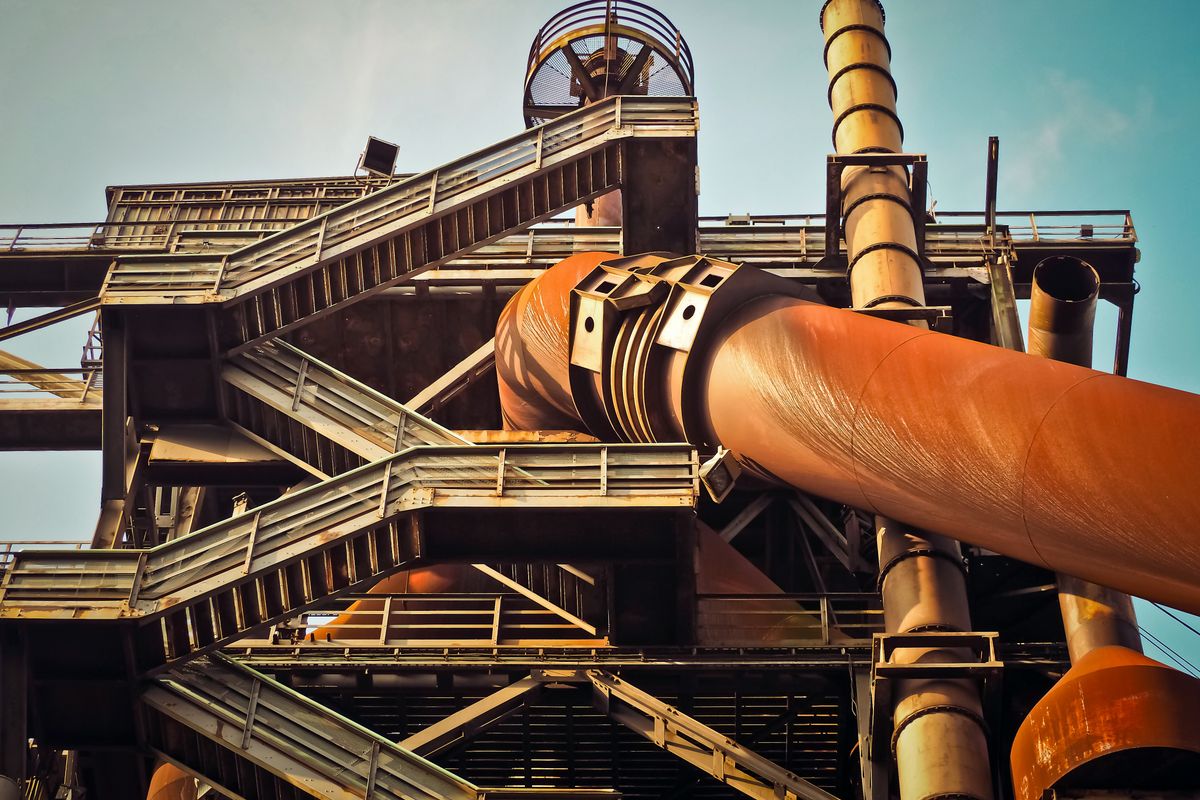
Steel is the skeleton of the modern economy. Every skyscraper, ship hull, automobile chassis, pipeline, and rail line depends on it. And for the past two decades, one country has determined how much it costs, how much is available, and where it flows: China.
China produces more steel than the next ten countries combined. In 2023, Chinese mills turned out approximately 1.02 billion metric tons — roughly 54 percent of global output. That figure is not a statistical anomaly. It is the result of deliberate industrial policy, decades of capital investment, and a domestic demand engine unlike anything the world has seen. For procurement managers, commodity traders, construction firms, and policymakers in the United States, understanding how China came to dominate global steel is foundational business knowledge.
From Scarcity to Surplus: How China Built Its Steel Machine
In 1978, China produced roughly 31 million metric tons of steel per year — significant, but well behind the Soviet Union, the United States, and Japan. Deng Xiaoping’s reforms changed that. As infrastructure investment accelerated through the 1980s and 1990s, Beijing identified steel as a strategic industry and directed state-owned banks to finance mill expansion at rates no private market would have tolerated.
The inflection point came after China’s accession to the World Trade Organization in December 2001. Export revenues flooded into fixed-asset investment, construction boomed, and steel demand surged. Provincial governments, eager to generate GDP and employment, approved mill after mill. By 2008, China had overtaken every other nation and was accelerating past them.
The major players are mostly state-owned. China Baowu Steel Group — formed through the 2016 merger of Baosteel and Wuhan Iron and Steel — is now the world’s largest steelmaker, producing over 130 million metric tons annually. HBIS Group, Shagang Group, Ansteel Group, and Jianlong Steel round out the top tier. Together, these five companies produce more steel than the entire United States and European Union combined.
How Chinese Output Decisions Set Your Input Costs
When Chinese domestic demand softened following the 2015 property sector correction and again during the Evergrande crisis of 2021 to 2023, Chinese mills did not reduce output proportionally. They exported the surplus. Chinese steel exports hit approximately 90 million metric tons in 2023 — the highest level since 2015 — flooding global markets and driving down hot-rolled coil benchmark prices on the London Metal Exchange and Singapore exchanges.
The mechanics are straightforward. Chinese mills, many with access to low-cost state bank financing and subsidized electricity, can sustain operating margins at price points that force Western mills offline. When global steel demand falls, Western mills cut production; Chinese mills frequently hold output steady or redirect exports. This dynamic has generated persistent trade friction, reflected in US Department of Commerce antidumping and countervailing duty investigations that have resulted in tariff rates on Chinese steel products ranging from 10 percent to over 250 percent depending on product category.
The practical implication for US buyers: the price you pay for structural steel, rebar, wire rod, or stainless flat-rolled products is a function not just of local supply and demand, but of utilization rates in Tangshan — the largest steelmaking city in Hebei Province — and policy signals from the Chinese Ministry of Industry and Information Technology, which publishes capacity target announcements that move global benchmarks.
The Tariff Architecture Every Procurement Professional Must Understand
Section 232 tariffs, imposed in 2018 under national security provisions and maintained since, placed a 25 percent tariff on steel imports from most countries including China. Separately, antidumping and countervailing duty orders impose product-specific surcharges on Chinese steel that frequently bring effective duty rates above 100 percent on certain categories including cold-rolled flat products and corrosion-resistant steel.
The result: Chinese steel rarely enters the US market directly in meaningful volumes. Instead, Chinese-origin steel often reaches US buyers through third countries — Vietnam, South Korea, Mexico, and Taiwan have all served as transshipment points, a practice the US Customs and Border Protection trade remedy enforcement unit actively investigates. For US importers, country-of-origin certification and supply chain traceability have become compliance requirements, not formalities.
For manufacturers competing with Chinese steel-intensive products in auto parts, appliances, and construction materials, the tariff architecture provides partial protection. But because Chinese steel sets the global benchmark price, the indirect effect of Chinese capacity decisions still flows through to US input costs regardless of where the steel is sourced.
Green Steel and the Next Competitive Frontier
The most consequential medium-term shift in global steel is not about volume — it is about carbon. The European Union’s Carbon Border Adjustment Mechanism, which entered its transitional phase in October 2023, will require importers of steel to pay a carbon price equivalent to EU ETS rates when fully implemented from 2026. This represents a structural cost disadvantage for high-emission Chinese blast furnace steel entering Europe.
Chinese steelmakers are responding. Baowu, HBIS, and Ansteel have all announced green steel roadmaps targeting net-zero production by 2050, with interim milestones for hydrogen-based direct reduction ironmaking. China’s electric arc furnace capacity — which uses scrap steel and dramatically reduces emissions — stood at roughly 10 percent of total output in 2023, compared to over 70 percent in the United States. As China’s EAF share expands, global scrap metal demand will shift significantly, adding Chinese demand to a market historically dominated by US, European, and Japanese mills.
This green transition connects to broader patterns documented across Chinese industry. China’s dominance over rare earth and critical materials extends into the specialty steels that underpin clean energy manufacturing. The International Trade Administration’s Steel Import Monitor tracks real-time import volumes and pricing, giving US industry the data infrastructure to monitor these transitions as they develop.
Strategic Takeaways for US-China Business Professionals
Price benchmarks are Chinese benchmarks. Shanghai futures prices and Tangshan billet prices are the leading indicators for global steel cost direction. Building this data into procurement forecasting is not a niche practice — it is table stakes for any steel-intensive business.
Third-country routing requires compliance diligence. If Chinese-origin steel is material to your product costs, your supply chain audit must trace origin beyond the immediate supplier. Antidumping duty evasion enforcement has intensified and the penalties are material.
Green steel premiums are real and growing. Corporate buyers in automotive and construction are increasingly requiring verified low-carbon steel. Understanding which Chinese suppliers are ahead of this certification curve is a sourcing advantage that will compound over the next decade.
Consolidation reshapes negotiation dynamics. As the top ten Chinese steelmakers account for over 50 percent of national output — up from 35 percent in 2015 — the negotiating dynamics for large buyers are shifting. Fewer, larger counterparties mean more formalized procurement relationships. Understanding how China’s major manufacturing corridors operate, from Guangdong to the Yangtze Delta, provides the broader context for steel sourcing strategies.
China did not build the world’s dominant steel industry by accident. It built it through coordinated policy, directed capital allocation, and a willingness to sustain capacity through demand cycles that would bankrupt private-market competitors. The industry that resulted will continue to set global commodity prices, shape competitive dynamics in manufacturing, and drive environmental policy debates for decades. For anyone with material interests in the global economy, fluency in China’s steel market is not background reading. It is a core professional competency.