
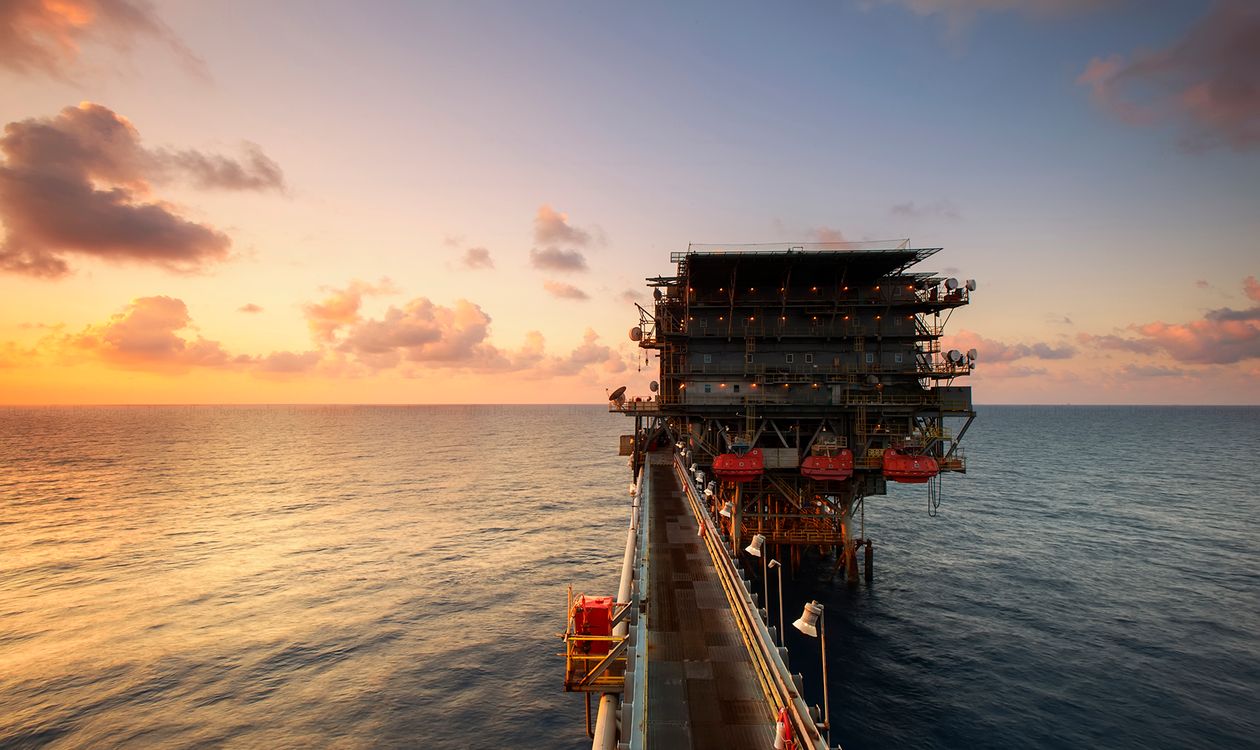
When Western business professionals think about Chinese energy companies, Sinopec’s massive refining empire typically comes to mind first. But two other state-owned giants — CNOOC Limited and PetroChina — play equally decisive roles in global energy markets. Their strategies have profound implications for Western oil companies, LNG buyers, institutional investors, and any business dependent on stable commodity pricing. Understanding how these companies operate and where they are expanding is no longer optional for serious trade professionals.
PetroChina: The Integrated Giant With More Barrels Than ExxonMobil
PetroChina was formally incorporated in 1999 as the listed arm of China National Petroleum Corporation (CNPC). Its Hong Kong and New York IPO in April 2000 raised $2.9 billion. By 2007, PetroChina briefly became the world’s first company to reach a $1 trillion market capitalization on the Shanghai exchange. Today, PetroChina produces roughly 4.2 million barrels of oil equivalent per day, making it one of the largest hydrocarbon producers in the world by volume. Its 2025 annual revenue exceeded $450 billion USD, placing it among the world’s top five energy companies by turnover.
PetroChina’s operations span every segment of the energy value chain: upstream exploration across Daqing, Tarim Basin, and Changqing; midstream pipelines covering over 90,000 kilometers; and downstream retail through more than 22,000 service stations. Through CNPC’s international arm, PetroChina has built production stakes in Iraq (Rumaila field — one of the world’s largest producing oil fields), Kazakhstan (PetroKazakhstan, acquired for $4.2 billion in 2005), Sudan, Chad, and Myanmar. It also holds LNG offtake agreements from Australia’s Queensland Curtis LNG project. For Western energy companies operating in frontier markets, PetroChina is frequently a partner, a buyer, or a competitor — sometimes all three simultaneously.
CNOOC: The Offshore Specialist Driving Deep-Water Ambitions
China National Offshore Oil Corporation (CNOOC) was established in 1982 with a specific mandate: develop China’s offshore resources through joint ventures with Western majors who brought the deepwater technology China lacked. That original model seeded a generation of CNOOC engineers who eventually built the company into a self-sufficient deepwater operator.
CNOOC’s listed subsidiary went public on the Hong Kong Stock Exchange and NYSE in February 2001, raising $1.46 billion. Its flagship deepwater discovery, the Liuhua 29-1 field in the South China Sea, reached first production in 2023 from water depths exceeding 1,500 meters. CNOOC’s most consequential international move came in December 2012 when it completed the $15.1 billion acquisition of Nexen — a Canadian oil sands and deepwater operator — the largest overseas acquisition by a Chinese company at that time. Nexen gave CNOOC significant production in the Canadian oil sands, the UK North Sea, the Gulf of Mexico, and West Africa.
In 2021, CNOOC Limited was added to the US Department of Defense’s list of companies alleged to support China’s military, leading to a brief NYSE delisting. The episode illustrates the dual-use security concerns now attached to Chinese energy SOEs in Western regulatory environments.
The LNG Strategy: Reshaping Global Gas Markets
China became the world’s largest LNG importer in 2021, and CNOOC and PetroChina sit at the center of that demand. CNOOC has signed long-term LNG offtake agreements with producers across Australia (Darwin LNG, North West Shelf), Qatar (QatarEnergy’s NFE expansion), the United States (Sabine Pass, Freeport LNG), and Russia (Yamal LNG). PetroChina holds stakes in Australian Curtis LNG and term contracts with Malaysian LNG. Combined, these two companies represent the two largest long-term LNG contract books in Asia.
Two dimensions matter for Western energy executives. First, Chinese NOCs increasingly prefer equity LNG — owning upstream stakes in liquefaction projects rather than purely purchasing spot cargoes. This captures upstream margins and ensures supply security during price spikes. Second, since 2022, China’s NOCs have absorbed Russian LNG cargoes initially destined for Europe at discounted prices, reducing China’s effective average import cost while tightening supply for European utilities.
For US LNG project developers, CNOOC and PetroChina are creditworthy offtake counterparties capable of anchoring large-scale project financing. But their dual role as both long-term customers and equity investors means negotiations are commercially sophisticated. The US Department of Energy’s LNG export authorization framework remains central to any deal structure involving Chinese NOC commitments to US export terminals.
Acquisitions, CFIUS, and the Political Calculus
Between 2005 and 2015, CNOOC and CNPC/PetroChina collectively spent over $60 billion acquiring oil and gas assets in North America, Africa, Central Asia, and Southeast Asia. That acquisition wave in Western jurisdictions is effectively over. CNOOC’s failed $18.5 billion bid for Unocal in 2005 — withdrawn after intense congressional opposition — established the template for US political resistance to Chinese SOE energy acquisitions. The Committee on Foreign Investment in the United States (CFIUS) has since become the decisive gatekeeper, and approval for Chinese SOE acquisitions of US production assets is effectively unavailable under current policy.
Canada’s 2022 government order requiring CNOOC, Sinopec, and other Chinese SOEs to divest minority stakes in Canadian oil sands companies signaled a similar hardening in Western investment screening. Chinese NOC overseas growth is now concentrated in Africa, the Middle East, Latin America, and Central Asia — regions where China’s Belt and Road Initiative provides a supportive diplomatic framework.
How These Companies Shape Global Commodity Markets
Even businesses that never negotiate directly with CNOOC or PetroChina operate within the market environment these companies create. Their combined crude oil procurement — China imports roughly 11 million barrels per day — materially influences Brent and Dubai benchmark prices. Their petrochemical integration produces ethylene, propylene, and aromatics that underpin China’s plastics, packaging, and synthetic fiber exports. Any Western importer sourcing packaging or synthetic textiles from China is, at some remove, a downstream customer of these two companies.
Their carbon transition investments also matter. PetroChina has targeted carbon neutrality by 2050; CNOOC aims to peak emissions before 2028. Both are investing in CCS, geothermal, and offshore wind. This trajectory connects directly to China’s green hydrogen strategy and parallels the transformation underway at Sinopec, which we have covered in depth.
What Western Companies Need to Know When Engaging Chinese NOCs
For service companies, technology suppliers, and joint venture partners, engaging CNOOC and PetroChina requires understanding their organizational structure. Both are ultimately answerable to SASAC — the State-owned Assets Supervision and Administration Commission of the State Council — which sets performance targets, approves major capital allocations, and appoints senior leadership. Commercial negotiations often run on parallel tracks: the technical team you meet, and a SASAC-level approval process operating in the background.
For technology companies, both NOCs are active acquirers of deepwater drilling technology, subsea equipment, and CCUS systems. However, US export control regulations — particularly EAR controls on dual-use technologies — apply to any advanced oilfield technology sold or licensed to Chinese SOEs. Professionals must track evolving guidance from the US Bureau of Industry and Security. Understanding how Chinese SOEs operate globally provides essential strategic context for any engagement.
The Bottom Line
CNOOC and PetroChina are not companies most Western trade professionals encounter directly. But they sit at the foundation of the global energy system that prices every input cost and shapes every supply chain. Their LNG procurement anchors Asian spot markets. Their crude buying moves Brent. Their refinery throughput determines the cost of plastics and synthetics that underpin manufacturing across four continents.
In the current bilateral trade environment, these companies represent both geopolitical friction — sanctions exposure, CFIUS review, export controls — and durable commercial interdependence. US LNG exporters need Chinese NOC offtake to finance new terminals. Chinese refineries need US feedstocks. The energy relationship, despite its political tensions, remains structurally bilateral in ways neither side can easily unwind. Professionals who understand both dimensions will be far better positioned to navigate it.