
China’s special economic zones (SEZs) are among the most consequential policy tools in the modern global economy. Since Deng Xiaoping designated Shenzhen, Zhuhai, Shantou, and Xiamen as the first four SEZs in 1980, the model has evolved from simple export processing enclaves into sophisticated open economy laboratories testing tax regimes, financial regulations, and cross-border data rules that often preview national policy by a decade. For foreign businesses entering China today, understanding which zones offer the most relevant advantages is not optional background knowledge. It is practical strategy.
From Shenzhen to Lingang: Four Decades of Zone Evolution
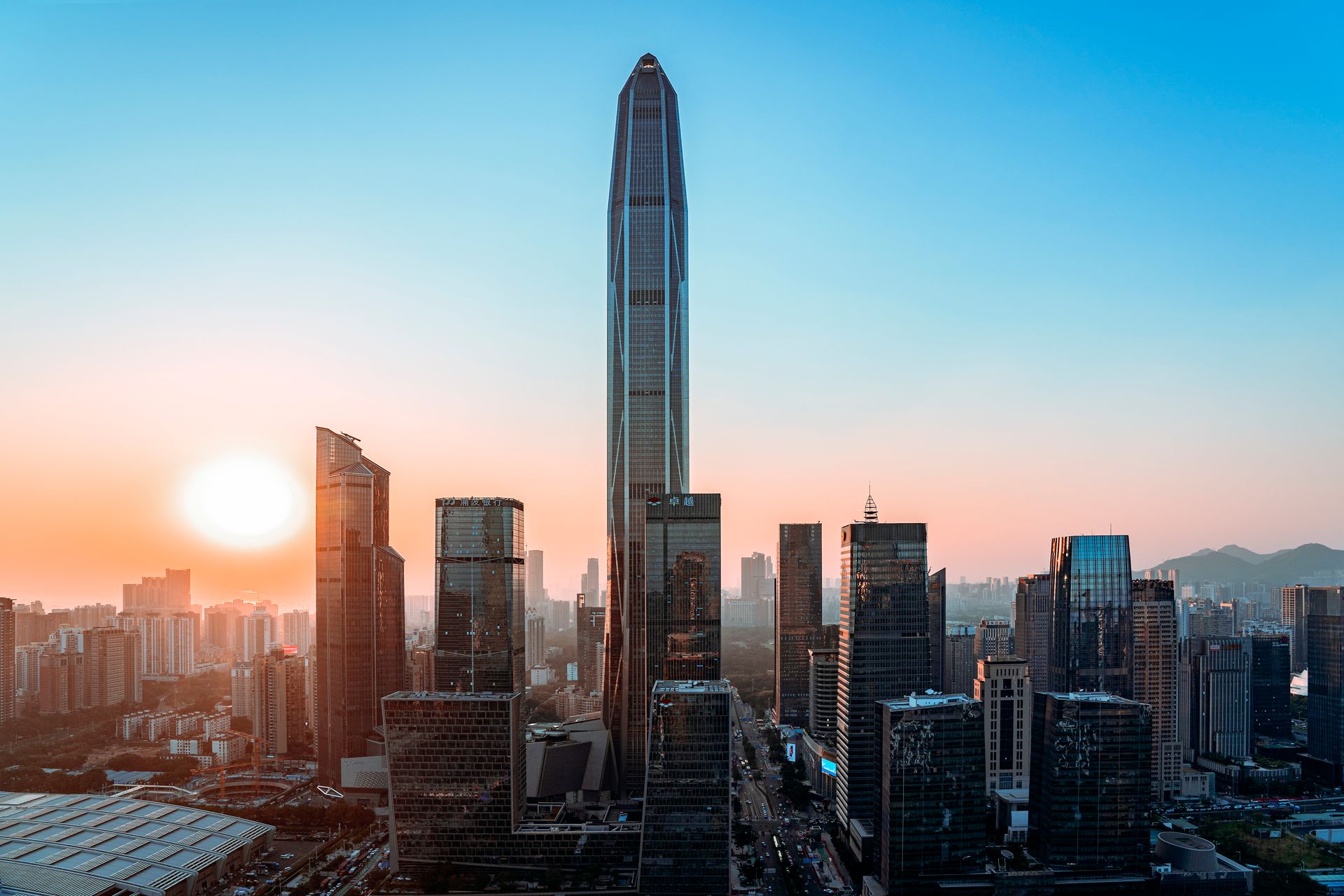
The original SEZ model was deliberately simple. By carving out geographic areas where market prices could operate, tariffs were suspended for re-export goods, and foreign capital was explicitly welcomed, Beijing created competitive pressure inside a still-planned economy without dismantling state ownership nationally. Shenzhen — a fishing village of roughly 30,000 people in 1979 — became the flagship proof of concept. By 2024, Shenzhen’s GDP exceeded RMB 3.76 trillion (approximately $520 billion), placing it among the top 30 urban economies globally.
The next major evolution came in 1990 with Shanghai’s Pudong New Area, a 1,210-square-kilometer development zone designed to attract financial services, advanced manufacturing, and multinational headquarters operations — capabilities the original SEZs were not built for. Within two decades, Pudong hosted the Shanghai Stock Exchange’s campus, Lujiazui Finance City with more than 1,000 financial institutions, and Zhangjiang Hi-Tech Park, which today anchors China’s largest biopharmaceutical manufacturing cluster.
The third wave arrived in 2013 with China’s first formal China (Shanghai) Pilot Free Trade Zone (PFTZ) in the Waigaoqiao bonded area. The PFTZ model was explicitly different in purpose: it was designed to test financial account liberalization, negative-list foreign investment rules, and cross-border data governance frameworks before rolling them out nationally. Rather than simply offering tax breaks, the Shanghai PFTZ began allowing foreign-owned enterprises to incorporate with 100% equity in sectors previously restricted to joint ventures — a fundamental structural shift in how China treated foreign capital.
Today, China operates 22 pilot free trade zones spanning every major region, from Heilongjiang in the northeast to Hainan in the south. Each carries a distinct industrial mandate, regulatory sandbox scope, and strategic rationale.
The Lingang Special Area: China’s Most Open Economic Enclave
Within the Shanghai PFTZ system, the Lingang Special Area — formally established in August 2019 — has emerged as the most ambitious regulatory experiment in mainland China. Located 75 kilometers southeast of central Shanghai on Dishui Lake, Lingang was designed to offer conditions approaching those of Hong Kong and Singapore for internationally operating companies.
The core policy package is substantive. Corporate income tax for qualified enterprises in integrated circuits, artificial intelligence, biomedicine, and civil aviation is reduced to 15% — compared to the standard 25% mainland rate. Foreign enterprises in designated sectors can hold 100% equity stakes without a Chinese joint venture partner, including in value-added telecommunications and certain financial services. As of mid-2026, Lingang has attracted more than 1,800 key projects with total registered investment exceeding RMB 860 billion ($120 billion).
Major anchors include COMAC’s C919 component manufacturing facilities, SMIC’s 28nm fabrication plant (which entered volume production phases in 2024), and Tesla’s Gigafactory Shanghai — which produced over 950,000 vehicles in 2023, making it the company’s largest global production site. Tesla’s investment was notably the first wholly foreign-owned automotive manufacturing operation approved without a joint venture requirement — a direct result of Lingang’s relaxed equity rules.
Hengqin, Qianhai, and the Greater Bay Area Architecture
The Guangdong-Hong Kong-Macao Greater Bay Area (GBA) has spawned its own generation of specialized zones with distinct cross-border advantages. The Hengqin Cooperation Zone, elevated to a jointly managed territory in September 2021, operates under a unique arrangement where Macao’s government co-manages the zone alongside Guangdong provincial authorities. Companies registered in Hengqin can access Macao’s legal system for dispute resolution, benefit from Macao’s 12% corporate tax rate, and tap Macao’s preferential trade arrangements with Portuguese-speaking countries — a frequently overlooked strategic advantage for businesses targeting Brazil, Angola, and Mozambique.
The Qianhai Shenzhen-Hong Kong Modern Service Industry Cooperation Zone functions as an offshore RMB financing hub and gateway for Hong Kong-licensed financial institutions to access mainland clients with reduced regulatory friction. In August 2021, Beijing expanded Qianhai’s area from 14.92 to 120.56 square kilometers and broadened its mandate to include legal services, accounting, and architecture sectors previously restricted to foreign firms. By 2025, Qianhai hosted more than 340 Hong Kong financial institutions and processed cross-border RMB settlement exceeding RMB 5.6 trillion ($780 billion) annually.
Hainan: The Island-Scale Free Trade Port
The most ambitious zone experiment currently underway is Hainan Free Trade Port, announced in June 2020 with the goal of achieving free flow of goods, capital, and cross-border data across an entire province — 35,400 square kilometers and a population of 10.5 million. The preferential regime includes a 15% corporate income tax for encouraged industries, zero tariffs on specified imports, and a personal income tax cap of 15% for high-demand talent categories.
The island’s duty-free shopping quota raised to RMB 100,000 per person annually in 2022, generating substantial retail investment from global luxury groups including LVMH, Kering, and Richemont. For US healthcare and medical device companies, the Boao Lecheng International Medical Tourism Pilot Zone is authorized to import drugs and devices approved in major markets (including the US and EU) before mainland China approval — a regulatory pathway that has attracted Johnson & Johnson, Medtronic, and Becton Dickinson.
Practical Framework: Choosing the Right Zone
Foreign businesses evaluating zone entry should assess four dimensions against their specific operating model. First, regulatory sandbox scope: Lingang’s 100% equity permission in manufacturing and technology is not automatically available in other PFTZs. Hainan’s drug import pathway is unique to Boao Lecheng. Verify current MOFCOM documentation directly — zone policies update frequently.
Second, supply chain and logistics position: zones adjacent to major ports (Shanghai PFTZ’s Waigaoqiao and Yangshan, Ningbo-Zhoushan) offer bonded logistics advantages inland zones cannot replicate. Shanghai PFTZ regularly processes customs declarations in under two hours — a material advantage for distribution-intensive businesses.
Third, industrial cluster alignment: zone ecosystems produce network effects that reduce operating costs. Suzhou Industrial Park’s three decades of electronics and precision manufacturing accumulation means a foreign-invested factory there can source 90% of components locally. Pure tax calculations miss this supply chain resilience advantage entirely.
Fourth, dispute resolution and legal certainty: China’s international commercial courts operate in Shenzhen and Xi’an with jurisdiction explicitly designed for cross-border disputes. Several PFTZs, including Shanghai and Hainan, have established international commercial arbitration centers with rules modeled on international standards — a significant improvement in legal predictability for US and Western counterparties.
The Negative List and Official Resources
China’s primary tool for defining what foreign investors can do — including within PFTZs — is the Negative List for Foreign Investment Access, published annually by the Ministry of Commerce (MOFCOM). Critically, there are two versions: a national list and a shorter PFTZ-specific list. The 2024 national Negative List contained 29 restricted or prohibited items; the PFTZ list contained 27, with reductions concentrated in financial services and selected manufacturing categories.
The US Department of Commerce’s International Trade Administration publishes a China country commercial guide with current zone policy summaries, freely accessible to US businesses at trade.gov. China’s official MOFCOM investment guidance portal publishes zone-by-zone policy updates and application procedures at mofcom.gov.cn.
What the Zone System Signals About China’s Economic Direction
The continued expansion of China’s free trade zone architecture — even during periods of heightened US-China trade tension — reflects a durable policy consensus that deeper integration with global markets serves China’s long-term development interests. The zones function simultaneously as economic engines and diplomatic signals: Hengqin’s Macao co-governance model, Hainan’s island-wide FTP, and Lingang’s talent incentives are designed to be internationally legible commitments to openness that reassure multinational investors during politically turbulent periods.
For US and Western businesses, the zone system creates a practical path to China market participation that sits structurally outside many contentious bilateral policy debates. A company manufacturing in Lingang under a wholly foreign-owned enterprise structure, selling primarily into third-country markets, occupies a legally and politically distinct position from one entangled in technology transfer requirements or mandatory joint ventures. That structural distinction has real commercial value — and it is precisely what China’s zone architects designed it to provide.