
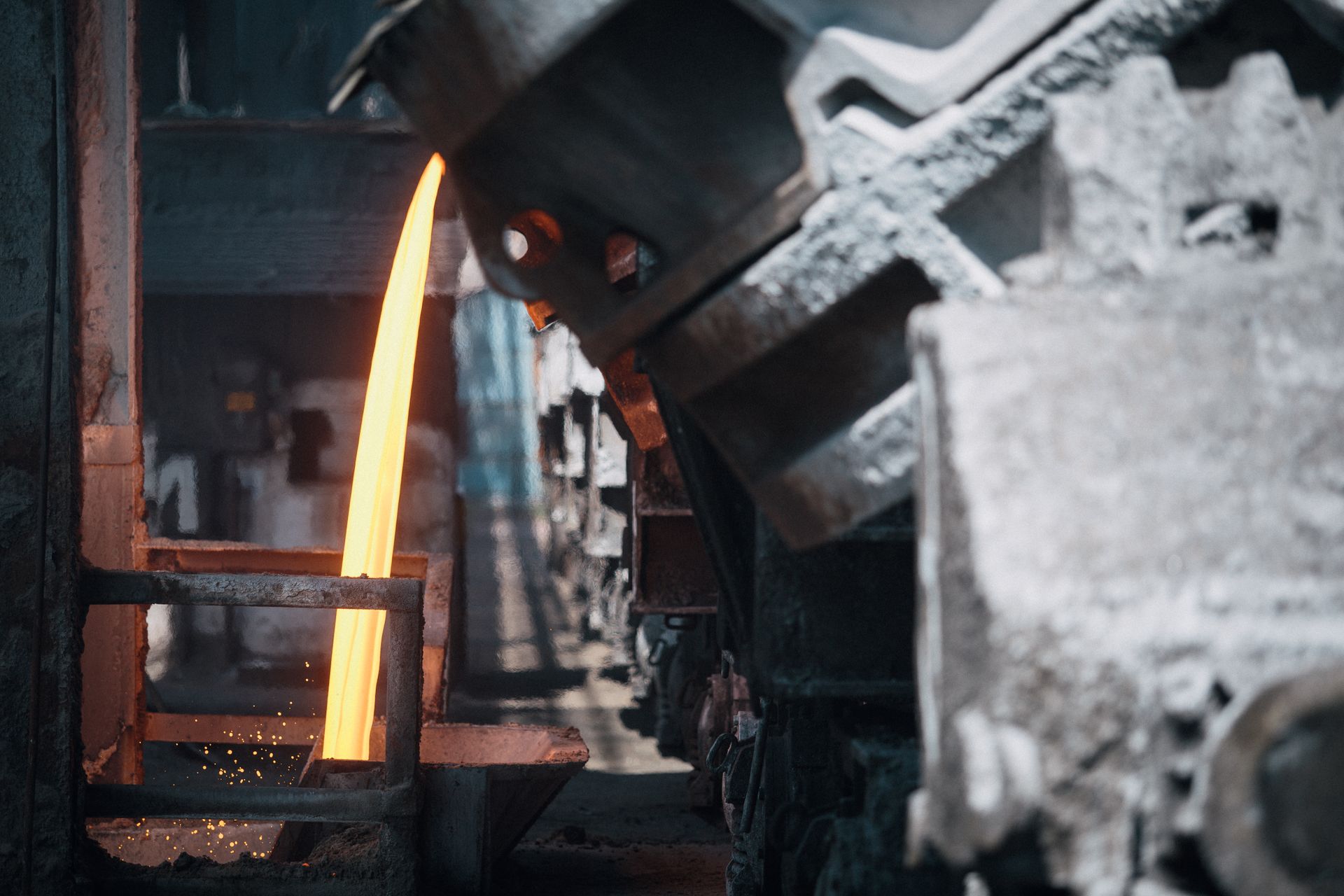
In 2023, China Baowu Steel Group produced roughly 131 million metric tons of crude steel — more than the entire annual output of the United States, Japan, and Germany combined. That single number encapsulates a profound shift in global industrial competition: a state-backed enterprise headquartered in Shanghai has, in less than a decade, reshaped pricing dynamics, trade policy debates, and supply chain strategies for manufacturers on every continent.
For US companies sourcing steel inputs, for international infrastructure developers, and for trade policy professionals navigating antidumping proceedings, the Baowu story is essential reading.
From Merger to Dominance: The Consolidation Playbook
China Baowu did not emerge organically as a giant. It was engineered. The entity’s modern form took shape in 2016 when the Chinese government orchestrated the merger of Baosteel Group and Wuhan Iron and Steel Corporation (WISCO). The logic was explicit: chronic overcapacity, fragmented ownership, and thin margins had rendered the sector vulnerable. A single dominant national champion could manage output, absorb debts, and negotiate with foreign partners from a position of scale.
The merger produced a company with annual revenue approaching $60 billion USD and a workforce exceeding 230,000. Consolidation continued: Baowu absorbed Magang Group in 2019, Taiyuan Iron and Steel in 2020, and Xinjiang Bayi Iron and Steel in 2021. By 2022, it had surpassed ArcelorMittal as the world’s largest steelmaker by volume. Its portfolio now spans hot-rolled coil, cold-rolled products, electrical steel, high-strength automotive steel, and specialty alloys for aerospace.
China’s State-owned Assets Supervision and Administration Commission (SASAC) directed this consolidation — a model that is neither market-driven nor accidental. The result is a company combining sovereign balance-sheet strength with commercial operational ambition.
Overcapacity and Its Global Trade Consequences
China produces roughly half of global crude steel — approximately 1 billion metric tons per year. Domestic consumption absorbs most of it, but the gap between capacity and demand periodically generates enormous export surges. In 2015 and 2016, those surges triggered antidumping and countervailing duty measures in the US, the EU, and more than a dozen other jurisdictions.
The US Department of Commerce has maintained tariffs on Chinese steel under Section 232 and specific antidumping orders. As of 2026, most Chinese cold-rolled steel faces combined duties exceeding 500%. Direct Chinese steel exports to the United States are effectively blocked by this tariff architecture.
What Baowu’s scale does affect, however, is global benchmark pricing. When Baowu ramps production — as it did in 2020 to fuel China’s infrastructure-led recovery — spot prices for hot-rolled coil compress across Southeast Asia, the Middle East, and Latin America. US manufacturers sourcing from these regions feel the secondary effects even without direct Chinese supply. The price signal radiates globally, touching every fabricator and construction company that buys structural steel.
Moving Up the Value Chain
A persistent misconception is that Chinese steel production means commodity-grade rebar. Baowu has invested heavily to disprove this. Its Baoshan complex in Shanghai is historically the most technologically advanced integrated steelmaker in Asia, producing high-specification electrical steel for EV motors and transformers, as well as advanced high-strength steel (AHSS) for automotive body structures.
Baowu’s electrical steel division deserves particular attention. The EV transition has created surging demand for non-oriented and grain-oriented electrical steel used in motor cores and transformer laminations. Baowu is positioned as the world’s largest single supplier of these products. Tesla’s Shanghai Gigafactory sources silicon steel from Baowu. So does a network of European and Japanese automakers with China production operations. This is no longer a rebar story — it is an advanced materials story with direct implications for global EV supply chains.
The company has also invested in hydrogen direct reduced iron (DRI) pilot programs with Rio Tinto, targeting carbon-neutral production pathways aligned with China’s 2060 neutrality commitment. Whether this materializes at commercial scale by 2030 will shape Baowu’s position in markets that will increasingly price embedded carbon.
The International Footprint
Baowu’s global strategy extends well beyond export volumes. The company holds equity in iron ore mining assets, including joint ventures with Vale in Brazil covering both ore extraction and downstream steel processing. It has established processing facilities in Southeast Asia and Europe, enabling it to serve customers with finished product while sidestepping some import duty structures. In Indonesia, Baowu is involved in integrated steel projects through Belt and Road-linked financing.
These offshore investments represent a qualitative shift: Baowu is no longer just a domestic producer that exports. It is becoming a vertically integrated global enterprise. Western contractors competing for infrastructure projects in Africa, Southeast Asia, or Latin America will increasingly encounter Baowu-affiliated supply chains in procurement packages — and need to evaluate them on quality and logistics rather than assumption. For essential background, the guide to Made in China 2025 and industrial upgrading strategy explains why Baowu’s technology ambitions are strategically credible.
What US Businesses Should Do With This
Sourcing strategy: US manufacturers using steel inputs need to monitor Baowu’s output decisions as a global price benchmark, even when sourcing from Mexico, South Korea, or India. Chinese production economics influence third-country supplier pricing in ways that are often invisible until a contract renewal.
Trade compliance: US Customs and Border Protection (CBP) actively monitors “circumvention” — routing Chinese steel through third-country processors to evade duties. Companies sourcing from Vietnam, Malaysia, or other Asian hubs must trace steel origin carefully. CBP’s Enforce and Protect Act (EAPA) investigations have exposed importers to retroactive duty liability running to millions of dollars. The China policy bank financing model is directly linked to the supply chain structures that create this compliance exposure.
Collaboration opportunities: For companies operating in China — through joint ventures, WFOE structures, or procurement — Baowu’s advanced product portfolio is a legitimate sourcing option. Its electrical steel is globally competitive on price and quality. American automakers with Chinese manufacturing already buy from Baowu. The China Free Trade Zone network simplifies import logistics for foreign-invested manufacturers procuring from domestic suppliers.
The Carbon Border Problem
Steel production accounts for 7-9% of global CO2 emissions. The EU’s Carbon Border Adjustment Mechanism (CBAM), entering full implementation in 2026, imposes a carbon cost on steel imports that do not meet EU emissions standards. This creates structural pressure on Chinese steel exports to Europe — and Baowu is investing in low-carbon technology partly to preserve access to high-value European markets.
The US is actively debating its own carbon border adjustment mechanism. If enacted, it would add a new layer of competitive pressure on Chinese producers that cannot easily be resolved through dumping allegations or currency policy — it targets the underlying production process. How Baowu responds will be a leading indicator of China’s seriousness about decarbonizing heavy industry.
The US International Trade Administration maintains steel trade policy resources, antidumping order databases, and market condition analyses at trade.gov/steel — the essential reference for any US business navigating this space. China Baowu’s own production data, strategic priorities, and ESG disclosures are published at the Baowu Group official portal.
A Company That Mirrors China’s Industrial Strategy
Baowu is a microcosm of how China builds competitive advantage: state-directed consolidation for scale, aggressive technology investment to move up the value chain, international expansion to secure resources and markets, and a long-term orientation that absorbs near-term losses for structural gain.
The instinct to dismiss Chinese state-owned enterprises as inefficient monopolies is increasingly wrong. Baowu competes effectively against ArcelorMittal, Nippon Steel, and POSCO in advanced product segments. Its supply chain touches mines in Brazil and Australia, processing in Europe and Southeast Asia, and customers on every continent.
Understanding Baowu means understanding both the competitive threat it poses and the commercial opportunities it creates — not as alternatives, but simultaneously. That dual perspective is exactly what effective US-China trade strategy requires. The GreatHandshake guide to Chinese SOE structure provides the foundational framework every trade professional should have before engaging any state-backed supplier or competitor.