
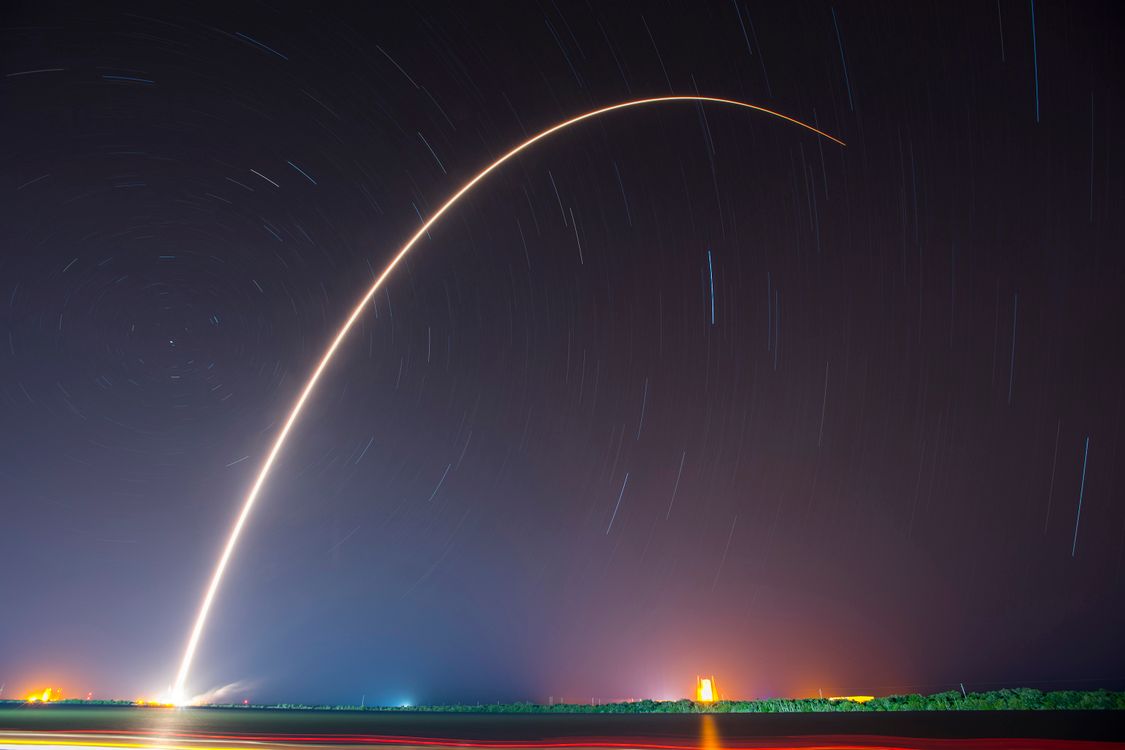
For most of the past six decades, space was a duopoly. The United States and the Soviet Union divided the cosmos between them. China watched, developed its own capabilities quietly, and then moved faster than almost anyone anticipated. Today, China operates the world’s only fully government-independent space station, has landed rovers on both the Moon and Mars, and has built a commercial launch sector beginning to compete with SpaceX on price. For business professionals working in US-China trade, advanced manufacturing, and dual-use technology, China’s space economy is no longer a curiosity. It is a trillion-dollar industrial ecosystem with direct supply chain implications across semiconductors, satellite communications, defense, and precision manufacturing.
Two Pillars: CASC and CASIC
China’s space industry is built on two state-owned giants. The China Aerospace Science and Technology Corporation (CASC) is the primary contractor for the Chinese government’s space program. It manufactures the Long March family of rockets, built the Tianhe core module of the Chinese Space Station (CSS), and executed the Chang’e lunar and Tianwen Mars missions. In 2023, CASC reported revenues exceeding 220 billion yuan ($30 billion USD) — comparable in scale to Northrop Grumman or BAE Systems.
The China Aerospace Science and Industry Corporation (CASIC) handles missiles, defense systems, and dual-use aerospace technologies. Together, CASC and CASIC employ more than 400,000 engineers and researchers across dozens of subsidiaries, sitting at the center of China’s civil-military fusion strategy. For foreign businesses, any partnership or supply relationship with Chinese aerospace-adjacent firms requires careful review under US Export Administration Regulations (EAR) and the International Traffic in Arms Regulations (ITAR). The lines between civil and military space technology in China are deliberately blurred — that integration is a stated policy goal.
The Commercial Space Sector: China’s Private Rocket Moment
Since 2015, when Beijing allowed private capital to enter the launch sector, more than 100 commercial space companies have been founded in China. The leading names include LandSpace, CAS Space, Galactic Energy, Deep Blue Aerospace, and Space Pioneer (Tianbing Technology). LandSpace made history in July 2023 when its Zhuque-2 rocket became the world’s first methane-fueled rocket to reach orbit — beating SpaceX’s Starship and Rocket Lab’s Neutron to that milestone. The rocket used a reusable architecture inspired by SpaceX’s Falcon 9 design philosophy, reflecting how openly China’s commercial space sector benchmarks against Western competitors.
These companies are building vertically integrated space infrastructure businesses: satellite manufacturing, ground station networks, Earth observation data analytics, and IoT connectivity constellations. The business models resemble Planet Labs or Spire Global, but with access to cheaper Chinese-manufactured components and significant government co-investment at the provincial level.
Satellite Internet: China’s Guowang Constellation
The largest single commercial space initiative in China is Guowang (国网), a state-backed satellite internet mega-constellation authorized to deploy up to 12,992 satellites in low Earth orbit. Operated by a subsidiary of state-owned China SatCom and backed by SASAC, the constellation directly mirrors Starlink’s architecture and business model. A second major LEO constellation project, SatNet (managed by a CASC subsidiary), has also been authorized. When combined, China’s planned satellite internet constellations represent a serious long-term challenge to Starlink’s dominance — not in Western markets, but across the Global South, Southeast Asia, and Africa, where both providers are competing for spectrum rights, ground infrastructure deals, and government contracts simultaneously.
The Chinese Space Station as Geopolitical Instrument
The Tiangong Space Station became fully operational in 2022. Unlike the International Space Station — which China was explicitly excluded from by US Congressional legislation in 2011 — Tiangong is open to international partners. As of 2025, seventeen countries have signed agreements with the China Manned Space Agency (CMSA) to conduct experiments aboard the CSS, including France, Germany, Italy, Pakistan, and several African and Latin American nations. China is using Tiangong as a diplomatic and commercial instrument: offering laboratory access while advancing research in microgravity manufacturing, pharmaceutical development, and materials science.
With the ISS scheduled for deorbit in 2030 and replacement commercial successors still under development, there is a window during which Chinese space infrastructure may be the only large orbital laboratory available to non-American researchers. US government restrictions currently prevent direct American participation, but the implications for global scientific collaboration are actively debated within NASA and the Department of Commerce.
Supply Chain Implications for Global Business
China’s space economy does not operate in isolation from its broader industrial base. Advanced carbon fiber composites — used in rocket fairings and satellite structures — flow from manufacturers who also supply China’s aviation and automotive sectors. Precision machining capabilities developed for aerospace feed directly into China’s machine tool industry, where companies like SMTG and DMTG now compete with German and Japanese manufacturers for global contracts.
Space-grade semiconductor components present the most sensitive supply chain question. US export controls on advanced semiconductor equipment have not stopped Chinese space missions — orbital systems currently operate on less cutting-edge chip nodes than consumer electronics. But demand for higher-performance space computing will narrow this gap. For companies involved in global electronics supply chains, China’s satellite manufacturing boom is a demand signal: Chinese satellite makers need radiation-hardened processors, optical sensors, high-voltage power systems, and thermal management materials. International component manufacturers not affected by ITAR restrictions have active sales pipelines into China’s commercial space sector.
Space as Industrial Policy: The Familiar Playbook
China’s approach to the space economy follows the same industrial policy logic that drove its dominance in solar panels, electric vehicles, and high-speed rail. The state identifies a strategic industry, provides coordinated subsidies, establishes domestic champions, and uses government procurement to build scale. The Made in China 2025 framework explicitly listed aerospace and aviation as priority sectors, and subsequent five-year plans have reinforced space as a pillar of China’s long-term industrial ambition.
The difference from previous technology sectors is dual-use sensitivity. When China dominated solar panels, the primary response was tariffs. When Chinese telecom companies entered 5G, the response was exclusion orders. Space is more complex because orbital infrastructure is beyond the territorial reach of any single government, and because commercial applications are genuinely civilian even when capabilities are inherently dual-use.
The US Department of Commerce’s Office of Space Commerce has published frameworks for thinking about this challenge. The consensus, reflected in the 2023 National Space Policy, is that the United States seeks to maintain leadership through innovation and international partnership rather than restriction alone. For business professionals, this means the regulatory environment around US-China space commerce will continue to evolve — and staying current with Bureau of Industry and Security (BIS) guidance is non-negotiable for any company with supply chain exposure.
China’s China National Space Administration (CNSA) has published its space program roadmap through 2050: a permanent crewed lunar base by 2035, a Mars sample return mission, and a space-based solar power demonstration satellite. Each program will require industrial supply chains of significant scale and global sourcing complexity.
What Business Leaders Should Watch
For executives in manufacturing, advanced materials, semiconductors, and data services, China’s space economy is a long-cycle demand signal with near-term contract opportunities. The key variables to monitor: the cadence of Chinese commercial satellite launches; the regulatory evolution of dual-use export controls under the BIS Entity List; and the progress of Guowang, which could reshape global satellite communications pricing within this decade.
Companies that have built internal supply chain resilience — including domestic alternatives in China’s semiconductor equipment sector — demonstrate the pattern China follows: build internal capability first, then compete externally. The space sector is following the same trajectory, approximately fifteen years behind where EVs are today. The transformation of Shenzhen from low-cost factory to global innovation hub offers a useful parallel: what begins as a cost-driven industrial cluster can, within a generation, become a globally competitive technology center. China’s space economy is making exactly that transition — and the business world is only beginning to reckon with what it means.