
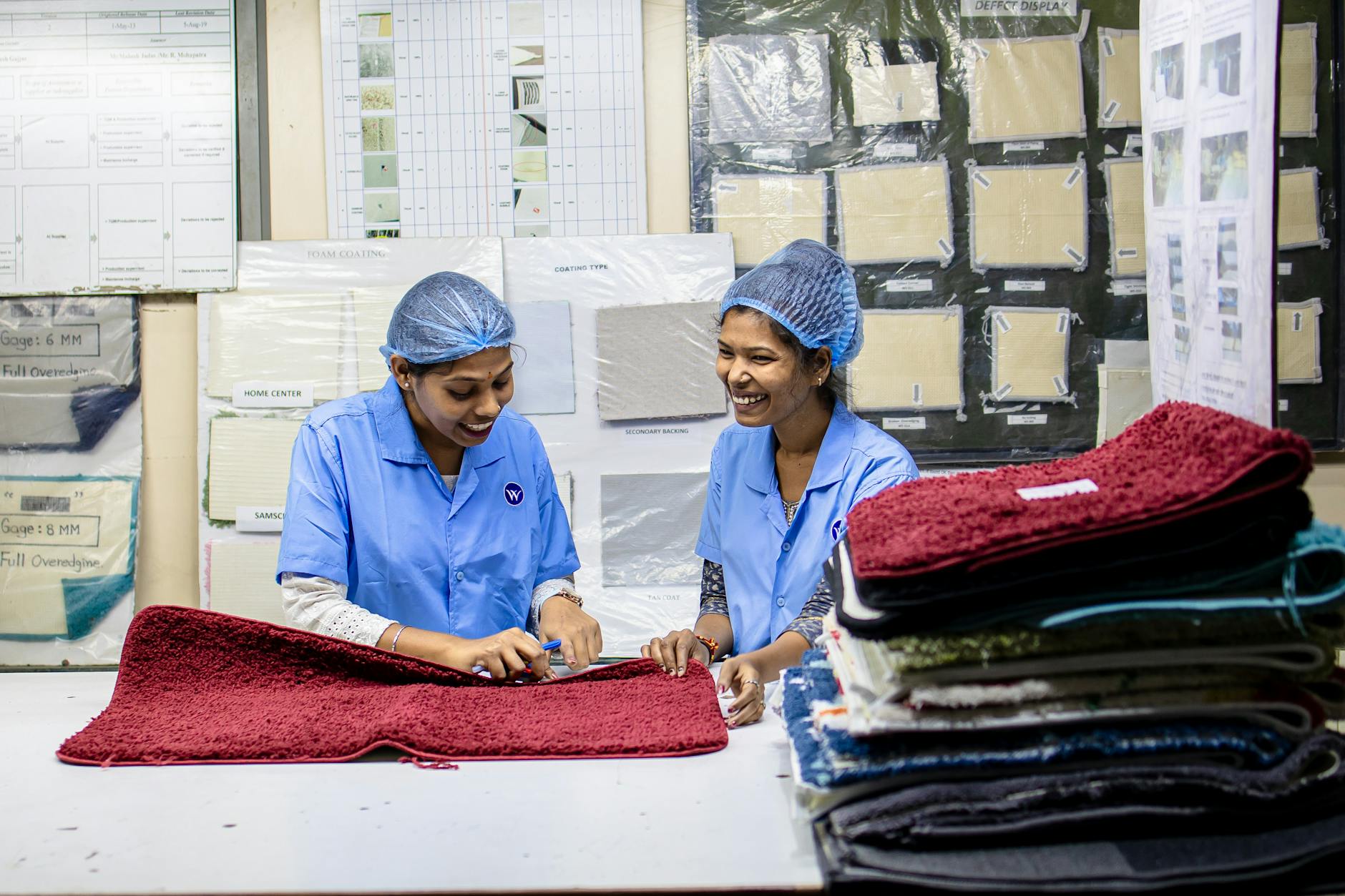
Quality control is the single most common point of failure for foreign companies sourcing from China. The factories exist, the prices are right, the samples look excellent — and then the first production run arrives with defects, substituted materials, or dimensions that do not match the approved spec. None of this is inevitable. It is the predictable result of skipping or shortcutting the quality management process. Foreign buyers who treat QC as a one-time inspection at the end of production pay for that choice repeatedly.
Why Quality Problems Happen in Chinese Manufacturing
Understanding why quality failures occur is the first step to preventing them. The most common root causes are not malice: they are misaligned incentives, communication gaps, and production pressure.
Chinese manufacturers operate on thin margins and competitive pricing. When costs rise mid-production — raw materials, labor, energy — the easiest lever is material substitution or process shortcuts. If a buyer has not specified materials precisely, or has not built in production monitoring, the factory has both the opportunity and the economic incentive to cut corners. This is not fraud in most cases: it is a factory solving a cost problem with tools it has available.
Communication gaps amplify the risk. A foreign buyer who communicates only by email, works through an intermediary, and visits the factory once a year is operating with limited visibility. The factory responds to whoever applies consistent pressure. If that is not the buyer, the buyer’s specifications lose priority.
Production pressure matters too. Chinese factories often run multiple clients simultaneously, and order sequencing shifts based on volume, relationship, and payment terms. A buyer who represents a small percentage of factory capacity has limited leverage when the factory needs to prioritize a larger order.
The Four Stages of Quality Control
1. Pre-Production: Supplier Qualification
Quality control starts before you place your first order. Supplier qualification means verifying that a factory has the capability, certification, and capacity to produce your product to your standard. This involves factory audits (either in person or by a third-party audit firm), review of relevant certifications (ISO 9001, industry-specific standards), examination of existing customer references, and production capacity assessment relative to your order volumes.
A factory that looks capable on paper may not have the equipment tolerances, quality management systems, or workforce stability to deliver consistently. Audit firms including Bureau Veritas, SGS, and TUV offer standardized factory audits that assess these factors systematically. For buyers sourcing significant volumes, a professional factory audit before the first order is mandatory, not optional. The cost of an audit is trivial compared to the cost of a failed production run.
2. Pre-Production: Specification and Sample Approval
A purchase order without a detailed product specification is an invitation to interpretation. Your product specification should document materials (with acceptable tolerances and grade specifications), dimensions (with tolerances), colors (Pantone references, not descriptions), surface finishes, testing requirements, labeling and packaging requirements, and any applicable regulatory compliance standards for your target market.
Sample approval is a separate step that should not be rushed. Initial samples, counter samples, and pre-production samples each serve a different purpose. The approved pre-production sample is the legal reference point against which production should be measured. Get a signed acknowledgment from the factory confirming the approved sample. Store physical samples at your facility and at the factory. This eliminates ambiguity when disputes arise.
3. During Production: In-Process Quality Checks
Waiting until production is complete to check quality is waiting too long. By that point, correcting a systemic defect requires reworking or scrapping finished goods, which is expensive and time-consuming. In-process inspection, either by an in-house quality representative or a third-party inspector, catches problems while they are still correctable.
In-process checks typically occur at two points: when the first production units come off the line (first article inspection), and at the midpoint of production when a statistically significant sample is available. The first article inspection is particularly valuable: if the first ten units are correct, the production setup is calibrated correctly. If they show defects, the issue can be resolved before hundreds or thousands of units are produced.
For buyers who cannot be present in China, third-party quality inspection services including QIMA (formerly AsiaInspection), Bureau Veritas, and Intertek offer on-site inspection at competitive rates. A single inspection typically costs $200 to $400 and takes one working day. Relative to the cost of a defective shipment, this is almost always the right investment. For broader context on how supply chain decisions interact with trade compliance, our guide on China’s free trade zones covers bonded logistics and customs implications for manufactured goods.
4. Pre-Shipment: Final Random Inspection
The pre-shipment inspection (PSI) is the most commonly used QC checkpoint. It occurs when at least 80% of production is complete and packed, and it involves randomly sampling finished goods against the approved specification. The standard sampling methodology is AQL (Acceptable Quality Limit), which specifies how many units to inspect from a given production batch and what defect rate constitutes a pass or fail.
AQL 2.5 is the standard threshold for most consumer goods: it means you are willing to accept up to 2.5% of critical defects in a shipment. AQL 1.0 is more stringent and appropriate for products with safety implications. Specify your AQL threshold in your purchase contract so there is no ambiguity about what constitutes a passing inspection result.
Common Quality Defects and How to Prevent Them
The defects that appear most frequently in Chinese manufacturing can be grouped into four categories:
Material substitution: The factory uses a lower-grade or cheaper material than specified. Prevention: specify materials precisely with grade designations, and conduct material testing as part of your inspection protocol. For textiles, specify fiber content and weave density. For plastics, specify resin grades and additives. For metals, specify alloy composition and hardness.
Dimensional variation: Finished goods do not match the approved dimensions. Prevention: specify tolerances explicitly in your spec, and measure critical dimensions during in-process and final inspection. Do not assume that a sample-accurate factory will maintain dimensional accuracy through a full production run without monitoring.
Surface and cosmetic defects: Scratches, color variation, print misalignment, uneven coatings. Prevention: classify defects as critical, major, or minor in your inspection criteria and specify acceptable limits for each. Provide the factory with a defect classification guide so inspectors and factory QC staff are applying the same standards.
Functional failures: The product does not perform as intended. Prevention: include functional testing requirements in your spec and have inspectors verify function on a sample of finished units. For products requiring regulatory compliance (electronics, toys, apparel), require factory testing reports and arrange independent laboratory testing of pre-shipment samples.
Working With Your Factory on Quality
The most effective quality programs treat QC as a collaborative process rather than an adversarial one. Factories that understand your quality standards, receive consistent feedback, and are recognized for good performance tend to deliver better quality over time. Factories that only hear from buyers when there are problems tend to become defensive rather than proactive.
Invest in the relationship. Regular visits, video calls with the production team, and clear communication about your expectations create a working environment where quality problems surface early rather than hiding until shipment. If your factory has its own QC staff, engage them directly: provide your inspection criteria, ask for their internal QC reports, and treat them as part of your quality chain rather than a factory bureaucracy to route around.
For entrepreneurs building product businesses that source from China, understanding the full operational picture from supplier selection through logistics is the foundation of a defensible business. Hustlers Library covers the sourcing, operations, and financial side of building product-based businesses across borders.
Building a QC System That Scales
As your China sourcing volume grows, ad-hoc inspection approaches become unsustainable. A scalable QC system has a few key components: a product specification library that is current and accessible to all factories, standardized inspection checklists for each product category, a third-party inspection service on retainer with established protocols, and a defect tracking system that captures root causes rather than just defect counts.
The data from your inspections, over time, will tell you which factories produce consistently and which require intensive monitoring. Use that data to make sourcing decisions: concentrating volume with your best-performing suppliers is both a quality strategy and a negotiating position. For context on how supplier relationships interact with broader supply chain resilience, our guide on cross-border payments between China and the West covers the financial side of managing Chinese supplier relationships at scale.
Quality control in Chinese manufacturing is entirely manageable for foreign buyers who treat it systematically. The process is not complicated: specify precisely, inspect consistently, communicate clearly, and track results. Companies that build this into their sourcing process from day one spend less time dealing with defect crises and more time scaling a supply chain that actually works.