
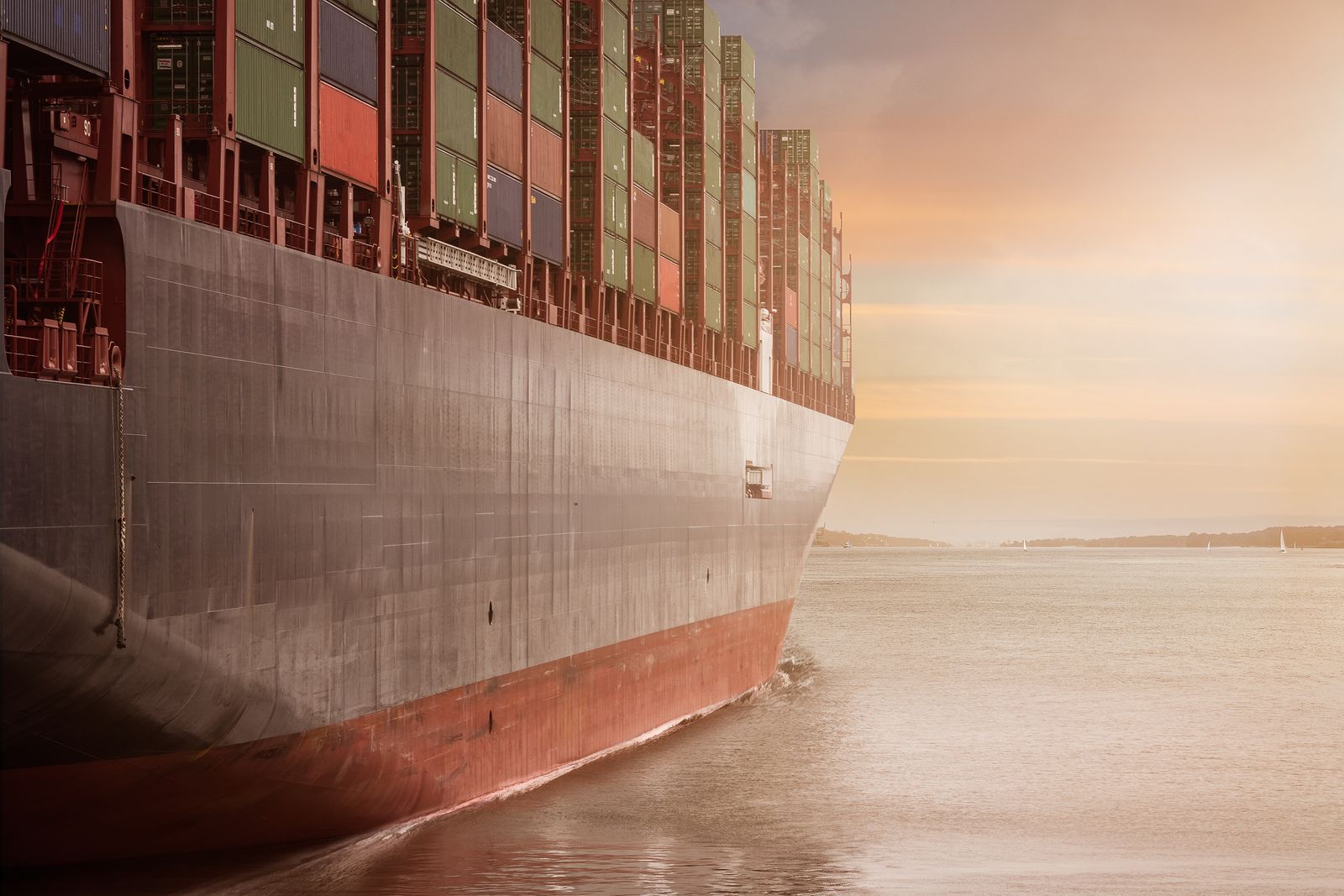
Every time a package shipped by a Chinese factory arrives at a doorstep in Ohio, Frankfurt, or São Paulo within five days, a staggering amount of infrastructure has done invisible work. Behind that seamless delivery sits a logistics ecosystem that China has spent two decades constructing and scaling into something the world has never seen before. The architects of that system are not household names in the West, but they are reshaping the economics of global trade as fundamentally as container shipping did in the 1960s.
This post examines how Cainiao Network, JD Logistics, and SF International have together transformed Chinese cross-border fulfillment from a slow, fragmented pain point into a competitive weapon that increasingly sets the pace for the entire global e-commerce industry.
The Problem China Solved
In 2012, China’s cross-border e-commerce was already generating tens of billions of dollars in gross merchandise value, but logistics was the chokepoint threatening to strangle growth. Packages took four to six weeks to reach US consumers. Customs clearance was opaque. International couriers like FedEx and DHL charged premiums that made sub-$20 consumer goods economically unviable to ship profitably.
The insight that drove China’s response was straightforward: if Chinese manufacturers were going to sell directly to global consumers at scale, they had to build their own fulfillment infrastructure. They could not outsource that competitive advantage to Western carriers. What followed was a state-backed, private-sector-executed buildout that rivals the US Interstate Highway System in strategic ambition.
Cainiao Network: Alibaba’s Logistics Intelligence Layer
Cainiao Smart Logistics Network (菜鸟智慧物流), founded in 2013 and majority-controlled by Alibaba Group, was never intended to be a courier company. Its founders designed it as a data platform sitting above China’s existing carriers, creating a unified logistics OS that could route, track, and optimize shipments across dozens of partners without Alibaba needing to own trucks or planes.
By 2026, Cainiao operates 16 overseas warehouses at strategic hubs including Liege Airport in Belgium, Los Angeles, Dubai, and Kuala Lumpur. Its eHub program, developed with airport authorities, has built dedicated air cargo facilities processing roughly 400,000 parcels per day at peak volumes using automated sorting systems that classify each parcel by destination country and customs zone in under three seconds. Cainiao’s revenue reached approximately RMB 78 billion (roughly $11 billion) in fiscal year 2024. Its operational infrastructure is now firmly embedded in global e-commerce supply chains regardless of its ultimate ownership structure.
JD Logistics: The Asset-Heavy Counter-Model
If Cainiao is the intelligence layer, JD Logistics (京东物流) is the industrial machine. Founded as the internal logistics arm of JD.com, it listed on the Hong Kong Stock Exchange in May 2021, raising approximately HK$24 billion ($3.1 billion). JD’s approach has always been asset-intensive: it owns its warehouses, operates its own fleet of last-mile couriers, and has built automated fulfillment facilities where robotic picking systems keep SKU misplacement rates below 0.001 percent.
For cross-border commerce, JD Logistics operates bonded warehouse facilities inside China’s cross-border e-commerce pilot zones across Hangzhou, Shanghai, and Shenzhen. In 2025, JD Logistics reported international revenue of approximately RMB 13.8 billion — roughly 14 percent of total revenue — growing at about 20 percent year on year as third-party merchants adopt its international fulfillment services. Its partnerships with Indonesian J-Express and minority stake in Dutch logistics firm Picnic signal a strategy of building geographic footholds complementing Alibaba’s air hub model.
SF International: The Premium Express Player
SF Express (顺丰速运), founded by Wang Wei in 1993, built its reputation on premium domestic express delivery. Its international ambition has accelerated sharply. SF International now operates direct flight routes to over 60 international destinations with a dedicated cargo fleet of more than 80 aircraft, making it the largest private cargo airline fleet in Chinese aviation. Its acquisition of DHL’s domestic China operations in 2021 for approximately $1.5 billion provided not just 175 Chinese cities coverage but operational exposure to DHL’s international integration expertise.
For US and European businesses sourcing from China, SF International delivers to major US cities in three to five business days at prices typically 15 to 25 percent below DHL Express and FedEx International Priority. The specialist mid-tier carriers Yanwen, 4PX, and Yun Express fill the gap for lighter, lower-value parcel flows that neither SF nor JD prioritize.
The Ecosystem Effect
What makes China’s logistics infrastructure genuinely formidable is ecosystem-level coordination. Cainiao routes Alibaba International Digital Commerce merchant shipments across a network of carrier partners including SF, ZTO Express, YTO Express, and over 3,000 regional couriers. China’s bonded warehouse zones provide the shared physical foundation for cross-border clearance efficiency that all three systems rely upon.
The result is a layered system where a Chinese seller has more fulfillment options, faster transit times, and lower costs than almost any comparable seller in the United States or Europe. That asymmetry is one of the structural advantages that enabled Shein, Temu, and AliExpress to offer landed costs that Western brands consistently struggle to match.
What US Trade Data Reveals
The scale of this infrastructure is visible in official US data. According to the US Census Bureau’s bilateral trade statistics, the United States imported approximately $427 billion in goods from China in 2023. US Customs and Border Protection processed an estimated 1 billion de minimis shipments (parcels under $800) in fiscal year 2023, attributed primarily to Chinese e-commerce growth.
The proposed de minimis reforms from the US Trade Representative would impose origin-based restrictions on goods from China. For logistics planners, the takeaway is clear: strategies built around current de minimis access carry regulatory risk that must be factored into medium-term supply chain planning. COSCO Shipping’s maritime dominance, covered in our analysis of China’s global maritime trade infrastructure, completes the ocean freight layer beneath all of this.
Strategic Implications for US and Western Businesses
For procurement officers and e-commerce operators, China’s logistics evolution creates both competitive pressure and partnership opportunity. The competitive pressure: if you are a mid-market consumer goods brand, your Chinese-fulfilled competitors can reach your customers faster and cheaper than a domestic 3PL can fulfill the same product. That is not temporary — it is a structural feature of where logistics investment has been concentrated for a decade.
The partnership opportunity is less obvious but real. JD Logistics and Cainiao now actively seek Western brand clients wanting to leverage their Chinese fulfillment infrastructure for Asia market entry. A US brand selling to Chinese consumers through JD.com can use bonded warehouse inventory in a Shanghai free trade zone, clearing customs only when orders are placed — eliminating bulk import risk while achieving domestic China delivery speeds.
For trade professionals working the US-China corridor, three action items stand out. First, benchmark your logistics cost structure against Cainiao and JD International pricing before committing to legacy carrier contracts for China-origin volume; the per-unit cost spread for sub-2kg parcels has widened materially since 2022. Second, model landed cost scenarios for your product categories if de minimis access is restricted or removed. Third, engage JD Logistics or Cainiao merchant onboarding teams directly if entering China — the first-party fulfillment data and delivery performance visibility these platforms provide is a competitive asset that generic freight forwarders cannot replicate.
China’s cross-border logistics revolution is ongoing. The companies building it continue to invest, expand, and drive down the cost and time of moving goods between China and the rest of the world. For any business whose supply chain touches China, understanding these systems is no longer optional background knowledge. It is core operational intelligence.