
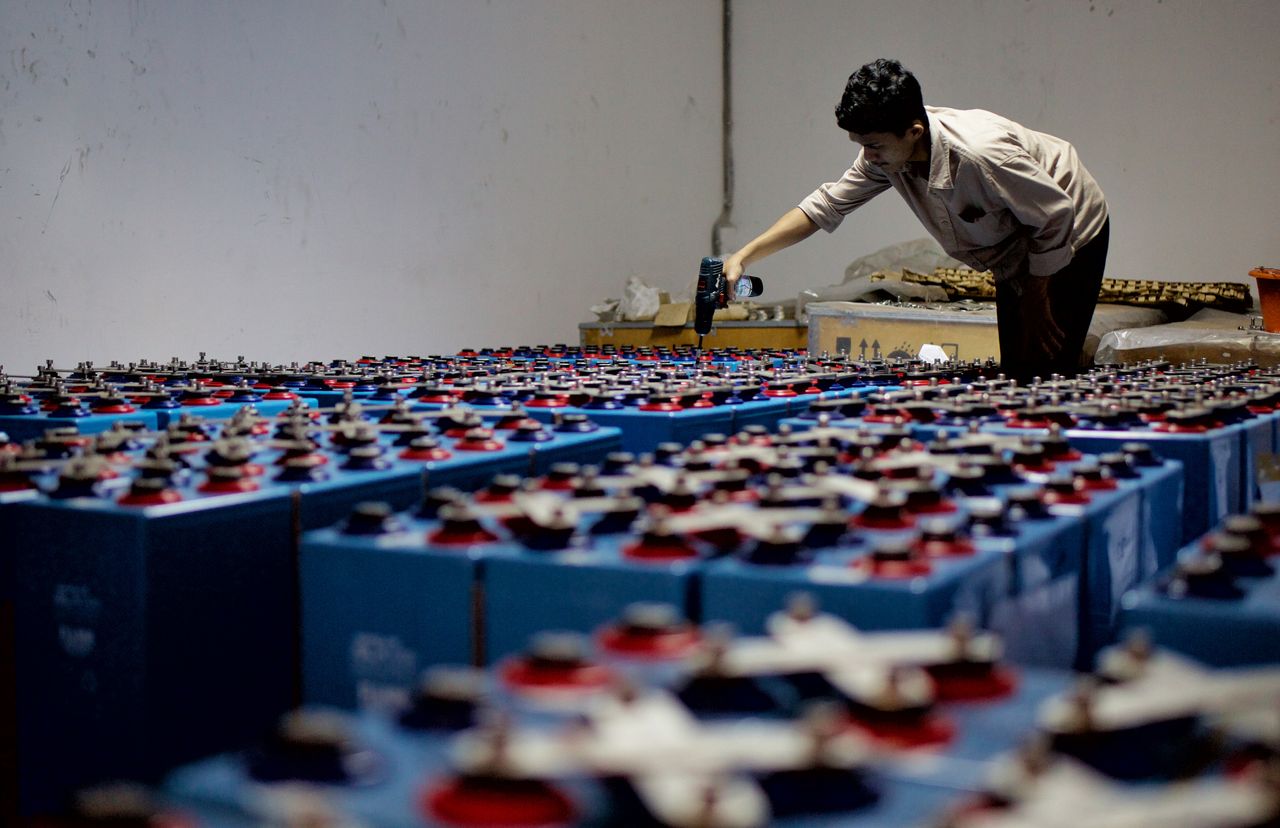
In 2011, a professor from Fujian turned down a role at the Chinese Academy of Sciences to run a small battery company in Ningde, a coastal city in southeastern China that most global investors had never heard of. Thirteen years later, Contemporary Amperex Technology Co. Limited – known as CATL – had become the world’s largest manufacturer of electric vehicle batteries, supplying Tesla, BMW, Volkswagen, Ford, Hyundai, and dozens of global automakers. In 2023, CATL reported revenues of approximately 400 billion yuan ($55 billion USD) and held a global market share exceeding 36 percent, per SNE Research. That trajectory – from regional startup to industrial superpower in a single decade – is one of the most consequential business stories of the 21st century.
For foreign executives sourcing batteries or entering the EV supply chain, CATL is not optional reading. It is the foundation.
The ATL Foundation: Where CATL Came From
CATL did not emerge from nothing. Its roots lie in Amperex Technology Limited (ATL), a Hong Kong-based battery company founded in 1999 by Robin Zeng Yuqun, along with co-founders Liang Shaokang and Pei Zhenhua. ATL initially focused on lithium polymer batteries for consumer electronics – Nokia, Apple, and other mobile device makers were early customers. In 2011, ATL’s parent company, Japan’s TDK Corporation, agreed to spin off ATL’s automotive battery division. Zeng took that division and incorporated it as CATL in Ningde, backed by Chinese government support and a manufacturing base purpose-built for scale.
The timing was deliberate. China’s central government had identified new energy vehicles (NEVs) as a strategic priority in its 12th Five-Year Plan (2011–2015), with subsidies and purchase incentives designed to drive domestic adoption. CATL positioned itself from day one as the supplier to that government-backed industry – a relationship that would prove enormously valuable as Chinese NEV sales exploded from fewer than 10,000 vehicles in 2011 to over 9.5 million in 2023.
The Technology Strategy: LFP vs. NMC and Why It Mattered
CATL’s rise was not purely a story of government subsidy. The company made a series of technically ambitious bets that paid off at industrial scale.
Early in its development, CATL invested heavily in two distinct battery chemistries: lithium iron phosphate (LFP) and nickel manganese cobalt (NMC). Where many Western battery developers concentrated on NMC for its high energy density, CATL recognized that LFP – while less energy-dense – offered significant advantages in cost, safety, cycle life, and thermal stability. This insight drove the development of its “cell-to-pack” (CTP) technology, introduced in 2019, which eliminated traditional battery module structures and packed cells directly into the pack casing. The result was a 50 percent increase in volumetric energy density, meaningful reductions in manufacturing complexity, and substantial cost savings per kilowatt-hour.
By 2022, CATL’s LFP batteries were powering the standard-range versions of Tesla’s Model 3 and Model Y globally – a striking endorsement from the company that had helped put CATL on the map in the first place. Tesla had begun sourcing from CATL in 2019 for its Shanghai Gigafactory, a relationship that forced Western competitors to take Chinese battery technology seriously.
CATL followed with its “Kirin Battery” (third-generation CTP) in 2022, delivering 255 Wh/kg and supporting 1,000-kilometer driving ranges. In 2023, the company announced its “Condensed Battery” targeting 500 Wh/kg – a density that would make electrification viable for passenger aircraft.
Global Customer Relationships: How CATL Won the World’s Automakers
CATL’s approach to winning international customers combined technical credibility with strategic patience – embedding itself into automaker supply chains through joint development agreements, co-investment in manufacturing, and local production commitments.
BMW was among the earliest and most significant Western partnerships. CATL began supplying BMW in 2017 and signed a €7.3 billion supply contract in 2019 – at the time one of the largest battery agreements ever announced. Volkswagen Group, Stellantis, Ford, Hyundai, and Honda followed. By 2023, CATL held supply relationships with virtually every major global automaker.
CATL moved aggressively into overseas manufacturing to address supply chain proximity concerns. Its Erfurt, Germany plant began production in 2023 with an initial 14 GWh capacity, with plans to expand to 100 GWh. A second European facility opened in Debrecen, Hungary in 2024. In North America, CATL licensed its technology to Ford’s battery plant in Marshall, Michigan – a structure designed to qualify for Inflation Reduction Act (IRA) incentives while keeping CATL’s intellectual property in Chinese hands. That arrangement drew scrutiny from the US Congress and fueled debate about IRA domestic content requirements.
The Competitive Landscape CATL Shaped
CATL’s dominance has forced a global restructuring of the battery industry. Its closest competitors – South Korea’s LG Energy Solution (approximately 14 percent market share in 2023), Panasonic, Samsung SDI, and SK On – have struggled to match CATL’s scale, vertical integration, and cost structure.
China’s second-largest domestic battery maker, BYD, is also a direct competitor. BYD’s “Blade Battery” LFP technology competes directly with CATL’s CTP platform. As covered in our earlier analysis of BYD’s global expansion strategy, BYD has vertically integrated from battery chemistry through final vehicle assembly – a model that gives it cost advantages CATL, as a pure component supplier, cannot fully replicate. The two companies compete intensely for domestic Chinese OEM contracts and, increasingly, for overseas supply deals.
CATL has responded by deepening vertical integration. The company controls stakes in lithium mining in Zimbabwe, the DRC, Chile, and China’s Jiangxi province – addressing the raw material bottleneck that China’s lithium supply chain makes available to domestic manufacturers. CATL also operates recycling joint ventures through Brunp Recycling Technology, processing spent batteries back into usable cathode materials.
Regulatory Headwinds: US Export Controls and the FEOC Question
CATL’s global ambitions have run directly into the US government’s evolving policy on Chinese technology in strategic supply chains. The US Inflation Reduction Act introduced the concept of “Foreign Entity of Concern” (FEOC) restrictions, which – as finalized by the US Department of Energy in 2024 – prohibit EV tax credits for vehicles using battery components manufactured or assembled by FEOC-designated companies. CATL, along with BYD, SVOLT, and several other Chinese manufacturers, is widely expected to face FEOC designation, which would significantly limit its ability to supply US-market vehicles directly.
The Ford Michigan partnership – structured as a licensing deal rather than equity investment – was explicitly designed to navigate this regulatory environment. Whether that structure ultimately satisfies FEOC requirements remains an active legal and policy question as of 2026. For foreign companies working in the EV supply chain, CATL’s navigation of this environment is a master class in regulatory arbitrage: maintaining access to the world’s largest EV market while structuring relationships to minimize political exposure.
The US-China dynamic in battery technology is also reshaping procurement strategies for Western automakers. Companies with existing CATL supply agreements must now model scenarios involving tariff escalation, FEOC restrictions, and potential export control actions – a risk management exercise that has become standard practice in the automotive and energy storage sectors. Our analysis of China’s automotive supply chain covers the broader implications for foreign parts manufacturers operating in this environment.
What CATL’s Rise Means for Foreign Businesses
For procurement executives, CATL is simply unavoidable in the battery supply chain. With over 13 production bases globally and installed capacity exceeding 600 GWh as of late 2024, any large-scale energy storage or EV program will interact with CATL’s technology, materials, or manufacturing ecosystem.
For investors and strategic planners, CATL’s trajectory illustrates durable principles about Chinese industrial development: government-aligned market positioning, technology licensing to penetrate regulated markets, and manufacturing scale investment ahead of profitability.
For trade policy analysts, CATL’s story sits at the center of the most consequential industrial competition of the coming decade. Battery gigafactories take four to six years and billions of dollars to build. CATL’s lead in installed capacity, qualified customer relationships, and materials sourcing cannot be erased in a single policy cycle.
Understanding CATL is not just about understanding one company. It is about understanding how China builds dominant industrial positions in sectors it identifies as strategically essential – a pattern also visible in advanced materials, semiconductors, and clean energy manufacturing. CATL’s Ningde headquarters – a sprawling industrial campus in a city whose name is embedded in its corporate identity – is as good a place as any to understand what modern Chinese industrial policy looks like when it works. For trade policy context, the U.S. Trade Representative’s clean energy trade policy resources detail the measures shaping American competitiveness in battery manufacturing — directly relevant to any company tracking the policy environment around CATL’s global expansion.