
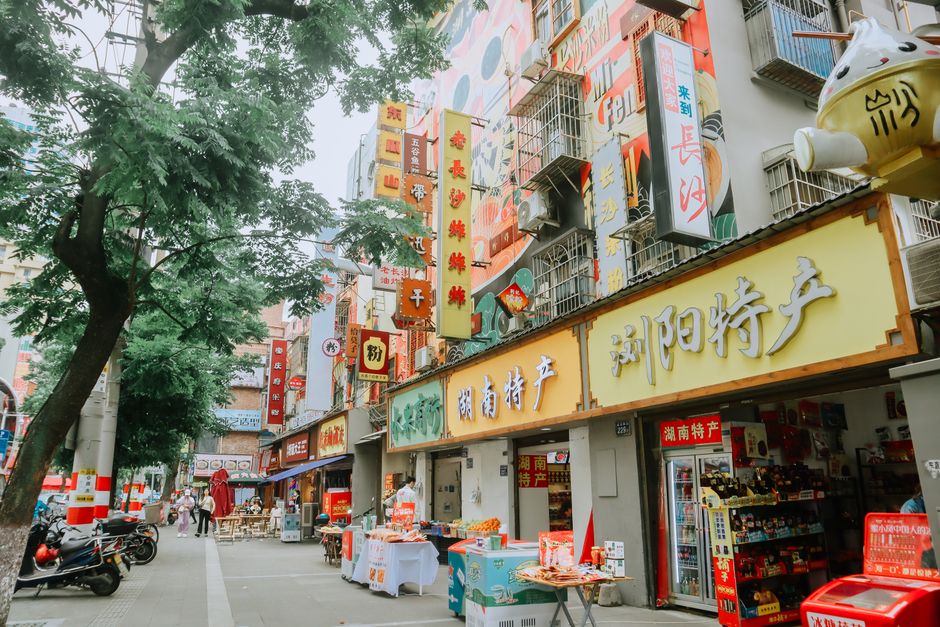
China remains one of the most consequential market opportunities in the world — and one of the most demanding. With a middle class of over 400 million consumers, a manufacturing ecosystem unlike any other, and a digital infrastructure that has leapfrogged the West in several respects, the case for entering China is easy to make. The case for executing it well is far harder.
Western companies that approach China as a market extension — assuming the same playbook that worked in Germany or Australia will translate — consistently underperform. Those that treat China as a distinct business environment requiring dedicated strategy, local relationships, and genuine adaptation tend to build durable positions. This guide is for the latter group.
What follows is a practical, eight-step framework for Western companies planning to enter the Chinese market. It covers the full lifecycle: from initial research and entry mode selection, through legal setup, hiring, localization, and digital marketing, to the ongoing compliance requirements that determine whether you stay. Timelines and budget estimates are included at the end.
Before you begin, two foundational reads worth bookmarking: The Complete Guide to Doing Business in China (2026) for the broader landscape, and How Western Brands Have Failed in China and What to Learn From It for the pattern of mistakes this guide is designed to help you avoid.
Step 1 — Market Research and Validation
Do not assume demand. The first job is to validate it — specifically in China, not by extrapolating from global trends.
Demand Signals
Start with Chinese-language platforms, not English ones. Baidu Index (index.baidu.com) functions like Google Trends for China and shows search volume, regional distribution, and seasonal patterns for any keyword. Taobao and JD.com bestseller lists reveal what price points and product configurations are actually selling. Xiaohongshu (Little Red Book) is the place to assess lifestyle and aspirational demand — if your category is being discussed by KOLs (key opinion leaders) there, consumer appetite exists.
For B2B plays, the China Council for the Promotion of International Trade (CCPIT) publishes industry reports, and the National Bureau of Statistics (NBS) releases annual sector data. Global trade databases like Panjiva can show you what Chinese importers are already buying in your category.
Competitor Mapping
Identify who already owns your segment. Use Tianyancha or Qichacha (Chinese corporate registry databases) to look up local competitors, their registered capital, shareholder structures, and patent filings. Check whether international competitors have established WFOE entities or are operating through distributors — their setup tells you something about the regulatory and competitive difficulty of the sector.
Regulatory Feasibility
China’s Ministry of Commerce (MOFCOM) publishes the Foreign Investment Access Negative List, updated annually. This document specifies sectors where foreign investment is restricted or prohibited. Check it first. For food, cosmetics, medical devices, and pharmaceuticals, sector-specific approvals from the National Medical Products Administration (NMPA) or the Ministry of Agriculture and Rural Affairs (MARA) may be required before a single unit can be sold.
Step 2 — Choose Your Entry Mode
Entry mode is not a formality — it determines your cost structure, your operational flexibility, and your exposure to partner risk. The four primary options for Western companies are:
WFOE (Wholly Foreign-Owned Enterprise)
A WFOE is a limited liability company 100% owned by the foreign parent. It can hire staff directly, sign contracts, invoice in RMB, and repatriate profits. It requires registered capital (amount varies by industry and province, typically USD 15,000–100,000 for trading/service companies, more for manufacturing), a registered address, and approval from the State Administration for Market Regulation (SAMR). Setup takes 3–6 months. A WFOE is the right structure if you want full control, intend to operate long-term, and have the budget for setup and ongoing compliance.
Joint Venture (JV)
A JV pairs the foreign company with a Chinese partner, sharing equity, management, and risk. JVs are required in certain restricted sectors (auto manufacturing, media, certain financial services). Outside of those mandated cases, JVs are increasingly rare — the loss of operational control and the complexity of managing two-party governance rarely justify the benefits. If considering a JV, focus significant due diligence on the partner’s government relationships, existing distribution network, and the exit clause mechanics.
Distributor / Representative Office
A Representative Office (RO) cannot sign contracts, generate revenue, or directly employ Chinese staff — it functions as a liaison and market intelligence operation. For companies not yet ready to commit to a WFOE, an RO buys time. A distributor arrangement (appointing an existing Chinese company to import and sell on your behalf) is faster and cheaper, but you cede pricing control, brand positioning, and customer relationships. Many companies use a distributor as Phase 1, with a WFOE conversion built into the plan.
Cross-Border E-Commerce First
For consumer goods, a cross-border e-commerce entry via Tmall Global, JD Worldwide, or Kaola (Netease) allows sales into China without establishing a local entity. Products ship from bonded warehouses under CBEC (cross-border e-commerce) customs regulations, which carry lower tariff rates and simplified product registration requirements in many categories. This approach is lower risk and faster to market, but limits your ability to sell offline, build local teams, or access some B2B channels. It is an excellent validation step before full entity setup.
Step 3 — Legal Registration and Licensing
Assuming you are setting up a WFOE (the most common full-entry structure), expect the following process:
Registration Steps
- Name pre-approval: Submit 3–5 proposed company names to SAMR. Chinese name required; pinyin transliteration of your brand is common but should be chosen carefully for tonal and semantic meaning.
- Business scope: Define your permitted activities. Business scope is legally binding — revenue from activities outside it can trigger penalties. Err toward broad language where regulators allow it.
- Registered address: Must be a physical address (not a virtual office in most municipalities). Some free trade zones (Shanghai FTZ, Hainan FTP) allow virtual addresses and offer streamlined approval.
- SAMR registration: Submit Articles of Association, shareholder certificates, registered capital commitments, and board resolution. Timeline: 2–4 weeks post-complete submission.
- Additional registrations: Tax bureau (VAT and corporate income tax), State Administration of Foreign Exchange (SAFE) for capital account, social insurance bureau, and bank account opening (allow 4–8 weeks for a corporate RMB account).
Costs
Government filing fees are modest (roughly RMB 500–2,000). The real cost is legal and consulting fees: a reputable bilingual law firm will charge USD 5,000–15,000 for a straightforward WFOE setup. Annual accounting and compliance runs USD 3,000–8,000 depending on transaction volume. Budget registered capital separately — it must be injected within the timeline specified in your Articles, though capital contribution schedules are flexible in most sectors.
For navigating the approval process in detail, see our deep-dive: How to Navigate China’s Regulatory Approval Process.
Step 4 — Build Your Local Team
Hiring in China
A WFOE can hire Chinese nationals directly under standard labor contracts governed by the Labor Contract Law of the People’s Republic of China (2008, amended 2012). Written contracts are mandatory within one month of employment commencement; failing to execute them triggers statutory double-pay liability. Fixed-term contracts are standard; open-ended contracts become legally required after two consecutive fixed-term contracts or 10 years of continuous service.
For senior hires, use specialized recruiters with China market experience — platforms like Liepin (猎聘) and 51job are the dominant local job boards. For executive search, firms like Michael Page China, Robert Walters, and Heidrick & Struggles have established China practices.
Mandatory Social Insurance
Employers must contribute to five statutory social insurance schemes plus the Housing Provident Fund (HPF): pension, medical, unemployment, work injury, and maternity. Combined employer contributions typically run 28–45% of base salary depending on the city. Shanghai, Beijing, and Shenzhen have the highest contribution rates. Factor this into your compensation modeling — the true cost of a RMB 30,000/month employee is substantially higher than the base salary.
Cultural Management Considerations
Direct criticism in group settings, Western-style “radical candor,” and flat decision-making structures create friction in Chinese workplace culture, where face (面子, miànzi) and hierarchy carry significant weight. Establish clear reporting lines, provide feedback privately, and invest in team-building rituals. Your China General Manager hire is the most consequential early decision — someone with deep local network relationships will move faster and encounter fewer obstacles than a technically superior candidate who lacks guanxi.
Step 5 — Localize Your Product and Brand
Translation and Linguistic Adaptation
Machine translation is not acceptable for market-facing materials. Hire native Mandarin copywriters, not translators. Product names, slogans, and brand taglines require cultural vetting — check tonal pronunciation (a name that sounds auspicious in English may sound like a misfortune in Mandarin), avoid numbers associated with bad luck (4 is widely considered unlucky; 8 is lucky), and test with target consumers before committing to packaging.
Product and Packaging Adaptation
Chinese consumers frequently prefer smaller pack sizes, premium packaging aesthetics, and “gifting-friendly” formats. For food and beverage, expect to adjust sweetness, spice levels, and portion sizes. Cosmetics and skincare must meet NMPA ingredient approval requirements — some Western formulations contain restricted substances and require reformulation. Apparel sizing runs smaller than Western standards.
Pricing for Chinese Consumers
The Chinese market is highly price-stratified. Premium foreign brands command price premiums in categories where “imported = quality” (infant formula, skincare, luxury goods, automotive). In categories where domestic brands have established quality perception (smartphones, home appliances, spirits), pricing at a significant premium to local competitors will not automatically succeed. Research where your category falls before setting your RMB price list.
Step 6 — Choose Your Sales and Distribution Channels
Online Channels
China’s e-commerce ecosystem is fragmented and category-specific. Tmall (Alibaba) dominates general merchandise and premium brands. JD.com leads in electronics, appliances, and health products, with a reputation for authentic goods that matters in these categories. Pinduoduo leads in price-sensitive segments. Douyin (TikTok’s Chinese version) has emerged as a dominant live-commerce and impulse-purchase channel. Xiaohongshu drives discovery and is critical for beauty, fashion, and lifestyle brands. Operating across multiple platforms simultaneously is common for scaling brands.
For a detailed breakdown, see: China’s E-Commerce Platforms Beyond Alibaba: JD, Pinduoduo, and Xiaohongshu.
Offline Channels
Offline retail remains significant for categories including grocery, pharmacy, luxury, and foodservice. Key Account (KA) retail relationships with RT-Mart, CR Vanguard, Hema Fresh (Alibaba’s new retail format), and Sam’s Club China require dedicated trade terms negotiation and in-store execution resources. Distributor networks are typically used to reach lower-tier cities (Tier 3–5) where direct sales infrastructure is cost-prohibitive.
B2B Channels
For industrial goods, SaaS, professional services, and raw materials, the B2B pathway runs through industry associations, Canton Fair (twice yearly in Guangzhou), and relationship-based procurement cycles. Government procurement is a separate channel with its own tender and registration requirements under the Government Procurement Law.
Step 7 — Digital Marketing in China
Western digital marketing experience does not transfer to China. Google, Facebook, Instagram, Twitter, and YouTube are blocked. The Chinese digital marketing stack is built around a different set of platforms with different mechanics.
Baidu SEO and SEM
Baidu controls roughly 60% of China’s search engine market. Organic Baidu SEO requires Chinese-language content hosted on a .cn domain (an ICP license is required — see Step 8), with Baidu Webmaster Tools verification. Baidu’s algorithm weights page load speed on Chinese servers heavily, which means hosting inside China or in Hong Kong. Baidu SEM (paid search) operates on a bid-per-click model similar to Google Ads but requires a Chinese business license to open an account.
WeChat is the operating system of Chinese business relationships. Every company needs a WeChat Official Account (subscription or service account), which requires a Chinese business entity registration. Service accounts allow CRM-style push messaging to followers (limited to 4 posts per month), mini-programs (lightweight apps within WeChat), and payment integration via WeChat Pay. WeChat is where B2B relationships are maintained and where B2C customer service is conducted.
Douyin (TikTok China) and Kuaishou
Short-video and live commerce have become dominant acquisition channels for consumer brands. Douyin’s algorithm-driven feed means that well-produced content can reach millions organically. Live-streaming commerce — where hosts demonstrate and sell products in real-time — generates enormous transaction volumes. Major brands run hundreds of live-streaming hours per month, staffed by dedicated in-house or agency teams.
KOL Partnerships
Key Opinion Leaders (KOLs) and Key Opinion Consumers (KOCs — micro-influencers) drive purchase decisions across virtually every consumer category. Platforms like Parklu (now Launchmetrics), PARKLU, and Nox Influencer provide KOL data and campaign management. For regulated categories (healthcare, cosmetics, food), SAMR has issued rules on advertising claims in KOL content that must be followed to avoid penalties.
For payment infrastructure that supports your digital commerce operations, see: China’s Cross-Border Payment Systems: A Practical Guide for Western Businesses.
Step 8 — Compliance and Ongoing Operations
Annual Filings
WFOEs must file an Annual Report with SAMR between January 1 and June 30 each year, disclosing financial information, changes in business scope, and shareholder status. Failure to file results in the company being flagged on SAMR’s anomaly list, which blocks future government approvals and contract registrations. Separately, an annual audit by a licensed Chinese CPA firm is required, with audited financials submitted to the tax authority.
Tax Obligations
The standard corporate income tax (CIT) rate is 25%. High-tech enterprises (certified by MOST/MOF) qualify for a reduced 15% rate. VAT is levied at 13% on goods and 6% on services. Monthly VAT filings are standard. Individual income tax (IIT) withholding applies to employee salaries on a progressive scale up to 45%.
IP Registration
China operates a first-to-file trademark system. Register your trademark with the China National Intellectual Property Administration (CNIPA) before entering the market — ideally 12–18 months ahead of launch, as trademark examination takes 9–18 months. File in both Chinese characters and Latin alphabet. Register your key patents in China separately from international PCT filings. For software and technology companies, trade secrets are protected under the Anti-Unfair Competition Law, but enforcement depends on robust internal documentation and confidentiality agreements with all staff.
Data Localization
The Personal Information Protection Law (PIPL, 2021) and the Data Security Law (DSL, 2021) impose strict requirements on how personal data about Chinese residents is collected, processed, and transferred internationally. “Important data” and personal data above threshold volumes (currently 1 million individuals) require a government security assessment before cross-border transfer. SaaS companies and platforms must store Chinese user data on servers physically located in China. Appoint a domestic compliance officer and conduct a data processing impact assessment before launch.
For a comprehensive look at the regulatory landscape, see: Understanding China’s Social Credit System and Its Business Implications.
Timeline and Budget — What to Realistically Expect
Realistic Timeline
| Phase | Activities | Duration |
|---|---|---|
| Research & Validation | Market analysis, feasibility, entry mode decision | 2–3 months |
| Legal Setup | WFOE registration, tax, bank account | 3–6 months |
| Team & Localization | Hiring GM & core team, product adaptation, brand localization | 3–6 months (overlaps with legal) |
| Channel Setup | E-commerce store setup, WeChat Official Account, distributor agreements | 2–4 months |
| Soft Launch | Limited market test, KOL seeding, PR | Month 9–12 |
| Full Market Launch | Full commercial launch, paid media activation | Month 12–18 |
Budget Benchmarks
First-year market entry budgets vary enormously by sector and ambition. The following are conservative minimums for a serious consumer goods or B2B services entry:
- Legal & registration: USD 15,000–30,000
- Registered capital (WFOE): USD 15,000–100,000 (sector-dependent; must be injected)
- Staffing (China team, year 1): USD 150,000–400,000 (GM + 3–5 staff)
- Product localization & certification: USD 20,000–100,000+
- Digital marketing (year 1): USD 50,000–200,000
- Office & operations: USD 30,000–80,000
Total first-year investment for a credible market entry: USD 300,000–800,000. Companies that budget less typically under-invest in staffing and localization — the two areas that most determine success.
When to Expect Profitability
Consumer brands typically require 2–4 years to reach operational breakeven in China. B2B and industrial companies with existing global relationships can move faster — 18–24 months is achievable if large accounts are secured early. E-commerce first strategies can generate revenue within 3–6 months of launch, though unit economics often compress significantly due to platform fees (Tmall charges 2–10% commissions plus tech service deposits of RMB 50,000–150,000), logistics, and promotional spend requirements.
For guidance on structuring the commercial relationships that underpin long-term success, see: How to Negotiate Contracts with Chinese Companies and Building Long-Term Partnerships in China: Beyond the First Deal.
External Resources
Three authoritative external resources for China market entry planning:
- MOFCOM (Ministry of Commerce, PRC) — official foreign investment policy, negative lists, and regulatory updates
- US Commercial Service — China — market intelligence, industry reports, and business matchmaking for US exporters
- US-China Business Council — annual member surveys, policy advocacy updates, and province-level business environment rankings
China market entry is a multi-year commitment, not a project. The companies that build durable positions there treat it as a second home market — with the investment, patience, and organizational focus that implies. The eight steps above are a starting point, not a shortcut. Start with the research. Hire people who know the terrain. And file that trademark before anything else.