
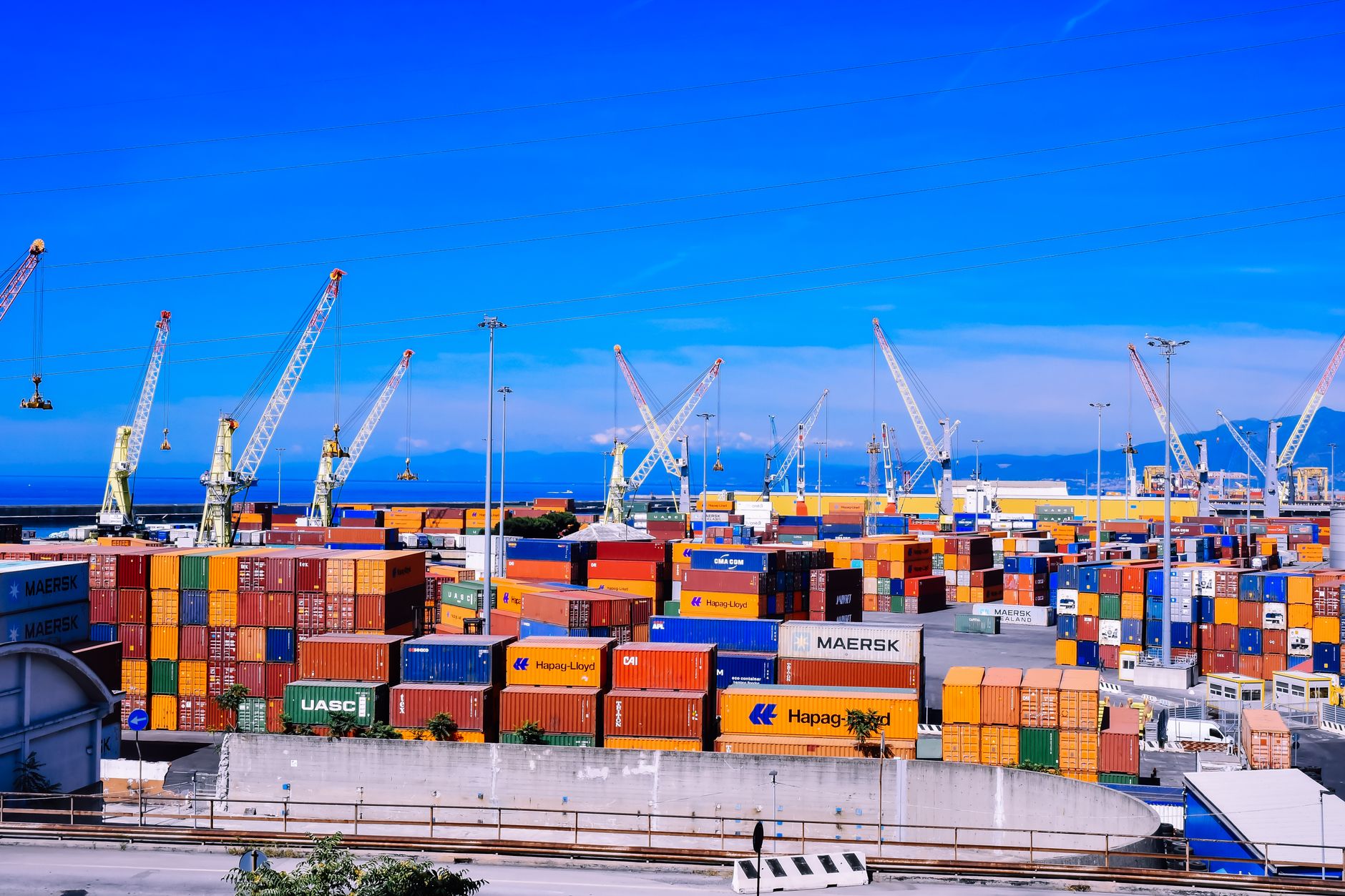
If you have shipped a product across an ocean in the last decade, there is a strong chance it moved through a Chinese port. China operates seven of the world’s ten busiest container ports by throughput. The combined annual capacity of its major port clusters — Shanghai, Ningbo-Zhoushan, Shenzhen, Guangzhou, Tianjin, Qingdao, and Xiamen — exceeds 300 million TEUs (twenty-foot equivalent units). For Western importers, exporters, logistics managers, and freight forwarders, understanding how China’s port and logistics infrastructure works — and who controls it — is not optional. It is table stakes for competitive supply chain management in 2026.
The Scale in Numbers
Ningbo-Zhoushan Port, in Zhejiang Province, has held the title of world’s busiest port by cargo tonnage for over 15 consecutive years. In 2024, it handled approximately 37 million TEUs of container volume alongside over 1.3 billion metric tons of total cargo. Shanghai’s Yangshan Deep Water Port — built on an artificial island connected to the mainland by the 32-kilometer Donghai Bridge — processes 49 million-plus TEUs annually and has ranked as the world’s highest-volume container port every year since 2010. The facility is operated by Shanghai International Port Group (SIPG), a publicly listed company in which the Shanghai Municipal Government holds a controlling stake.
Shenzhen’s dual-port complex at Yantian and Shekou, operated primarily by Hutchison Ports and Cosco Shipping Ports, serves the Pearl River Delta’s export manufacturing base — the cluster that produces electronics, clothing, furniture, and consumer goods destined for Walmart, Amazon, and major European retailers.
COSCO Shipping Ports: The State Player in Global Terminals
No discussion of Chinese port infrastructure is complete without COSCO Shipping Ports (CSP), the terminal investment arm of COSCO Shipping Holdings. As of 2025, CSP holds equity stakes in 51 port projects across 26 countries. Terminals under its influence or direct operation include Piraeus Port in Greece (acquired from the Greek government in 2016 for €368.5 million), Khalifa Port in Abu Dhabi, the COSCO-PSA Terminal in Singapore, and facilities in Rotterdam, Antwerp, and Valencia. In China itself, CSP holds operating interests at Tianjin, Qingdao, Shanghai, and Guangzhou terminals.
The strategic logic is straightforward: controlling terminal capacity at origin ports in China and destination ports abroad reduces dependence on third-party infrastructure and gives COSCO pricing leverage in tightening freight markets. Western logistics executives who negotiated rates during the 2021-2022 freight spike — when trans-Pacific spot rates reached $20,000 per 40-foot container — understand exactly why that leverage matters.
Port Free Trade Zones: What They Mean for Western Buyers
China’s port infrastructure is inseparable from its Free Trade Zone (FTZ) strategy. Every major port cluster is anchored by a designated FTZ that allows bonded storage, reduced customs inspection, and simplified cross-border payment settlement. The Shanghai Pilot FTZ, established in 2013 and expanded into the Lingang Special Area, offers foreign-invested entities a reduced 15% corporate income tax rate versus the standard 25%, along with streamlined regulatory approval for financial, logistics, and technology businesses.
Suppliers operating within a bonded FTZ can defer Chinese VAT and customs duties until goods leave the zone. For Western buyers who source from FTZ-located factories and re-export a portion of finished goods, this bonded status can significantly reduce cash flow friction. The standard Chinese export VAT rebate rate for most manufactured goods is 13% — but rebate timelines vary by commodity classification, and it pays to understand your supplier’s specific VAT position before quoting landed costs.
Hinterland Connectivity: The China-Europe Rail Network
The China-Europe Railway Express (中欧班列) deserves particular attention from Western logistics planners. Launched in 2011 with a single service from Chongqing to Duisburg, Germany, the network by 2025 connects 112 Chinese cities to 25 European countries across 78 operating lines. Journey times from central China to major European cities run 12 to 15 days — roughly half the transit time of sea freight and a fraction of the cost of air freight. Annual volume exceeded 1.9 million TEUs in 2024, up from virtually zero a decade earlier.
For manufacturers sourcing from inland provinces — Chongqing (automotive), Zhengzhou (electronics), or Wuhan (automotive and steel) — rail has become a serious complement to port-based sea freight. Electronics components, automotive parts, and pharmaceutical ingredients with a high value-to-weight ratio are strong candidates for this corridor.
Automation: How Chinese Ports Are Widening the Efficiency Gap
China’s port operators are actively reinvesting to extend their lead over international competitors. Qingdao Port’s automated container terminal deployed automated guided vehicles (AGVs), remote-controlled quay cranes, and AI-powered vessel scheduling in a full-scale commercial environment before any comparable facility in North America or Europe reached equivalent operational maturity. Tianjin Port launched China’s first “5G smart port” certification in 2020, coordinating 76 automated rail-mounted gantry cranes via millimeter-wave 5G networks.
SIPG’s Yangshan Phase IV facility, fully operational since 2017, runs entirely without human workers on the yard — all equipment is remotely monitored from an operations center in Lingang. Chinese automated terminals consistently report berth productivity rates 20 to 35% above the global average for comparable vessel classes, according to data from the International Association of Ports and Harbors (IAPH).
Managing Port Risk in Your Supply Chain
Understanding China’s port infrastructure has direct implications for freight budgeting, procurement, and supply chain risk decisions.
Origin Port Selection
Suppliers in different Chinese provinces connect to different port clusters with different service frequency and transit times. A Ningbo supplier has direct weekly sailings to Los Angeles in 14 days. A Wuhan supplier may route through Ningbo or Tianjin, adding two to five days and one transshipment event. When evaluating factory quotes, always confirm which port the goods will export from and verify the weekly sailing schedule to your destination — this is a basic procurement discipline that many buyers overlook until a delay makes it expensive.
Congestion Risk Is Real and Asymmetric
Chinese ports are vulnerable to sudden congestion events triggered by weather, regulatory shifts, or unexpected closures. The 2021 Yantian port disruption — triggered by a COVID outbreak — backed up trans-Pacific freight for six weeks and cost the global retail industry an estimated $500 million in additional freight charges. Western companies with China-dependent supply chains should maintain 8 to 12 weeks of safety stock for critical components and designate secondary port routing in their freight contracts. For a deeper view of how the Belt and Road infrastructure strategy affects your broader trade routes, that context matters here too.
The Geopolitical Reality Check
COSCO’s global terminal stakes — in Piraeus, Rotterdam, the Middle East, and West Africa — have attracted scrutiny from Western security establishments. The US Department of Transportation’s Maritime Administration (MARAD) and the European Commission’s foreign investment screening mechanisms have flagged concerns about strategic chokepoint concentration. The Chinese Ministry of Commerce has consistently positioned these investments as commercial port development rather than strategic infrastructure control.
The commercial reality is more nuanced than the headlines suggest. Port operators — Chinese-owned or otherwise — are overwhelmingly motivated by return on invested capital. COSCO’s Piraeus investment materially improved port efficiency: Piraeus moved from the world’s 93rd to 25th busiest container port between 2010 and 2023, directly as a result of COSCO’s management and capital. Western freight buyers should monitor regulatory developments but should not allow geopolitical noise to distort commercial routing decisions. The ports work. The question is always which port works best for your specific trade lane, cargo profile, and cost structure.
For companies building their broader understanding of how COSCO’s maritime network functions at the shipping line level, that context sits directly upstream of any port-level decision.
The Bottom Line
China’s port and logistics infrastructure represents decades of coordinated capital investment and operational scale that no alternative network will displace in the near term. For Western companies sourcing from or selling into China, the practical imperative is to understand how the system works, build relationships with freight forwarders who know China’s port clusters deeply, and design supply chain contingencies that account for real vulnerabilities — weather, regulatory shifts, and geopolitical friction — rather than imagined ones.
The automated cranes at Yangshan, the smart terminal at Qingdao, and the rail platforms at Chongqing are not threats to Western commerce. They are the infrastructure that connects it.