
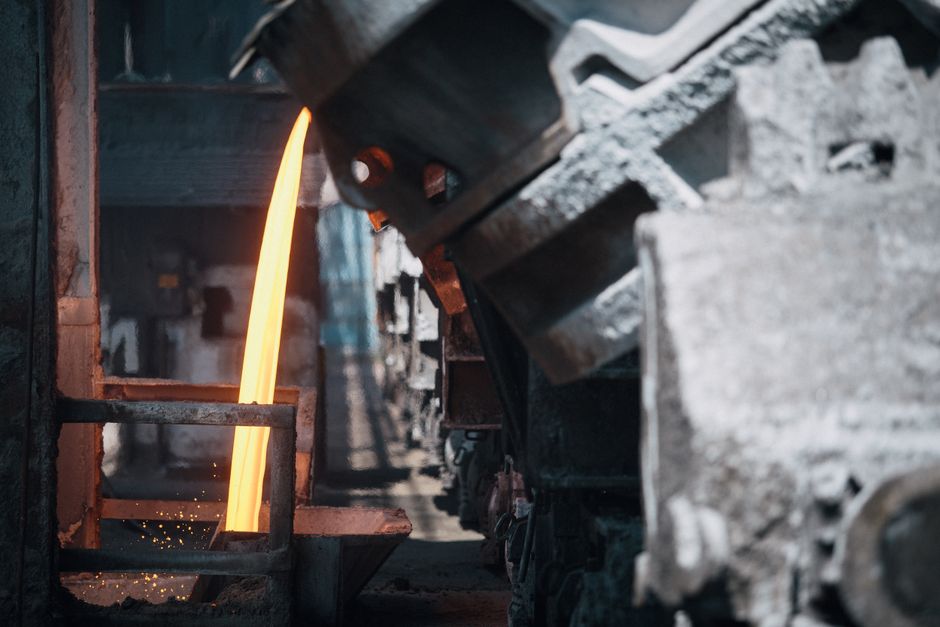
No industry tells the story of China’s industrial rise more completely than steel. In 1980, China produced roughly 37 million metric tons of crude steel per year — a fraction of what the Soviet Union and the United States were turning out. By 2023, China produced approximately 1.019 billion metric tons, accounting for just over 54% of global steel output. That is more than the next 10 largest producing countries combined. For importers, construction firms, automotive suppliers, shipbuilders, and infrastructure developers anywhere in the world, understanding how China’s steel industry got here — and where it is going — is not optional. It is essential.
From Post-War Backwater to Global Behemoth
China’s steel ambitions predate the reform era. Mao Zedong’s disastrous Great Leap Forward (1958–1962) tried to leapfrog industrialization by melting down agricultural tools in backyard furnaces, producing mostly unusable pig iron. That experiment cost lives and destroyed grain production, but it embedded a national obsession with steel capacity that would eventually be harnessed productively.
The real transformation began with Deng Xiaoping’s Opening and Reform policy. In 1978, China had a handful of large state-owned steel complexes — Baoshan Iron and Steel (now Baowu), Anshan Steel, and Wuhan Iron and Steel among them. With Japanese technical assistance and foreign direct investment, Baoshan’s No. 1 blast furnace came online in 1985 as one of the world’s most modern facilities at the time.
Through the 1990s and into the 2000s, China’s steel output tracked almost perfectly with its construction and infrastructure boom. The 2001 WTO accession supercharged demand. Between 2000 and 2010, Chinese steel production more than quadrupled — from around 128 million to over 620 million metric tons — as skyscrapers, highways, high-speed rail lines, and entire new cities required structural steel at a pace the rest of the world had never witnessed.
The Key Players: State Giants and Private Upstarts
China’s steel sector is a hybrid of state-directed consolidation and aggressively competitive private enterprise.
China Baowu Steel Group
Formed through the 2016 merger of Baosteel Group and Wuhan Iron and Steel Group — with subsequent absorptions of Maanshan Steel, Taiyuan Iron and Steel (TISCO), and others — Baowu is now the world’s largest steel producer. In 2023, Baowu produced approximately 132 million metric tons, eclipsing ArcelorMittal (roughly 68 million metric tons) by nearly a factor of two. Baowu’s flagship Baoshan complex in Shanghai specializes in high-grade automotive steel sheets, supplying Volkswagen, GM’s China joint ventures, and domestic OEMs including BYD and SAIC Motor.
HBIS Group (Hebei Iron and Steel)
Headquartered in Shijiazhuang, Hebei Province, HBIS is the second-largest Chinese producer and has pursued aggressive global expansion. It acquired a majority stake in Serbia’s Smederevo steel plant in 2016 and has invested in steelworks in South Africa and India. HBIS produces approximately 45 million metric tons annually and is a significant supplier of construction-grade rebar and wire rod.
Shagang Group
A remarkable example of private enterprise in a state-dominated sector, Shagang (Jiangsu Shagang Group) is the largest privately owned steel company in China, with annual output of around 44 million metric tons. Founded by Shen Wenrong in Zhangjiagang, Jiangsu Province, Shagang grew by acquiring second-hand equipment — including entire blast furnaces purchased from Germany’s Krupp — and running them with extraordinary operational efficiency. Shagang regularly ranks among the most profitable Chinese steelmakers.
Angang Steel and Shougang Group
Angang (Anshan Steel), based in Liaoning Province, and Shougang (Capital Steel), which relocated its main production base from Beijing to Caofeidian in Hebei ahead of the 2008 Olympics, each produce 30–35 million metric tons per year. Both are significant suppliers to the automotive, shipbuilding, and appliance industries.
The Policy Architecture Behind the Scale
China’s steel dominance was not accidental. It was the product of explicit industrial policy executed across multiple Five-Year Plans.
The government’s approach combined several tools: preferential financing from state-owned banks (Bank of China, ICBC, and China Development Bank have all extended multi-billion-dollar credit lines to major steelmakers), land grants for industrial parks, subsidized electricity in key provinces, and export tax rebates that periodically made Chinese steel cheaper on international markets than domestically.
The Ministry of Industry and Information Technology (MIIT) has published successive Steel Industry Adjustment and Upgrade Plans. The most consequential was the 2016 supply-side structural reform, which ordered the elimination of 150 million metric tons of capacity over five years. Contrary to skeptical Western forecasts, the targets were largely met — not by shutting down profitable modern mills, but by permanently closing “zombie” capacity: outdated induction furnaces, illegal “ground steel” operations, and loss-making provincial plants. This tightened quality standards while concentrating output among the most efficient producers.
The World Steel Association, headquartered in Brussels, tracks global output and confirms that Chinese capacity closures between 2016 and 2021 exceeded 150 million metric tons — real reductions, not accounting adjustments.
The Trade Dimensions: Anti-Dumping, Tariffs, and Global Overcapacity
China’s steel dominance has generated sustained trade friction with both the United States and the European Union.
In 2016, the Obama administration imposed Section 201 safeguard tariffs on Chinese steel imports. The Trump administration escalated this in 2018 with 25% Section 232 tariffs on steel imports from all sources, ostensibly on national security grounds, though explicitly targeting Chinese overcapacity. The Biden administration maintained those tariffs while negotiating tariff-rate quotas with European allies. As of 2026, Chinese steel exports to the United States face a combination of Section 232 tariffs, antidumping duties, and countervailing duties that in many product categories exceed 200% ad valorem — effectively barring direct Chinese steel from the US market.
The European Union has operated a system of safeguard quotas since 2018 under Regulation (EU) 2018/1397, restricting imports in 26 steel product categories to country-specific or residual quota limits. These measures were extended and adjusted through 2024 and remain in force.
Despite these restrictions, China continues to be a dominant supplier to Southeast Asia, the Middle East, Latin America, and Africa — markets that do not operate equivalent trade defense regimes. In 2023, China exported approximately 90 million metric tons of finished steel, with ASEAN and Africa absorbing the largest shares.
For Western companies sourcing globally, the practical implication is that Chinese steel shapes pricing benchmarks even in markets where it is not directly purchased. A construction firm in Brazil or a shipbuilder in South Korea prices against Chinese mill costs. This is why any serious supply chain analyst tracks China’s steel production data — published monthly by the National Bureau of Statistics of China — as a leading indicator for global commodities markets.
Quality Segmentation: Where Chinese Steel Excels and Where It Does Not
A persistent misconception in Western markets is that Chinese steel is uniformly low-quality commodity product. The reality is far more segmented.
At the commodity end, Chinese producers dominate construction rebar, wire rod, hot-rolled coil, and structural sections on both price and volume. These grades are broadly comparable in quality across global producers at similar price points. Where Chinese mills have historically lagged — and where the gap has narrowed significantly — is in high-value specialty steels: electrical steel for transformer cores, aerospace-grade titanium alloys, ultra-high-strength automotive body panels, and bearing steels demanding extreme purity.
Baowu’s research arm has made deliberate investments in electrical steel (critical for EV motors and power transformers) and high-grade automotive sheet. POSCO of South Korea and Nippon Steel of Japan remain benchmarks for the highest-specification product grades, but the gap at mid-tier automotive and appliance quality is narrowing. The rapid growth of BYD and other Chinese EV manufacturers has created a powerful domestic pull for higher-specification steel that is accelerating quality investment at Chinese mills.
Similarly, China’s massive shipbuilding industry — which accounts for over 50% of global new vessel tonnage — consumes enormous quantities of marine-grade plate steel, and domestic suppliers have progressively qualified for Lloyd’s Register and Bureau Veritas classification-society approvals that were previously dominated by Korean and Japanese mills.
Environmental Pressure and the Green Steel Transition
China’s steel industry faces its most significant structural challenge not from trade barriers but from its own carbon emissions. Steel production accounts for approximately 15% of China’s total CO₂ output, making it the single largest emitting industrial sector. Blast furnace-basic oxygen furnace (BF-BOF) production dominates at over 90% of Chinese output, compared to roughly 70% in the EU and under 30% in the United States, where electric arc furnaces (EAF) using scrap steel are far more prevalent.
China’s 2060 carbon neutrality commitment and the 14th Five-Year Plan (2021–2025) both contain steel-specific carbon targets. The government has mandated that all new steel capacity use EAF or direct reduced iron (DRI) processes. Baowu has announced a carbon neutrality roadmap for 2050, and multiple producers are piloting hydrogen-based direct reduction — though at present, hydrogen costs remain prohibitive at commercial scale.
The EU’s Carbon Border Adjustment Mechanism (CBAM), which began its transitional phase in 2023, will impose carbon costs on steel imports from 2026 onward. For Chinese producers exporting to Europe, this creates a meaningful competitive disadvantage until their carbon intensity approaches European benchmarks.
What This Means for Western Companies
For importers and procurement teams: Chinese steel is unlikely to reach you directly if you are based in the US or EU, but Chinese production costs set the floor for global steel prices. When Chinese mills run at high utilization and export aggressively, global hot-rolled coil prices fall. When Beijing mandates production cuts — as it did ahead of the 2022 Beijing Winter Olympics to reduce air pollution in northern China — prices spike globally. Track MIIT output directives and NBS monthly production data as part of any serious raw materials procurement strategy.
For construction and infrastructure developers: Chinese-funded projects in Belt and Road countries typically require Chinese steel. If you are a contractor or subcontractor on such projects, understanding Chinese mill certifications, tolerance standards (GB/T vs. ASTM vs. EN), and quality control protocols is essential. Conducting proper due diligence on Chinese suppliers — including mill certification audits — remains critical.
For manufacturers sourcing components: The evolving landscape of Chinese export controls and Western trade defense measures means that Chinese steel arrives in your supply chain indirectly — through finished components sourced from Vietnam, India, Mexico, or Turkey. Transshipment enforcement has tightened in both the US (CBP) and EU (OLAF), and the liability risk for circumvention is substantial.
For investors and analysts: China’s steel sector is a proxy for domestic property and infrastructure investment. The prolonged crisis in Chinese real estate — Evergrande’s 2021 collapse being the most visible symptom — directly depressed steel demand from 2022 onward. Watch Chinese crude steel output growth rates as a real-time indicator of infrastructure stimulus versus austerity cycles.
Conclusion
China’s steel industry did not become the world’s largest through low wages alone. It was built through deliberate policy, sustained capital investment, aggressive consolidation, and an infrastructure boom of historic scale. The sector now faces genuine structural pressures: slowing domestic construction demand, Western trade barriers, carbon transition costs, and the need to move up the quality curve. None of these challenges are likely to dislodge China from its position as the dominant force in global steel for the foreseeable future. But the terms of engagement are changing. Western businesses that engage with Chinese steel — directly or through downstream supply chains — need to understand both the scale of what was built and the forces now reshaping it.