
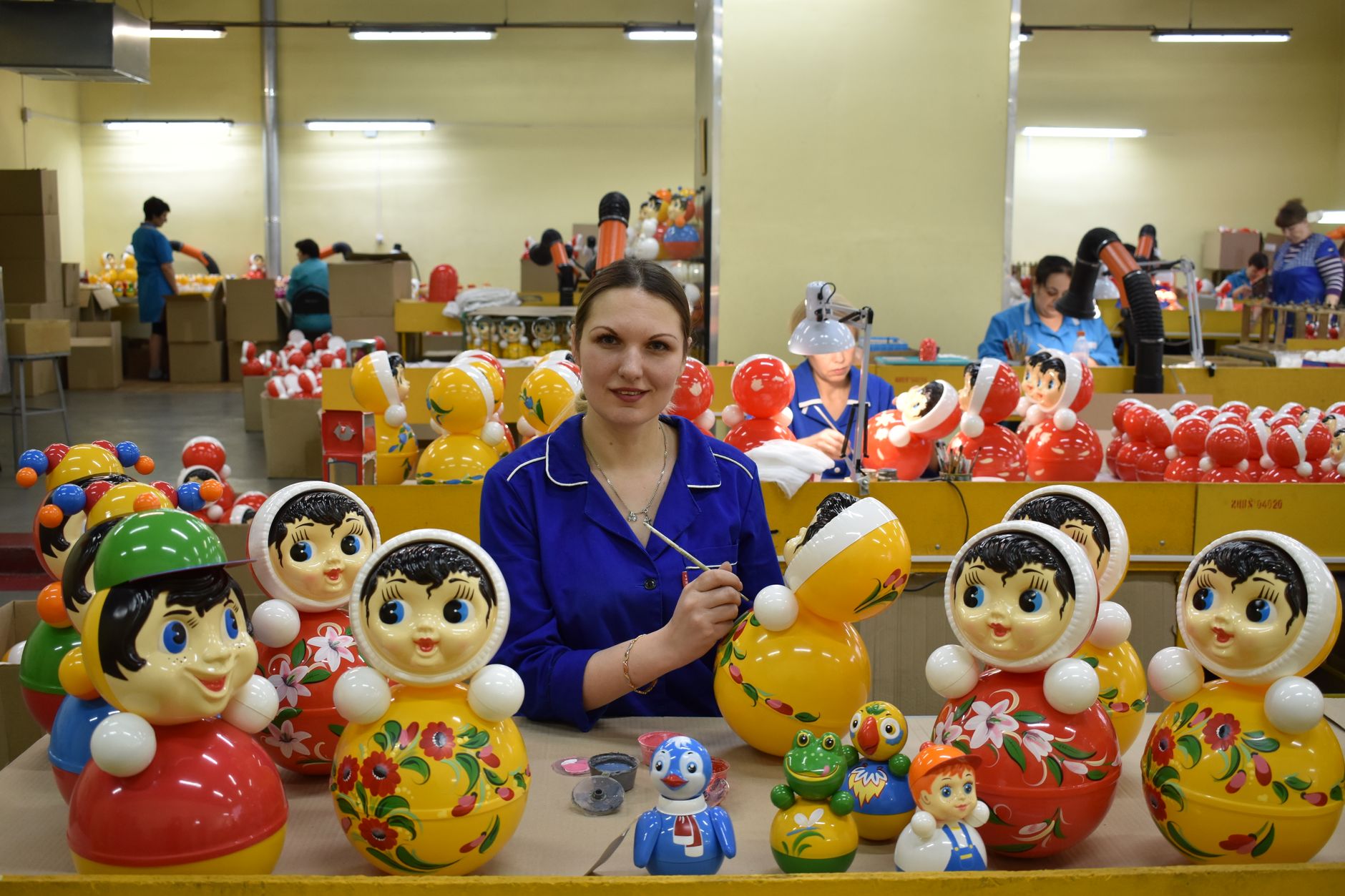
Every year, roughly 80 percent of the world’s toys are made in China. That figure has held remarkably steady for three decades — through trade wars, pandemic disruptions, and the persistent rise of competing manufacturing hubs across Southeast Asia. The dominance is not accidental. It is the product of a specific geography, an industrial ecosystem, and supplier relationships that have proven extraordinarily difficult to replicate anywhere else.
Understanding how China’s toy industry works — where it is concentrated, who controls it, and how global buyers actually source from it — is essential knowledge for any importer, brand, or retailer whose products touch this $100 billion global market.
Chenghai: The World’s Toy Capital
The district of Chenghai, within Shantou in eastern Guangdong Province, is the unquestioned capital of Chinese toy manufacturing. With over 5,000 registered toy companies concentrated in an area smaller than many mid-sized American cities, Chenghai produces an estimated 60 to 70 percent of all decorative and novelty toys exported from China. The district generates more than 20 billion RMB (approximately $2.8 billion USD) in toy output annually — a figure that has grown steadily since the 1980s.
The district’s Chenghai Toy Trade City is one of the world’s largest permanent toy wholesale markets, housing thousands of showrooms where international buyers negotiate orders year-round — from die-cast vehicles to remote-controlled drones — without the formality of intermediaries or seasonal trade fair schedules.
Chenghai’s strength grew from a specific manufacturing culture: family-run factories producing small batches economically, iterating designs quickly, and vertically integrating components that larger factories elsewhere had to outsource. By the late 1990s, Chenghai had developed a complete supply chain cluster — plastics processors, electronics subcontractors, painting workshops, and packaging printers — all within a 30-kilometer radius. That density of specialization is the foundation of its competitive advantage.
Dongguan, Shenzhen, and the Greater Pearl River Delta
While Chenghai dominates novelty production, the broader Pearl River Delta region — particularly Dongguan and industrial zones east of Shenzhen — handles higher-complexity manufacturing: electronic learning toys, battery-powered ride-ons, plush toys with embedded technology, and licensed product manufacturing for major Western brands including Hasbro and Mattel.
Rising labor costs have pushed the most labor-intensive assembly operations toward Vietnam and Bangladesh, but Dongguan retains its importance for technology-integrated toy manufacturing where proximity to Shenzhen’s electronics ecosystem provides irreplaceable advantages. Shenzhen’s role is increasingly that of a design and engineering hub: product development studios, tooling manufacturers, and electronics integration specialists work upstream for toy brands before production moves to satellite factories.
The Major Players
China’s toy manufacturing sector is highly fragmented. Unlike industries such as electric vehicles or solar panels — which have consolidated into national champions — toy manufacturing remains split between large contract manufacturers, mid-sized private brand builders, and thousands of small specialist factories.
Alpha Group (阿尔法集团), headquartered in Guangzhou and listed on the Shenzhen Stock Exchange, is one of China’s largest integrated toy companies, combining animation IP development with consumer product manufacturing. Alpha Group reported revenues of approximately 3.5 billion RMB ($480 million USD) in 2023, with brands distributed across more than 80 countries. AULDEY Toys (奥迪双钻), founded in 1993 in Guangdong, built a strong domestic business in remote-controlled cars and educational robots before expanding internationally into Southeast Asian and European markets.
For Western brands, the supply chain typically involves tier-1 contract manufacturers — with quality management certifications including ICTI (International Council of Toy Industries) and SA8000 standards — who subcontract component work to a surrounding ecosystem of smaller suppliers. This layered structure creates audit complexity that thorough due diligence processes consistently identify as a critical risk area for global buyers.
Safety Regulations and the Compliance Framework
No sector in Chinese manufacturing has faced more intense regulatory scrutiny than toys. The 2007 Mattel recalls — involving nearly 21 million toys for lead paint and small magnet hazards — triggered a fundamental restructuring of the compliance framework governing Chinese toy exports.
In the United States, the Consumer Product Safety Commission (CPSC) enforces the Consumer Product Safety Improvement Act (CPSIA), requiring mandatory third-party testing, Children’s Product Certificates, and compliance with standards for lead content, phthalates, flammability, and mechanical hazards. Chinese manufacturers exporting to the US must obtain certification through CPSC-accredited laboratories before any shipment.
In Europe, the EN 71 standard governs toy safety across EU member states, supplemented by REACH regulations on chemical substances. Chinese exporters must affix CE marking and maintain technical documentation demonstrating conformity. On the Chinese domestic side, the State Administration for Market Regulation (SAMR) enforces GB 6675 — China’s national toy safety standard, substantially revised in 2014 to align with international requirements.
The Tariff Effect and Supply Chain Diversification
US-China trade tensions, beginning with Section 301 tariffs in 2018 and continuing through escalation into 2026, imposed significant cost burdens on toy imports, with many categories facing additional duties of 25 percent on top of existing rates. Global toy companies including Hasbro and Mattel publicly committed to reducing their China manufacturing concentration, targeting Vietnam, India, and Mexico for portions of production.
The diversification has been real but incomplete. Vietnam has emerged as the most significant alternative, growing toy export value from approximately $500 million in 2017 to over $2 billion by 2024. But Vietnamese toy factories still source 50 to 70 percent of their inputs from China — the upstream component ecosystem has no peer. True supply chain diversification requires rebuilding a supplier network that took three decades to construct.
For importers navigating this landscape, the Canton Fair and Chenghai’s permanent wholesale infrastructure remain among the most efficient mechanisms for identifying suppliers and comparing product ranges across the supply chain.
The Rise of Chinese Toy Brands Globally
For most of its history, China’s toy industry operated as an OEM supplier — producing other companies’ brands. That model is shifting. Pop Mart (泡泡玛特), founded in Beijing in 2010 and listed on the Hong Kong Stock Exchange in 2020 with a market capitalization briefly exceeding $10 billion USD, built a global brand around designer vinyl collectibles and the blind box format. Pop Mart demonstrated that Chinese toy companies can build genuine brand equity in Western markets without relying on licensed foreign IP.
Chinese-brand remote-controlled vehicles, STEM kits, and hobby-grade products have become a significant presence on Amazon and TikTok Shop, with manufacturers engaging global consumers directly under proprietary brand names. This trajectory mirrors the pattern seen earlier in consumer electronics, where brands like Anker built substantial global businesses from Chinese manufacturing roots. The direct factory-to-consumer model pioneered in fast fashion is beginning to replicate in toys as Chinese manufacturers develop the English-language marketing capabilities needed to serve Western consumers without traditional retail intermediaries.
What Buyers Need to Know
Three practical realities shape the sourcing process for Western companies. First, supplier tiering matters enormously. The largest contract manufacturers in Dongguan and Chenghai maintain robust quality management systems and can produce documentation required by CPSC, EN 71, and major retailer codes of conduct. Smaller factories in the same geography may be price-competitive but lack the compliance infrastructure needed to supply major retail channels.
Second, tooling ownership is a critical negotiation point. Most Chinese factories will offer to build tooling at low cost in exchange for exclusivity. Brands that do not negotiate tooling ownership upfront find that switching suppliers requires abandoning their molds or paying for duplication. Securing tool ownership in the initial contract is standard practice among experienced sourcing teams.
Third, geography determines function. Yiwu is a trading hub for finished stock goods — ideal for small quantities of existing designs. Chenghai is where custom development happens. Dongguan is where licensed, compliance-intensive manufacturing of branded product lines is concentrated. Understanding which geography serves which sourcing need saves significant time and cost at the development stage.
China’s toy industry is upgrading: moving from pure volume production toward design capability, brand building, and direct consumer engagement. For Western brands, that means a supplier base increasingly capable of becoming a competitor. For importers, it means continued partnership with a manufacturing ecosystem that remains, for now, irreplaceable in its depth, efficiency, and scale.