
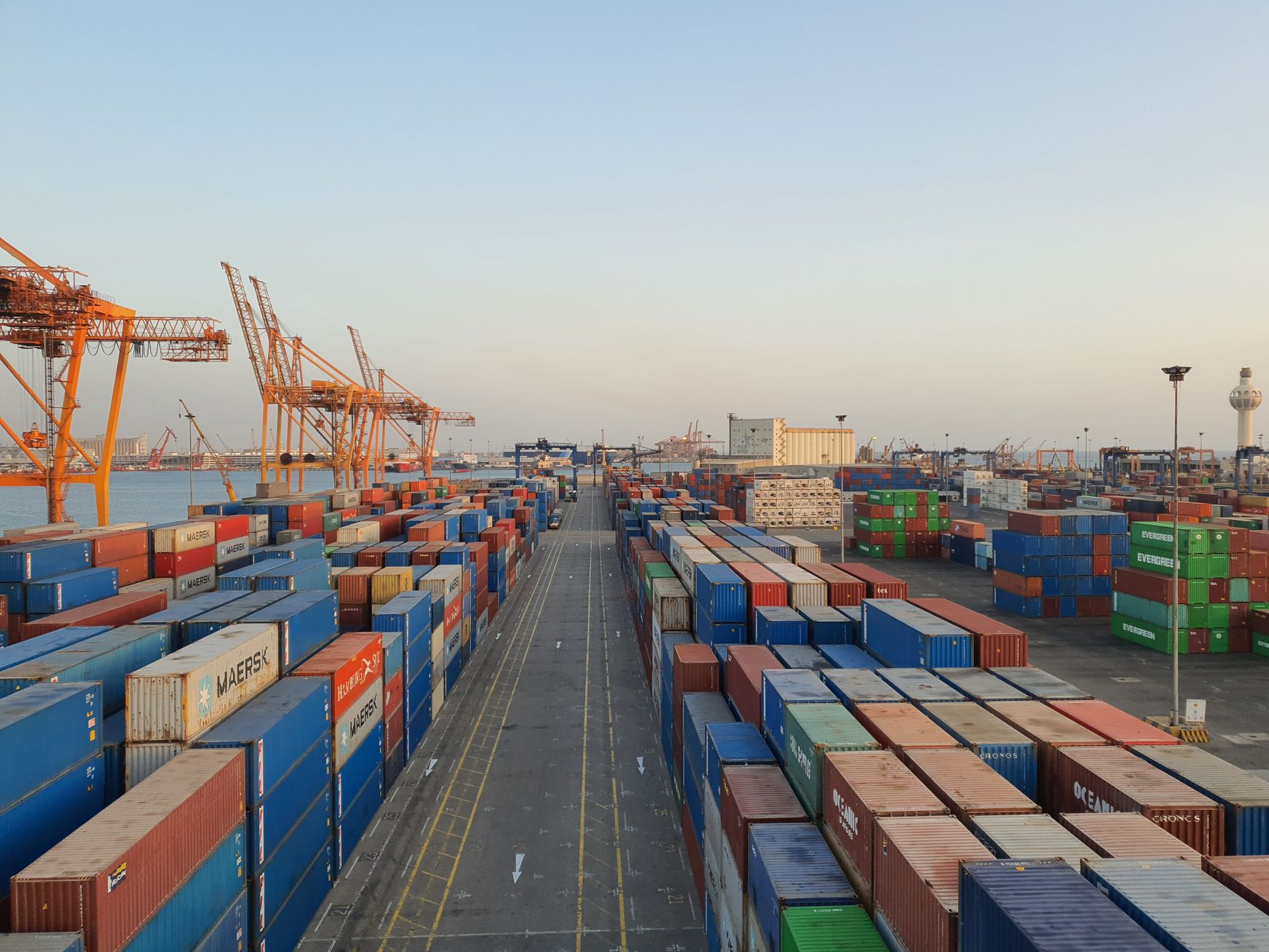
Walk into any shipping yard from Los Angeles to Rotterdam, and you will find the same object stacked floor to ceiling: a steel intermodal container. Odds are it was built by CIMC — China International Marine Containers Group. Founded in 1980 and headquartered in Shenzhen, CIMC manufactures roughly 80 percent of the world’s dry freight containers and more than half of all refrigerated units. It is one of the most consequential industrial companies most Western executives have never heard of — and one of the clearest illustrations of how Chinese manufacturing dominance can operate far below the radar of headline tariff debates.
This article examines how CIMC built its global container monopoly, why that position is both commercially powerful and geopolitically sensitive, and what importers, logistics managers, and trade strategists need to understand about the company that underpins virtually every supply chain on Earth.
From Joint Venture to Global Monopoly
CIMC began in 1980 as a joint venture between China Merchants Group and Danish shipping conglomerate Maersk. The company produced its first container in Shekou, Shenzhen — a location chosen for its proximity to Hong Kong’s export-driven economy and the emerging Pearl River Delta manufacturing corridor.
For much of the 1980s, CIMC was a minor player. Global container manufacturing was dominated by Korean and Taiwanese firms. The shift came in the early 1990s when CEO Mai Boliang, who joined in 1992, pursued an aggressive acquisition strategy targeting distressed competitors. Between 1993 and 2000, CIMC absorbed more than a dozen rival container plants across China, consolidating capacity at a speed that Korean and Taiwanese producers could not match.
By 2001, CIMC had surpassed South Korea’s Hyundai Translead to become the world’s largest container manufacturer. By 2010, its global market share in dry freight containers exceeded 50 percent. Today that figure sits at approximately 80 percent for standard ISO dry containers — a level of market concentration almost without parallel in a globally traded industrial product.
The Business Model: Volume, Standardization, and Vertical Integration
CIMC’s dominance reflects a disciplined industrial strategy built on three pillars.
Cost Efficiency
A standard 20-foot equivalent unit (TEU) dry container sold for approximately $1,800 to $2,200 in normal market conditions before the COVID-19 shipping boom temporarily pushed prices above $6,000. CIMC achieves margins on razor-thin economics by concentrating production in Shenzhen, Tianjin, and Qingdao, sourcing Corten weathering steel from domestic Chinese mills, and maintaining proprietary production line technology with utilization rates that Western competitors have rarely matched.
Product Diversification
CIMC long ago moved beyond the standard dry freight box. Its portfolio includes reefer containers (approximately 40 percent global market share), tank containers for liquid chemicals, semi-trailers and road transport vehicles through its Hong Kong-listed CIMC Vehicles subsidiary, and prefabricated modular buildings delivered in over 40 countries. This diversification insulates CIMC from the cyclical container shipping market — when newbuild orders collapse, vehicle and modular building revenue streams provide buffer.
Global Acquisitions
Key international moves include the 2015 acquisition of Hyundai Translead, one of the largest semi-trailer manufacturers in North America, giving CIMC a significant US manufacturing footprint. The Hyundai Translead acquisition is particularly notable for US-China trade watchers: it means CIMC — ultimately controlled by China Merchants Group, a Chinese state-owned enterprise — manufactures trailers used by US trucking companies on US highways, a reality that has attracted congressional scrutiny similar to debates around Hikvision and Dahua in the surveillance sector.
The COVID Shipping Boom: CIMC’s Defining Moment
From mid-2020 through early 2022, global container shipping entered the most chaotic period in its modern history. Container spot rates on the Shanghai-to-Los Angeles route peaked at over $20,000 per TEU in January 2022, compared to roughly $1,500 before the pandemic. For CIMC, this was an extraordinary windfall.
CIMC’s 2021 revenue reached approximately RMB 172 billion ($26.7 billion), a 75 percent year-on-year increase, with net profit exceeding RMB 11 billion. The company delivered more containers in a 24-month period than comparable historical demand cycles had required.
The episode illustrated a structural reality: when global trade surges, there is effectively only one supplier at meaningful scale. No country outside China has the manufacturing capacity, supply chain integration, or cost structure to produce containers at CIMC’s volume on short notice. This is not merely a trade statistic — it is a logistics infrastructure dependency with serious strategic implications, as examined in our overview of China’s port and logistics infrastructure.
Geopolitical Scrutiny and Western Buyer Implications
CIMC’s majority ownership by China Merchants Group has drawn increasing attention from Western regulators. In the United States, the Office of the United States Trade Representative (USTR) has scrutinized Chinese dominance in maritime supply chain infrastructure as part of its Section 301 investigations. A 2024 USTR report identified container manufacturing concentration as a national security concern, recommending incentives for domestic production and allied diversification.
For Western importers and logistics operators, the practical implications are clear:
- No credible alternative at scale — Korean producers and remaining non-Chinese manufacturers collectively hold less than 20 percent of the market; no US or European manufacturer produces standard ISO containers commercially
- Price-setting power during demand surges — CIMC’s market position gives it pricing influence that no buyer can circumvent when demand spikes
- Regulatory risk — US legislation restricting Chinese-made port cranes (primarily ZPMC) has already passed; container-specific restrictions remain under discussion as of mid-2026
The Industrial Ecosystem Behind the Box
CIMC sits atop a dense Chinese industrial ecosystem: Baowu Steel and HBIS supply the Corten steel plate; bamboo and hardwood flooring comes from Hunan and Guangxi provinces; refrigeration units for reefer containers are supplied by Carrier and Thermo King (both US companies), one of the rare points where Western technology remains embedded in Chinese-assembled products. COSCO Shipping — itself linked to China Merchants Group — is both a primary customer and an indirect stakeholder, giving Chinese state-linked entities an end-to-end position from steel mill to shipping lane. This structural integration is a central theme in understanding how China’s Belt and Road Initiative is reshaping global trade infrastructure.
Opportunities for Western Companies
Despite its geopolitical dimensions, CIMC’s dominance creates concrete commercial opportunities:
Component and technology supply: CIMC actively sources IoT sensors, GPS tracking modules, temperature logging systems, and locking hardware from Western suppliers. Companies offering container monitoring solutions have found CIMC and its customers receptive to innovations that add value without threatening the core manufacturing position.
Leasing and fleet management: Western container leasing companies — Triton International, Textainer, and CAI International (now part of Mitsubishi HC Capital) — own large fleets of CIMC-manufactured containers leased to global shipping lines. This leasing layer provides Western capital with exposure to container trade economics without direct manufacturing competition.
Specialty containers: Custom pharmaceutical cold-chain containers with GDP (Good Distribution Practice) certifications, blast-resistant units for the energy sector, and certain military-specification containers remain segments where Western manufacturers retain competitive positions.
What This Means for US-China Trade Strategy
CIMC is a case study in the quiet depth of Chinese industrial leadership. Unlike BYD or Huawei — companies with consumer visibility and political salience — CIMC operates in the infrastructure layer of global commerce. It is invisible to the end consumer but present in every international shipment of consumer goods, industrial parts, and agricultural products.
For US importers, supply chain resilience planning must account for the hardware layer of logistics, not just the product layer. The containers carrying goods from Chinese factories are themselves Chinese-manufactured — a dependency that US policy attention has begun to address but has not resolved.
For Chinese manufacturers and exporters, CIMC represents a compelling strategic model: patient capital deployment, relentless cost optimization, and a willingness to acquire rather than build from scratch in overseas markets. Its trajectory from joint venture to near-monopoly over four decades mirrors the broader arc of Chinese industrial ascent — and its deep roots in the Shenzhen ecosystem illustrate how geography, policy, and operational discipline combine to produce durable market leadership, as detailed in our profile of Shenzhen’s evolution from factory floor to innovation hub.
CIMC is listed on the Shenzhen Stock Exchange (stock code: 000039) and the Hong Kong Stock Exchange (stock code: 2039). Its annual reports and investor disclosures are publicly available through the China National Enterprise Information Disclosure Platform (CNINFO). In a world where supply chain visibility has become a boardroom priority, understanding the company that makes the box is not optional — it is foundational.