
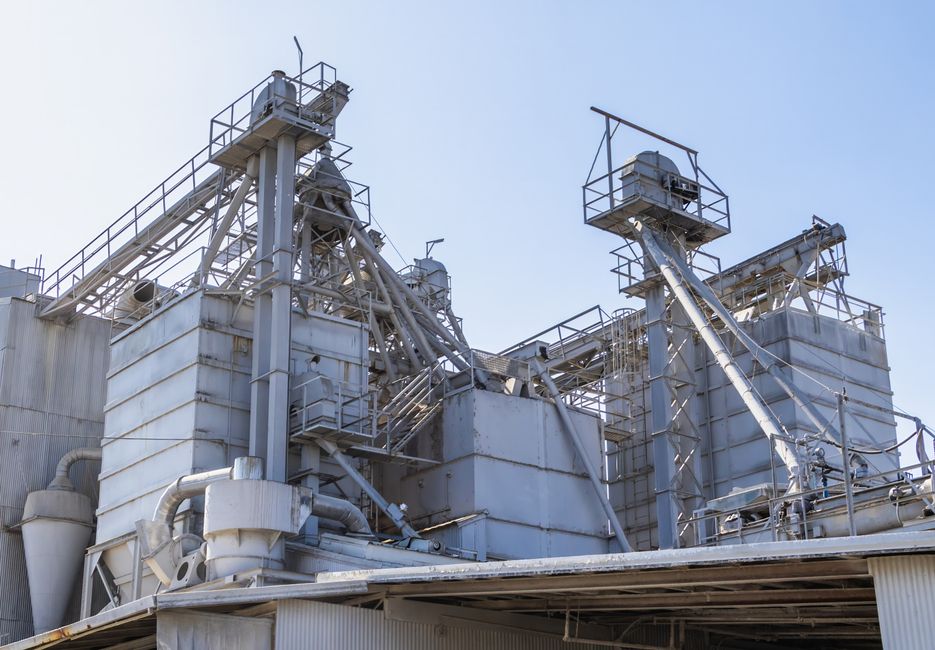
Every skyscraper in Shanghai, every highway crossing the Tibetan Plateau, every dam reshaping the Yangtze River basin was built with cement. And for the past two decades, a disproportionate share of that cement has come from two Chinese companies that most Western business professionals have never heard of: China National Building Material Group (CNBM) and Anhui Conch Cement. Together, they anchor an industry that produces more than half the world’s cement supply, exerts pricing power over global commodity markets, and is increasingly competing for infrastructure contracts from Southeast Asia to Africa.
The Scale That Defies Comparison
China produced approximately 2 billion metric tons of cement in 2023, according to the China Cement Association — roughly 55 percent of total global output. The US Geological Survey reported US cement production that same year at approximately 93 million metric tons. China manufactures more cement in a single month than the United States produces in an entire year.
This dominance is the product of three forces: China’s unprecedented urbanization drive (lifting over 600 million people into cities between 1980 and 2020), centralized state planning that channeled capital into infrastructure at a speed no market economy could match, and a consolidation policy that eliminated thousands of small inefficient kilns in favor of a handful of industrial giants capable of global competition.
CNBM: The State-Owned Giant With a Global Footprint
China National Building Material Group is a Fortune Global 500 company headquartered in Beijing. It is the world’s largest building materials company by revenue, reporting approximately RMB 290 billion (roughly $40 billion USD) annually. CNBM is a direct subsidiary of SASAC — the State-owned Assets Supervision and Administration Commission — placing it in the highest tier of China’s industrial hierarchy.
CNBM’s portfolio spans the entire building materials value chain. Its cement division commands combined annual capacity exceeding 500 million metric tons. Its flat glass division is the world’s largest. Its fiberglass subsidiary, China Jushi Co., holds approximately 35 percent of global fiberglass production capacity — with direct implications for wind energy, aerospace, and automotive sectors that depend on fiber-reinforced composites.
The company has operating assets in over 100 countries, including cement plants in Zambia, Tanzania, and Kazakhstan. Its presence along Belt and Road corridors is deliberate: CNBM has been designated a key state vehicle for infrastructure exports, winning contracts to supply building materials for ports, railways, and housing projects financed by Chinese policy banks. China’s port and logistics infrastructure makes such export-oriented operations feasible at scale.
Anhui Conch: Built on Operational Excellence
If CNBM represents the state-directed side of this industry, Anhui Conch Cement represents something rarer: a Chinese industrial champion built primarily through operational efficiency rather than government allocation. Listed on both the Hong Kong Stock Exchange (HKG: 0914) and the Shanghai Stock Exchange, Conch is headquartered in Wuhu, Anhui Province, and controls approximately 14 to 15 percent of China’s total cement production capacity.
Conch pioneered large-scale new dry process (NDP) kiln technology in China, investing in 5,000 and 10,000-tonne-per-day rotary kilns that dramatically reduced energy and labor cost per ton of clinker. Its home province sits atop some of China’s richest limestone reserves, giving Conch a structural raw material advantage competitors have struggled to replicate. The result: Conch consistently produces cement at costs 15 to 20 percent below the Chinese industry average.
At its peak in 2021, Conch reported net profits of approximately RMB 30 billion ($4.2 billion USD). Revenue moderated after 2022 as China’s real estate sector contracted, with net profit declining to roughly RMB 15 billion in 2023. But the company holds net cash exceeding RMB 70 billion as of mid-2024 — significant capacity to weather the downturn and invest internationally.
The Equipment Ecosystem and Integrated Bidding
China’s building materials industry sits at the center of an integrated industrial ecosystem spanning raw material extraction, heavy equipment, and construction services. XCMG, Sany, and Zoomlion built their global market positions in parallel with the building materials boom. Sany Heavy Industry now holds approximately 15 percent of the global concrete pump market, with machines routinely deployed across Africa, the Middle East, and Latin America.
For Western construction companies evaluating project bids in emerging markets, this coordination is a competitive reality that cannot be ignored. A Chinese consortium offering CNBM cement, Sany pumps, and CRRC rail equipment — financed by China Development Bank — competes not on price alone but on a fully integrated, government-backed supply chain that no Western competitor can easily replicate.
Specialized Materials and the Green Transition
Beyond commodity cement, China’s building materials industry holds world-leading positions in specialized materials central to the global energy transition. China Jushi produces approximately one-third of all glass fiber consumed globally, incorporated into wind turbine blades, printed circuit boards, and lightweight automotive components. This is part of a broader pattern of Chinese advanced materials dominance that Western renewable energy developers are increasingly navigating as a supply chain risk.
CNBM’s solar glass subsidiary supplies tempered photovoltaic cover glass to panel manufacturers globally, including companies assembling panels for US and European markets. CNBM materials therefore flow into Western supply chains not only through construction imports but through the electronics and renewable energy equipment consumers purchase daily.
What Foreign Businesses Need to Know
Sourcing requires rigorous due diligence. The Pearl River Delta’s manufacturing ecosystem includes hundreds of smaller building materials suppliers alongside the giants — and quality variance is substantial. ASTM compliance testing, factory audits, and sample verification are non-negotiable before placing large orders.
Trade policy risk is rising. The US Department of Commerce maintains active antidumping and countervailing duty orders on a range of Chinese building materials, including ceramic tile, glass products, and certain steel construction inputs. Western importers must model tariff exposure into long-term supply agreements. On the Chinese side, China’s Ministry of Commerce (MOFCOM) publishes export licensing guidelines and bilateral trade facilitation agreements relevant to building materials flows.
Partnership opportunities exist. CNBM has demonstrated willingness to enter joint ventures for overseas cement plant construction — particularly in markets where it lacks local regulatory standing. Western construction companies with strong networks in Southeast Asia or Africa may find CNBM a willing technology and capital partner.
The Road Ahead
The top ten Chinese cement producers now account for over 60 percent of national capacity, up from roughly 35 percent a decade ago — and consolidation continues. Both CNBM and Anhui Conch have signaled accelerated overseas investment plans for 2025 to 2030, targeting Africa, the Middle East, and South and Southeast Asia. Just as Baowu Steel and HBIS reshaped global steel markets through scale and overseas positioning, CNBM and Conch are on a similar trajectory in building materials.
For Western businesses, the correct posture is neither alarm nor complacency. China’s building materials giants create genuine commercial opportunities — as suppliers of cost-competitive materials, as construction partners in third markets, and as customers for Western engineering expertise and digital construction technology. The companies that engage with clear-eyed due diligence and a firm grasp of the regulatory landscape will find the world’s largest building materials industry is also one of the world’s most important business relationships to get right.