
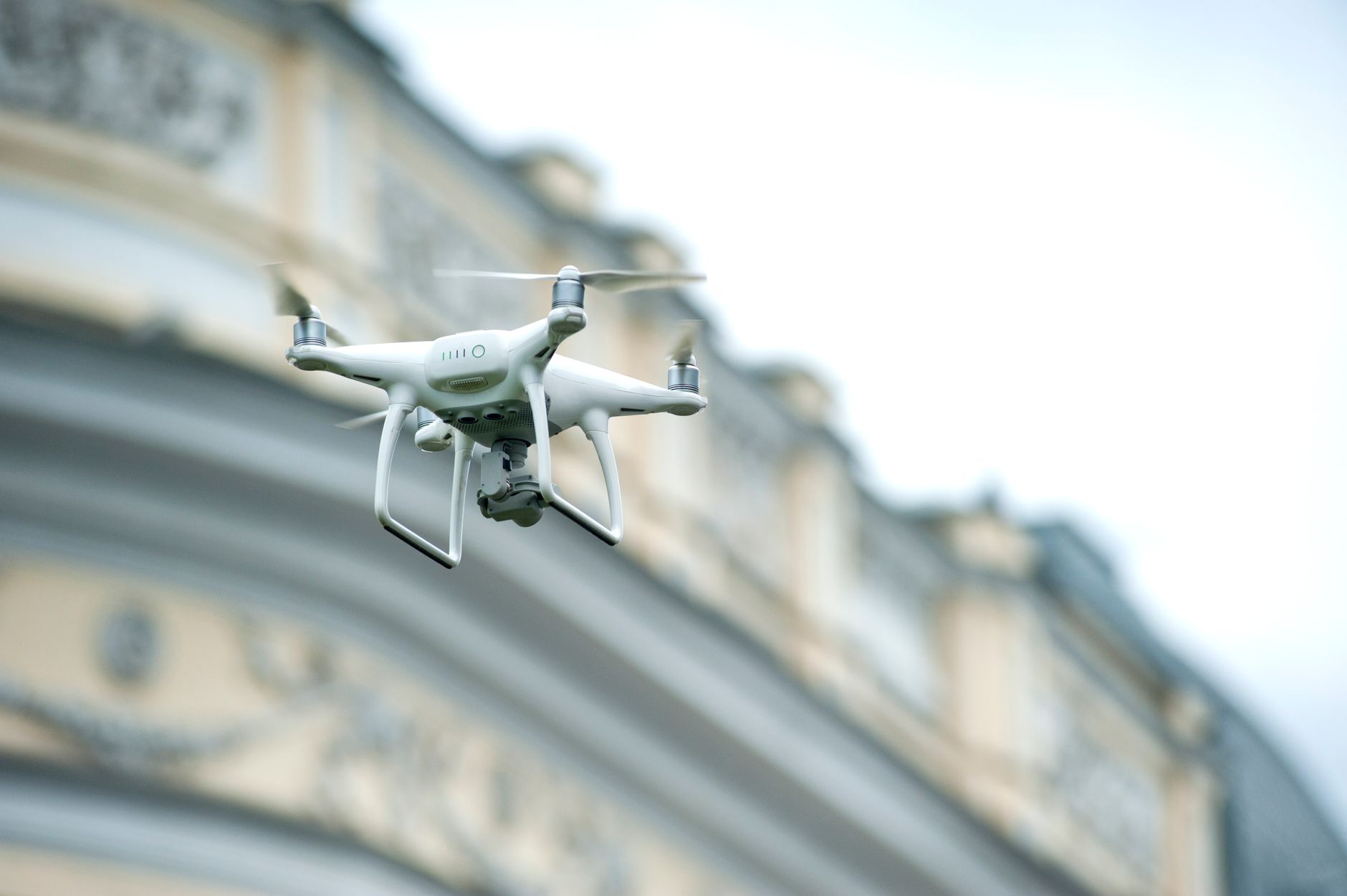
In 2013, a 32-year-old engineer named Frank Wang launched a consumer drone called the Phantom 1 from a cramped office in Shenzhen. It was not the first consumer drone. It was not the cheapest. What it was, however, was the first product to make aerial photography genuinely accessible to ordinary people. Within five years, DJI — Da-Jiang Innovations — commanded roughly 70 percent of the global consumer drone market, outcompeting established aerospace firms, Silicon Valley startups, and dozens of well-funded challengers. Understanding how that happened requires looking at the intersection of manufacturing ecosystems, R&D investment, pricing strategy, and a brand of relentless iteration that defines China’s most successful technology companies.
From Campus Project to Global Category Leader
Wang founded DJI in 2006 while still a student at Hong Kong University of Science and Technology. His initial product was a flight controller for remote-controlled helicopters — not a finished drone, but the intelligent autopilot system that would eventually power everything DJI built. This focus on core technology rather than assembled hardware proved decisive. DJI’s proprietary flight stabilization algorithms, initially developed in a Shenzhen apartment, gave the company a technical moat that competitors would spend years trying to replicate.
The Phantom 1 launched at $679 — meaningfully cheaper than competitors, fully assembled, and designed to fly within minutes of unboxing. It sold 100,000 units in its first year. By 2015, the Phantom 3 had integrated a 4K camera, three-axis gimbal stabilization, and real-time video downlink. The product line had become the tool of choice for professional cinematographers, surveyors, and infrastructure inspectors worldwide.
By 2018, DJI’s revenue had reached approximately $2.7 billion. By 2023, annual revenue was estimated at over $3.8 billion, with market share in consumer drones holding steady above 70 percent globally. No single competitor holds more than 10 percent.
The Shenzhen Ecosystem Advantage
DJI’s dominance cannot be understood in isolation from its geography. Shenzhen is arguably the world’s most concentrated electronics manufacturing ecosystem. Component suppliers, contract assemblers, PCB fabricators, sensor manufacturers, and motor producers are all within a 30-kilometer radius of DJI’s Nanshan District headquarters. This proximity compresses supply chains to a degree that no other region replicates at scale.
When DJI engineers needed a new motor controller or battery management chip, they could receive physical prototypes within 24 to 48 hours. A product that would take a US-based competitor six months to prototype could be turned around in two weeks in Shenzhen. The ecosystem that makes Shenzhen the world’s factory also makes it the world’s fastest prototyping environment.
DJI’s supply chain integration goes deeper than geography. The company manufactures its own gimbals, cameras, transmission systems, and battery management units. This vertical integration — costly in capital but decisive in quality control — allowed DJI to release a major new product line approximately every 18 months between 2013 and 2020, consistently leapfrogging competitors who had not yet shipped their response to the previous generation.
R&D Investment and the Technology Stack
DJI employs over 14,000 people, with roughly 25 percent in R&D roles — a ratio higher than most hardware technology firms globally. The technical stack DJI has built is formidable: OcuSync transmission systems capable of 15-kilometer HD video transmission, obstacle avoidance using a proprietary combination of infrared, ultrasonic, and computer vision sensors, and flight management software integrating real-time airspace data from authorities in over 100 countries.
DJI’s enterprise division has become a significant revenue contributor. Agricultural drones under the Agras brand (the T40, carrying a 40-kilogram payload) are deployed across China’s farmland at scale, with more than 1.4 million hectares treated by DJI agricultural drones in 2022 alone according to DJI’s agricultural platform data. Inspection drones are used by utilities, oil and gas operators, and infrastructure managers across 100-plus countries. The enterprise segment now accounts for a growing share of overall revenue, reducing DJI’s dependence on the consumer market where regulatory pressure is most acute.
Export Controls and the Regulatory Headwind
The US Department of Defense added DJI to its “Chinese military company” list in 2020, restricting US government procurement of DJI products. The Federal Communications Commission has separately flagged DJI systems as potential national security concerns. These concerns parallel the trajectory experienced by Huawei in telecommunications — where a Chinese technology leader’s global ambitions collided with US national security frameworks.
DJI has responded by restructuring its data architecture: local data mode settings, government edition products routing zero data through DJI servers, and an independent security audit completed by Kivu Consulting in 2020 that found no evidence of unauthorized data transmission.
The US government market — worth approximately $367 million annually — is largely closed to DJI. Law enforcement agencies and federal entities have shifted to US-manufactured alternatives from companies like Skydio. Yet the broader US commercial drone market is estimated by the FAA to exceed $14 billion annually by 2025, and DJI retains dominant share in commercial and consumer segments despite government restrictions. A detailed look at how export controls are reshaping the broader Chinese drone industry — including XAG in agriculture and EHang in air mobility — provides additional context for global procurement teams.
Why the Competitive Response Failed
The list of well-funded companies that attempted to dislodge DJI and failed is instructive. 3D Robotics, backed by $100 million in venture capital, pivoted entirely out of consumer drones in 2016. GoPro’s Karma drone was recalled within two weeks of launch. Parrot exited the consumer market in 2019. Yuneec never exceeded single-digit market share.
The pattern reveals that DJI’s advantage is not primarily cost. It is the speed of iteration, the depth of vertical integration, and the quality of proprietary software that competitors without comparable infrastructure cannot replicate. A product that costs a competitor 18 months and $50 million to bring to market can be answered by DJI in six months at lower retail price.
Brand Investment and Global Distribution
Unlike most Chinese hardware exporters who rely on OEM arrangements, DJI has built one of China’s strongest consumer technology brands. In a 2023 brand recognition survey across 15 countries, DJI was recognized by 68 percent of photography and outdoor enthusiasts — comparable to GoPro. DJI operates flagship retail stores in New York, London, Tokyo, and Sydney, and has cultivated a global authorized reseller network of over 1,400 partners in more than 100 countries.
This brand investment — marketing, cinematographer sponsorships, content partnerships — defends premium pricing that Chinese hardware manufacturers rarely sustain. The Pearl River Delta manufacturing ecosystem underlying DJI’s production also supports a broader network of drone component suppliers whose products find their way into drone brands across Europe, North America, and Southeast Asia.
What the DJI Model Tells Foreign Businesses
Vertical integration changes competitive dynamics. When a competitor owns its camera system, gimbal, transmission hardware, battery, and software — and manufactures all of them — the traditional playbook of competing on one dimension while outsourcing others breaks down.
Speed of iteration is structural, not circumstantial. DJI’s product cadence is enabled by Shenzhen’s supply chain density. For procurement teams, products from Chinese technology companies may genuinely evolve faster than comparable products from Western competitors. Evaluation cycles should account for this.
Regulatory risk is bilateral. DJI’s US government restrictions have created protected demand for domestic alternatives. The FAA’s Unmanned Aircraft Systems integration program actively supports domestic drone industry development as a strategic priority. Foreign technology companies serving regulated markets need contingency planning for regulatory exposure that domestic competitors do not face.
Brand investment is not optional for premium positioning. DJI’s willingness to invest in brand is precisely why it commands prices significantly above what a cost-engineering approach alone would support. Chinese companies that invest in brand outperform those competing only on specification and price.
DJI’s estimated valuation sits between $15 billion and $30 billion depending on methodology. From a university project to global category leader in under two decades, it remains one of the most instructive case studies in how Chinese technology companies build durable competitive advantage — and what that means for every industry where Chinese innovation is accelerating.