
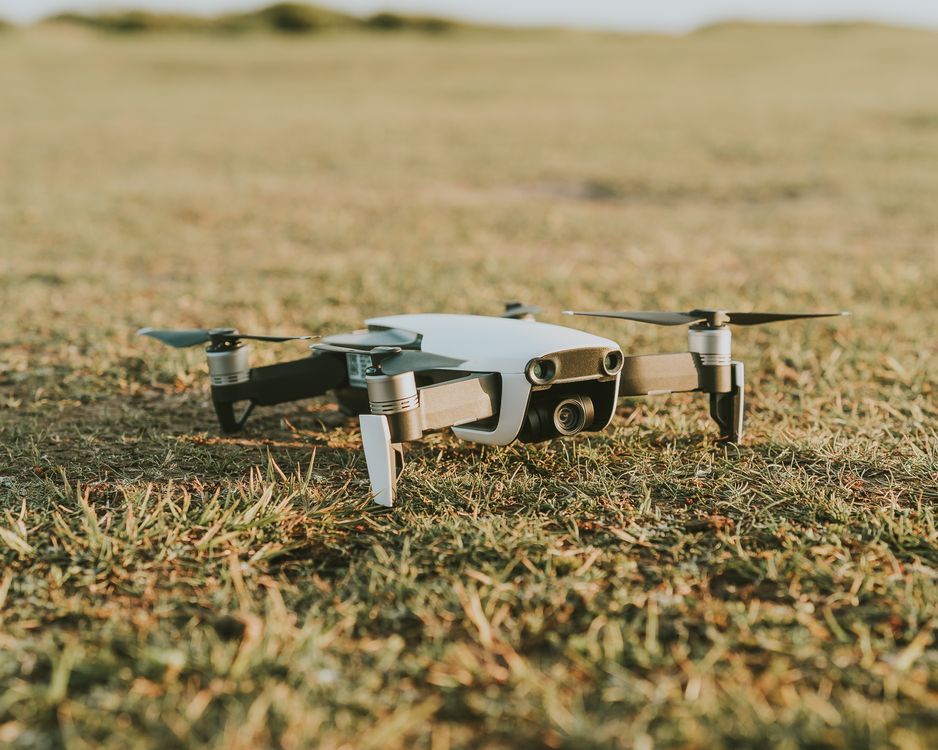
When Frank Wang (Wang Tao) founded Da-Jiang Innovations in a Shenzhen apartment in 2006, his singular obsession was flight stabilization technology. Two decades later, DJI commands an estimated 70 to 76 percent of the global consumer and prosumer drone market, with annual revenues reported by industry analysts at approximately $5.5 billion in 2024. But the DJI story in 2026 is no longer simply about market share dominance. It is about how a Chinese technology champion has responded to an intensifying geopolitical environment, pivoted aggressively into enterprise applications, and continued expanding internationally despite headwinds that would have grounded lesser companies.
For buyers, procurement managers, logistics operators, and technology partners, understanding where DJI is heading is essential operational intelligence. This is a company whose hardware is embedded in agriculture, construction, public safety, film production, and emergency response on six continents.
From Shenzhen Garage to Global Platform: The Foundation
DJI’s ascent followed a pattern that Shenzhen made possible. The city’s Huaqiangbei electronics ecosystem gave DJI access to components, manufacturing talent, and rapid iteration cycles that no competitor could match on cost or speed. Wang’s early focus was flight controllers for radio-controlled helicopters. The 2013 launch of the Phantom 1 — the world’s first ready-to-fly consumer drone with GPS stabilization — transformed the company into a consumer electronics giant almost overnight.
Between 2013 and 2020, DJI released product line after product line: the Phantom series for prosumers, Mavic for compact portability, Inspire for cinematographers, Matrice for industrial deployment, and Agras for agricultural spraying. By 2020, DJI had offices in the US, Europe, Japan, and South Korea, and customers ranging from Bechtel to Hollywood production studios to municipal fire departments — a case study in Chinese technology brand-building that China’s Pearl River Delta electronics cluster was designed to produce.
The Regulatory Reckoning: US Entity List and NDAA Restrictions
DJI’s challenges with US regulators began accumulating after 2017, when reports emerged that US military units were using DJI drones for surveillance operations and that the company’s data handling practices had drawn scrutiny from the US Department of Homeland Security. In 2020, the US Department of Defense designated DJI a “Chinese military company” under the provisions of the National Defense Authorization Act — a designation that DJI has consistently contested and that carries significant procurement implications for US government contractors.
In December 2021, the US Commerce Department added DJI to the Bureau of Industry and Security Entity List, restricting US companies from exporting certain technology to DJI without a license. Subsequent NDAA provisions — specifically Section 1260H of the FY2023 NDAA — effectively prohibited US federal agencies and their contractors from procuring DJI drones using federal funds.
The practical impact has been significant but not fatal. Federal and defense-adjacent procurement is a meaningful but minority segment of DJI’s global revenue. American commercial buyers can still purchase DJI products; US companies can still use them. The restrictions apply specifically to federally funded procurement and certain technology exports. DJI has responded by contesting designations in US courts (with legal progress by mid-2025) and by accelerating domestic chip design partnerships within China’s semiconductor ecosystem.
The Enterprise Pivot: Where DJI’s Growth Engine Now Lives
Consumer drones — the Mavic and Mini product lines — remain important for DJI’s brand presence, but the company’s most strategically significant growth is happening in enterprise and industrial applications. The Matrice 350 RTK, DJI’s flagship enterprise platform as of 2026, supports payloads ranging from thermal cameras to LiDAR scanners to multispectral sensors, and has become the standard platform for infrastructure inspection, precision agriculture, and public safety operations in dozens of countries.
The Agras T50, DJI’s flagship agricultural spraying drone, represents one of the most compelling bilateral trade stories in the sector. Chinese agricultural operations have adopted Agras drones at massive scale — by 2024, DJI drones had collectively treated over 100 million hectares of farmland in China, according to figures cited by DJI at its 2024 agricultural conference. But the platform has also found significant adoption in Brazil, Australia, and Southeast Asia. For American agricultural technology companies evaluating partnerships or competitive responses, the Agras line is essential reference material.
DJI’s Dock product line — automated drone-in-a-box stations that allow drones to launch, fly missions, and recharge without human intervention — has found rapid adoption in industrial inspection, border monitoring, and port logistics. Several major logistics and port operators in Europe and Asia Pacific have deployed DJI Dock systems as part of automated inspection workflows. This infrastructure-scale deployment represents a fundamentally different commercial model than selling individual drones to individual buyers.
The Competitive Landscape: Who Is Challenging DJI?
DJI’s dominance has attracted serious challengers — most benefiting from its US federal procurement restrictions. Skydio (Redwood City, California) has secured significant government contracts on the strength of its AI-powered autonomous flight and NDAA-compliant supply chain. Autel Robotics, Chinese-founded but US-domiciled, aggressively markets its EVO Max lines as DJI alternatives for government customers. Parrot (France) has pivoted almost entirely to defense markets with its ANAFI USA platform.
None has matched DJI’s combination of production scale, software ecosystem depth, and price competitiveness in commercial markets. At the consumer level, DJI’s Mini 4 Pro retailed at approximately $759 at launch — a price point NDAA-compliant competitors have struggled to approach at comparable performance. The dynamic illustrates a pattern visible in the surveillance camera industry with Hikvision and Dahua: regulatory barriers create space for US alternatives in government markets while commercial adoption continues.
DJI’s International Expansion: Markets Where the Playbook Runs Freely
Outside US federal procurement, DJI’s global strategy operates largely without restriction. In Europe, DJI drones dominate commercial, media, and agricultural markets. The EU’s U-Space regulatory framework required product adaptations that DJI delivered through software updates and new configurations. In Southeast Asia, DJI’s agricultural drones are scaling through government-backed programs — India, Indonesia, Vietnam, and Thailand have all seen significant Agras deployment growth. Latin America, particularly Brazil and Argentina, has become one of DJI’s fastest-growing regional markets, with Chinese agri-tech expansion across the hemisphere creating natural distribution pathways.
What Western Business Partners Need to Know in 2026
Supply Chain Resilience
DJI has systematically reduced reliance on US-origin components since 2021. Gimbal motors, imaging sensors, and flight controller chips have been progressively replaced with domestically sourced alternatives — reducing vulnerability to further export controls while maintaining performance parity that DJI’s ongoing product releases continue to demonstrate.
Data Security and Enterprise Procurement
Enterprise buyers with government contracts or security sensitivities should conduct careful due diligence. DJI has introduced Local Data Mode (disabling all internet connectivity during flight), on-premise processing options, and third-party security audits. The US Cybersecurity and Infrastructure Security Agency (CISA) has published guidance on evaluating Chinese-manufactured technology in critical infrastructure — essential reading for procurement teams regardless of ultimate vendor choice.
Commercial vs. Federally Restricted Markets
US commercial enterprises — construction firms, media companies, agricultural operators, utilities — face no legal restriction on DJI products. Restrictions apply to federally funded procurement by government contractors. Many organizations that interpreted DJI restrictions as broader than they legally are forfeited operational advantages without legal necessity. The USTR industrial goods trade policy outlines the broader regulatory environment governing Chinese technology imports into US commercial markets.
Partnership and Distribution Opportunities
DJI’s authorized enterprise partner network remains one of the most accessible entry points for building service businesses around drone technology. The program includes training certification, co-marketing support, and SDK access — a commercially viable model even in complex regulatory environments.
The Bigger Picture: DJI as a Template for Chinese Tech Globalization
DJI’s trajectory offers an instructive template for how Chinese technology companies sustain global relevance under geopolitical pressure. The company has not retreated from international ambition. It has adapted product lines for regulatory compliance, diversified supply chains to reduce technical dependencies, invested in legal challenges to contested designations, and continued delivering hardware that commercial customers find genuinely superior at comparable price points.
This pattern is visible across multiple Chinese technology sectors — from CATL building gigafactories in Hungary and Germany to telecom equipment suppliers restructuring global supply chains. The lesson for Western companies is that understanding these firms’ strategies and capabilities is prerequisite to sound sourcing, partnership, and competitive decisions.
DJI’s official enterprise product documentation remains essential reading for anyone in the industrial drone space. The company’s commitment to advancing what unmanned systems can do — in agriculture, infrastructure, public safety, and logistics — shows no signs of diminishing. Whether you are a buyer, a competitor, or a policy analyst, DJI in 2026 demands your attention.