
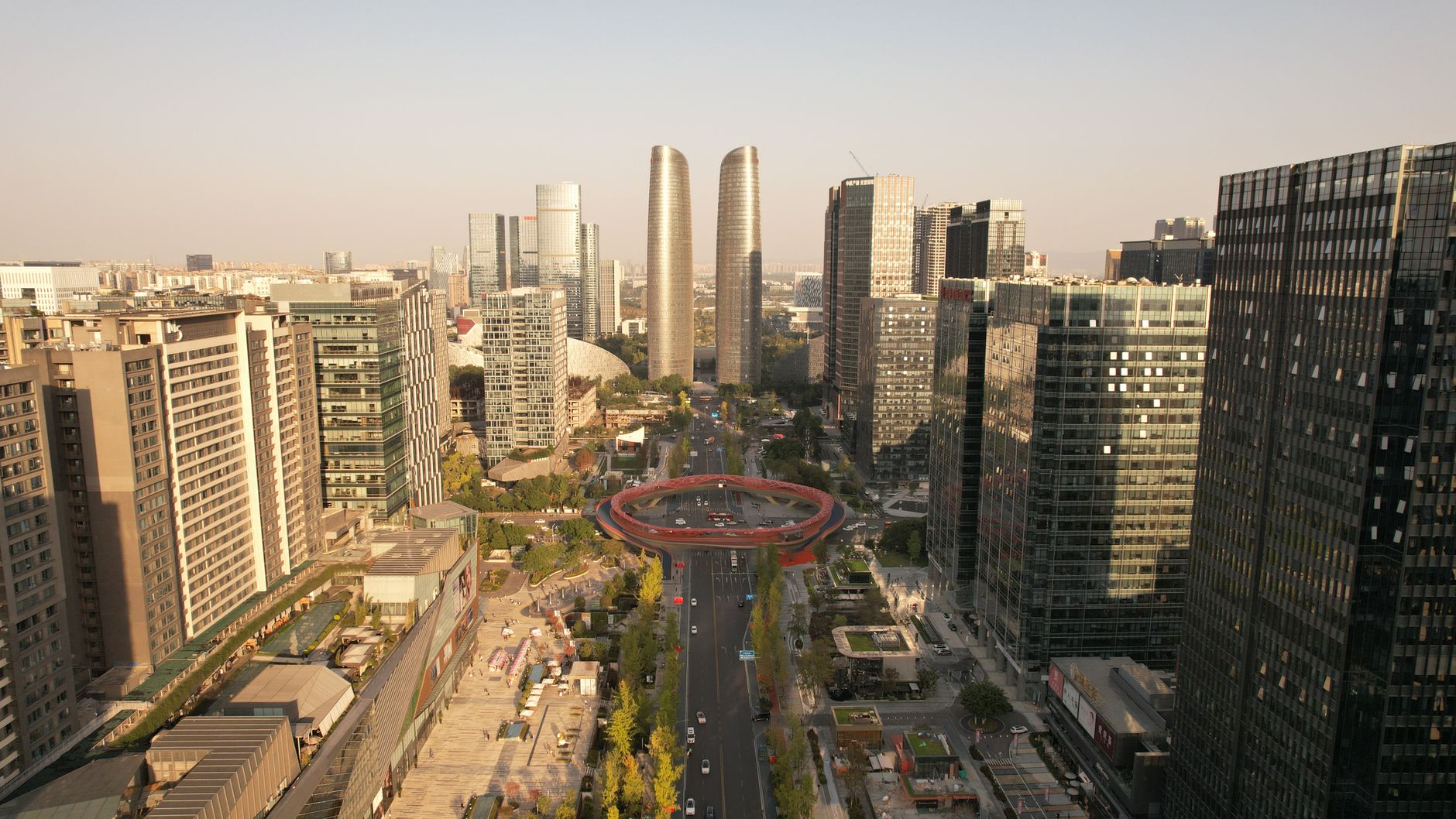
Chengdu is no longer just a city famous for giant pandas and fiery hotpot. Over the past decade it has quietly grown into one of China’s most strategically important business destinations — a manufacturing powerhouse, a digital-economy hub, and the commercial gateway to western China’s 400 million consumers. For Western companies that have concentrated their China footprints in Shanghai, Beijing, or Shenzhen, Chengdu deserves a serious second look.
This guide covers what makes Chengdu distinctive, which industries are genuinely open to foreign players, and the practical steps required to establish or expand a presence there.
Why Chengdu, Why Now
Chengdu is the capital of Sichuan Province and the economic anchor of the Chengdu-Chongqing Economic Circle — a state-level development zone that Beijing formally designated in 2021 as China’s “fourth economic pole,” alongside the Yangtze River Delta, Pearl River Delta, and Beijing-Tianjin-Hebei cluster. The economic circle encompasses roughly 95,000 square kilometers and a combined GDP that crossed 10 trillion RMB (approximately USD 1.4 trillion) in 2024.
The city’s appeal to foreign investors rests on several converging factors:
- Lower operating costs. Commercial rents, industrial land prices, and average wages are meaningfully lower than in Tier-1 cities. A mid-level bilingual manager in Chengdu typically earns 30 to 40 percent less than an equivalent hire in Shanghai.
- Educated talent pool. Sichuan and the broader western region generate roughly 500,000 university graduates annually. Chengdu itself hosts more than 56 universities, including Sichuan University and the University of Electronic Science and Technology of China (UESTC).
- Rail and air connectivity. The China-Europe Railway Express (CRE) runs dedicated freight trains from Chengdu to European destinations including Lodz, Tilburg, and Nuremberg — a 10- to 14-day journey versus 25 to 35 days by sea. Tianfu International Airport, opened in 2021 and one of China’s largest, handles over 60 international routes.
- Policy support. Chengdu High-Tech Zone (CDHT) and the Chengdu-Chongqing Free Trade Zone both offer preferential corporate income tax rates (15 percent for qualified hi-tech enterprises versus the standard 25 percent), streamlined customs processing, and dedicated foreign investment service centers.
Key Sectors Open to Foreign Investment
Advanced Manufacturing and Electronics
Chengdu has emerged as a critical node in global electronics supply chains. Intel, Texas Instruments, Dell, Foxconn, and Lenovo all maintain significant operations in the city. Intel’s Chengdu facility, for example, assembles and tests a substantial share of the company’s global CPU output. The city’s concentration of electronics manufacturers has created a dense supplier ecosystem that benefits new entrants in semiconductor packaging, PCB fabrication, precision components, and industrial automation.
Foreign companies investing in integrated circuit design or manufacturing may qualify for the “2+8” incentive program administered through the Chengdu Municipal Bureau of Industry and Information Technology, which bundles R&D subsidies, tax relief, and housing allowances for key technical personnel.
Software, IT Services, and Digital Economy
Chengdu ranks among China’s top five cities for software and information technology revenues, with output exceeding 1.4 trillion RMB in 2024. The Tianfu Software Park and Chengdu Hi-Tech Zone house operations from IBM, SAP, Accenture, Tata Consultancy Services, and dozens of mid-tier Western technology firms that use Chengdu as a nearshore development center serving Asia-Pacific clients.
The cost advantage is significant: a senior software engineer in Chengdu commands roughly 30 to 45 percent less than an equivalent hire in Shanghai or Beijing, with attrition rates that are measurably lower due to the city’s high quality of life. Game development, fintech software, and enterprise SaaS are three verticals where Western companies have found Chengdu-based engineering teams particularly productive.
Consumer Goods and Food and Beverage
Western China’s middle class is growing faster than the national average in per-capita income terms. Sichuan consumers are known for above-average spending on food, lifestyle products, and premium imported goods — particularly spirits, personal care, and health supplements. Chengdu’s retail infrastructure includes 10 large-format international malls and a deeply developed night-economy culture that has made food and beverage one of the most active foreign investment categories in the city.
Western restaurant chains, food ingredient suppliers, and packaged goods brands looking to test the Chinese market without a full Beijing or Shanghai setup have used Chengdu as a lower-cost entry point with high consumer receptivity.
Healthcare, Life Sciences, and MedTech
Sichuan Province’s large population and aging demographics make healthcare one of the highest-growth sectors in the region. The Chengdu Tianfu International Bio-Town, a dedicated life sciences park, has attracted global pharmaceutical and medical device companies including Novartis, Roche, and BD. Foreign companies in clinical diagnostics, surgical equipment, and pharmaceutical manufacturing can access streamlined approval pathways through the Sichuan Provincial Drug Administration — which operates under the national National Medical Products Administration (NMPA) framework.
Entity Structure: What Works in Chengdu
Most foreign companies entering Chengdu establish a Wholly Foreign-Owned Enterprise (WFOE) or a Joint Venture (JV), depending on the sector. The process is administered by the Ministry of Commerce (MOFCOM) at the national level, with local execution handled through the Chengdu Municipal Commerce Bureau.
For market entry strategy — whether to use a WFOE, a JV, or a Representative Office — understanding how to structure a joint venture with a Chinese state-owned enterprise is especially relevant in Chengdu, where SOEs are prominent partners in manufacturing, infrastructure, and healthcare. In regulated industries, a JV may not just be advisable — it may be legally required under China’s Foreign Investment Law (effective January 2020) and its accompanying Negative List, which is published annually by MOFCOM and the National Development and Reform Commission.
The registration process in Chengdu typically takes 15 to 30 business days for a standard WFOE. The Chengdu High-Tech Zone operates a dedicated foreign investment service window (外商投资服务中心) at 2399 Tianfu Avenue that provides bilingual support for entity registration, work permits, and tax filings.
Navigating the Local Government Relationship
Chengdu’s municipal government has a well-established track record of courting foreign investment. The city has consistently ranked among China’s top five in annual surveys of foreign investor satisfaction conducted by the China Council for the Promotion of International Trade (CCPIT).
That said, Western companies should understand that the relationship with local government in Chengdu — as in any Chinese city — requires ongoing cultivation rather than a one-time interaction. Investment agreements often include soft commitments around local hiring targets, procurement from local suppliers, and participation in industry associations. These are rarely hard obligations but matter for maintaining the goodwill that translates into expedited approvals and access to subsidy programs.
Understanding how China’s hukou system affects workforce planning is particularly relevant in Chengdu, where the city has actively reformed its hukou policy to attract talent from across western China — giving foreign employers access to a migrant workforce that is relatively well-settled and stable compared to coastal cities.
Logistics and the China-Europe Railway Express
One of Chengdu’s most distinctive competitive advantages is its position as the largest origin city on the China-Europe Railway Express (CRE) network. As of 2025, Chengdu operates more than 10 CRE service lines, with over 8,000 train trips completed annually from its International Railway Port in Qingbaijiang District.
Rail shipping from Chengdu to Central Europe costs roughly 30 to 50 percent less than air freight while cutting transit time by more than half compared to ocean shipping. Bonded warehouse facilities at the Qingbaijiang Railway Port allow deferred duty payment and cross-docking. For further detail on this logistics tool, see how Western companies can use bonded warehouses in China.
Cultural and Business Environment
Chengdu has a reputation within China for a relaxed pace of life, strong local identity, and entrepreneurial culture that differs from the high-pressure environments of Shanghai or Shenzhen. For Western professionals, a few observations are worth noting:
- Relationship-building takes time but tends to be genuine. Chengdu business culture places significant weight on personal trust built over shared meals and social occasions. The city’s teahouse culture is both a social lubricant and a venue for serious business discussions.
- Decision-making is often consensus-oriented. Significant decisions in local companies and SOEs frequently require broader internal alignment. Patience and consistent follow-up work better than deadline pressure.
- English proficiency is lower than in coastal cities. Budget for professional interpretation, particularly in manufacturing, government, and traditional industries.
For frameworks on managing Chinese business relationships, the guide to handling Chinese partner disputes without litigation is a practical starting point.
Resources for Getting Started
Several organizations provide practical support for Western companies evaluating or entering the Chengdu market:
- The US-China Business Council (USCBC) maintains an active Western China committee and publishes annual business environment surveys that include Chengdu-specific data.
- MOFCOM publishes the current Negative List, sector investment guides, and the bilateral investment treaty framework governing US and European investor protections.
- The US Commercial Service, operated through the International Trade Administration (ITA), offers Gold Key matchmaking services and market research for US companies entering Chengdu — with staff based in both Chengdu and Chongqing.
The Bottom Line
Chengdu is not a backup option for companies that couldn’t make Shanghai work. It is a distinct market with its own strengths, cost structure, and strategic advantages — particularly for companies in electronics manufacturing, software development, healthcare, and consumer goods that want to access western China’s growing middle class while keeping operational costs under control.
The combination of improving infrastructure, a stable talent base, active government support for foreign investment, and direct rail connectivity to Europe makes Chengdu one of the more compelling secondary entries in China for Western companies in 2026. Done right, a Chengdu operation can serve not just as a China market vehicle, but as a cost-effective regional production and services hub with genuinely global reach.