
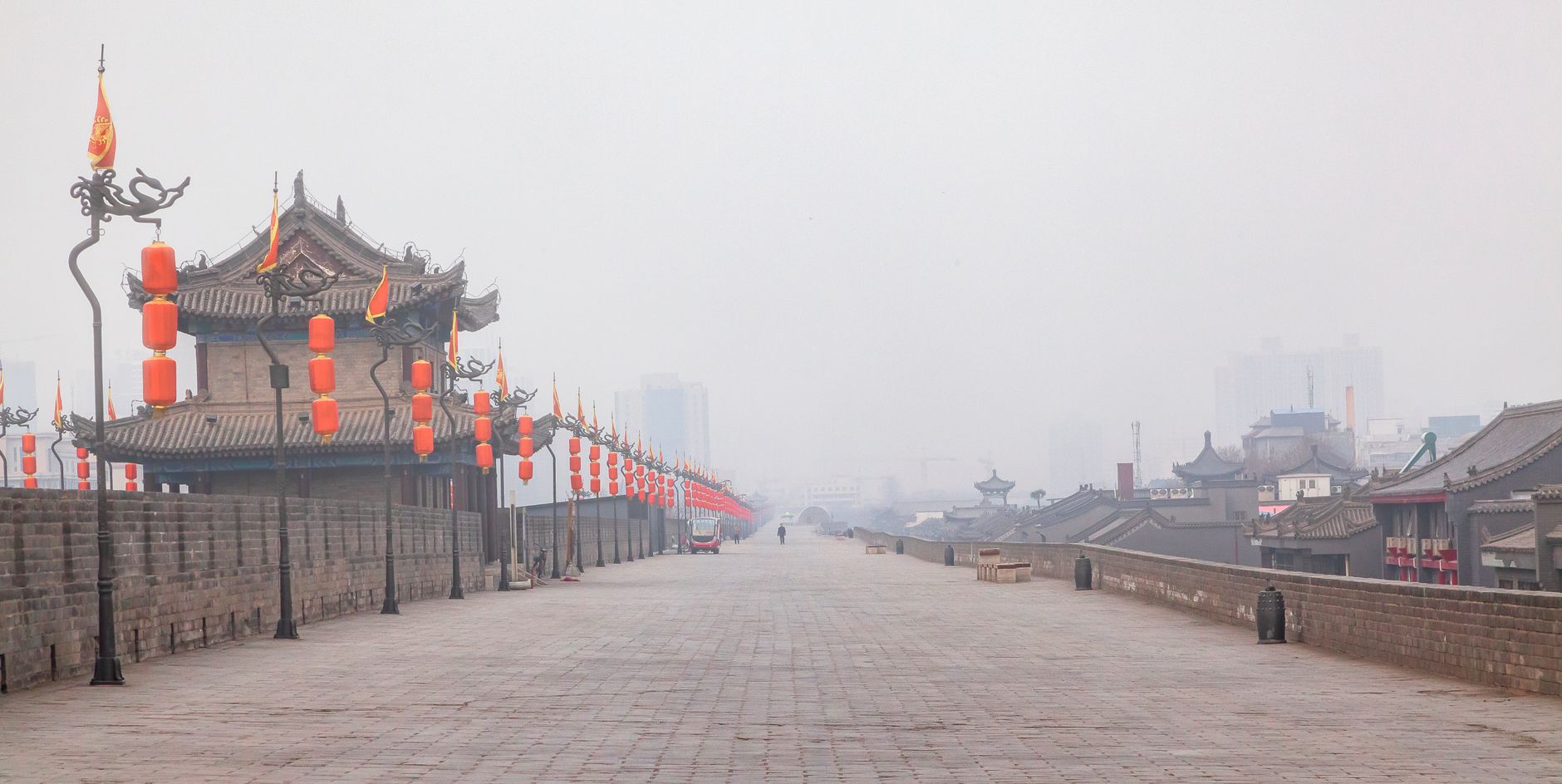
Xi’an is not a city that announces itself quietly. The capital of Shaanxi Province sits at the eastern end of the ancient Silk Road, home to the Terracotta Warriors and more than 3,000 years of recorded history. Yet for foreign businesses, the more relevant story is what Xi’an has become in the 21st century: a serious manufacturing and technology hub with ambitious expansion plans, a fast-growing consumer class, and a cluster of industrial sectors that directly intersect with international trade.
This guide is for executives, entrepreneurs, and trade consultants considering Xi’an as a market entry point, sourcing destination, or production base. Those who arrive without understanding its unique industrial profile, administrative structure, and cultural context tend to underestimate both the opportunity and the friction involved.
Xi’an’s Economic Identity: What Sets It Apart
Xi’an is a Tier 2 city by most conventional rankings, but that classification undersells its strategic weight. It is the largest city in northwest China, with a permanent population exceeding 13 million, and its municipal GDP surpassed 1.3 trillion RMB in 2024 — driven by advanced manufacturing, aerospace, and a large university research base. The city hosts more than 90 universities and research institutes, including Northwestern Polytechnical University and Xi’an Jiaotong University, two of China’s top engineering schools. This academic infrastructure feeds a pipeline of STEM graduates that makes Xi’an particularly attractive for R&D-intensive foreign manufacturers.
Unlike Chengdu or Wuhan, which have positioned themselves as consumption and tech hubs, Xi’an leads with manufacturing and research depth. For a broader framework on how Chinese cities differ by tier and industry focus, see our guide on how tiered cities differ for business in China.
Key Industrial Sectors for Foreign Companies
Aerospace and Defense Supply Chains
Xi’an is China’s aerospace manufacturing capital. AVIC Xi’an Aircraft Industry (Group) and COMAC assembly operations are concentrated in the Yanliang District, alongside dozens of tier-one and tier-two aerospace suppliers. For foreign companies in components, precision machining, composite materials, or MRO services, Xi’an presents genuine partnership opportunities — though subject to strict regulatory review given the dual-use sensitivity of the sector. Foreign investment in aerospace is governed by China’s Foreign Investment Negative List, administered by the Ministry of Commerce (MOFCOM).
New Energy Vehicles and Battery Supply Chain
BYD opened one of its largest NEV manufacturing bases in Xi’an in 2022. The facility now produces hundreds of thousands of vehicles per year and has catalyzed a regional supply chain ecosystem spanning battery cells, structural components, charging infrastructure, and software systems. Foreign suppliers of battery materials, thermal management systems, and automotive electronics are actively being courted by both BYD and the municipal government.
Semiconductors and Pharmaceuticals
Samsung’s memory chip fabrication facility in Xi’an — totaling over $15 billion USD in investment — established the city’s credibility in semiconductor manufacturing and drew a cluster of materials, equipment, and chemical suppliers to the Xi’an Economic and Technological Development Zone (ETDZ). On the pharma side, Xi’an’s Hi-Tech Industries Development Zone hosts both traditional Chinese medicine (TCM) extraction operations and modern biopharmaceutical manufacturers. Foreign pharmaceutical and medical device companies entering the market must register with the State Administration for Market Regulation (SAMR), which administers product approvals, GMP certification, and market access.
Xi’an’s Major Development Zones
Xi’an Hi-Tech Industries Development Zone (XHTZ): The most prominent zone for foreign investors, housing over 20,000 enterprises in IT, biopharma, advanced manufacturing, and financial services. It functions as Xi’an’s main commercial and R&D district.
Xi’an Economic and Technological Development Zone (ETDZ): Focused on heavy and advanced manufacturing — automotive, electronics, and aerospace components. BYD and Samsung both operate here.
China (Shaanxi) Pilot Free Trade Zone: Established in 2017, the Shaanxi FTZ covers three sub-areas: Xi’an central, Yangling (agricultural tech), and Xixian New Area. It offers streamlined customs procedures, reduced business registration timelines, and pilot policies for cross-border services and investment liberalization. Foreign companies can use it for bonded warehousing, re-export, and expanded access in logistics, financial services, and professional services. For a deeper look at how to leverage China’s FTZ system, see our guide on how to use China’s Free Trade Zones for market entry.
Setting Up a Legal Entity in Xi’an
Foreign companies can establish a Wholly Foreign-Owned Enterprise (WFOE), a joint venture, or a representative office in Xi’an through the standard national framework, with the Shaanxi FTZ offering accelerated registration timelines for eligible sectors. For most manufacturing or technology operations, a WFOE provides full operational control without requiring a Chinese partner. However, sectors on the restricted or prohibited list may still require JV structures or NDRC approval — always verify against the current MOFCOM Foreign Investment Negative List before finalizing your structure.
For US companies, the US Commercial Service (trade.gov/china) maintains on-the-ground resources in China and can facilitate introductions to vetted legal and accounting partners. Their China Business Advisory Service is particularly useful for initial market entry decisions. US companies should also review the Commerce Department’s guidance on export controls before transferring technology to Xi’an-based aerospace or semiconductor entities.
Logistics and Supply Chain Infrastructure
Xi’an is a critical node in China’s Belt and Road Initiative land logistics network. The China-Europe freight train routes departing from Xi’an International Trade and Logistics Park connect the city to Central Asia, Russia, and European destinations including Hamburg, Warsaw, and Rotterdam. In 2024, Xi’an handled over 5,000 China-Europe freight train trips — more than any other Chinese city.
For companies sourcing from or exporting to Europe, transit times via rail run approximately 12-14 days to Central European destinations — roughly half the maritime transit time from Shanghai via the Suez Canal. For high-value goods or just-in-time supply chains, this translates into meaningful working capital savings. Xi’an Xianyang International Airport adds air cargo capacity with direct freight connections to Europe and Southeast Asia. For broader context on how China is reshaping domestic and cross-border trade flows, see our analysis of China’s dual circulation strategy and its impact on trade.
Labor Market and Talent
Xi’an’s large university base produces a significant surplus of engineering, computer science, and applied science graduates. Entry-level STEM salaries are considerably lower than in Beijing or Shanghai. Skilled engineers with 3-5 years of experience in aerospace or semiconductor sectors command salaries in the 250,000-400,000 RMB range — competitive by international standards for equivalent expertise.
Xi’an has been actively loosening hukou restrictions to attract talent and increase permanent residency conversion — good news for companies hiring from outside Shaanxi Province. The local government’s talent programs include housing subsidies, education access for dependents, and streamlined permanent residency pathways for skilled workers.
Cultural and Business Environment
Xi’an’s business culture follows the relationship-first orientation common across China, with some northwest China characteristics worth noting. The pace of relationship-building tends to be measured — decision-makers value demonstrated commitment and patience over aggressive timelines. Foreign executives who make multiple visits and show genuine interest in the city’s development trajectory consistently report stronger outcomes than those who treat Xi’an as a transactional vendor market.
Local government and state-enterprise partners respond well to foreign companies that connect their investment with Xi’an’s stated industrial priorities. The municipal government has identified smart manufacturing, biopharmaceuticals, new energy, aerospace components, and digital economy as priority sectors for foreign investment. Aligning your market entry pitch with these priorities tends to accelerate administrative cooperation. English proficiency varies widely — within the development zones it is workable, but budget for professional Mandarin interpretation in any government or senior-level meetings.
Practical Entry Checklist
- Identify your target zone: XHTZ for tech/R&D/services, ETDZ for manufacturing, Shaanxi FTZ for trade and cross-border services
- Verify negative list status: Check MOFCOM’s current list for your industry category before committing to a structure
- Engage the US Commercial Service: Their Chengdu-based officers cover northwest China and can facilitate partner introductions
- Plan for logistics early: Xi’an’s rail connections to Europe are an underutilized advantage; engage a licensed customs broker in the ETDZ from the outset
- Map Xi’an Jiaotong University’s industry liaison office: Useful for both R&D partnerships and talent recruitment pipelines
Xi’an is not the easiest city to navigate as a foreign business — bureaucratic processes, language barriers, and physical distance from coastal commercial centers all add friction. But for companies in aerospace supply chains, NEV components, semiconductor materials, pharma, or cross-border logistics to Europe, the case for Xi’an is unusually compelling. The talent pool, infrastructure investment, and policy support are aligned in ways that are hard to replicate elsewhere in western China — and competition from other foreign entrants remains considerably lower than in Tier 1 markets.