
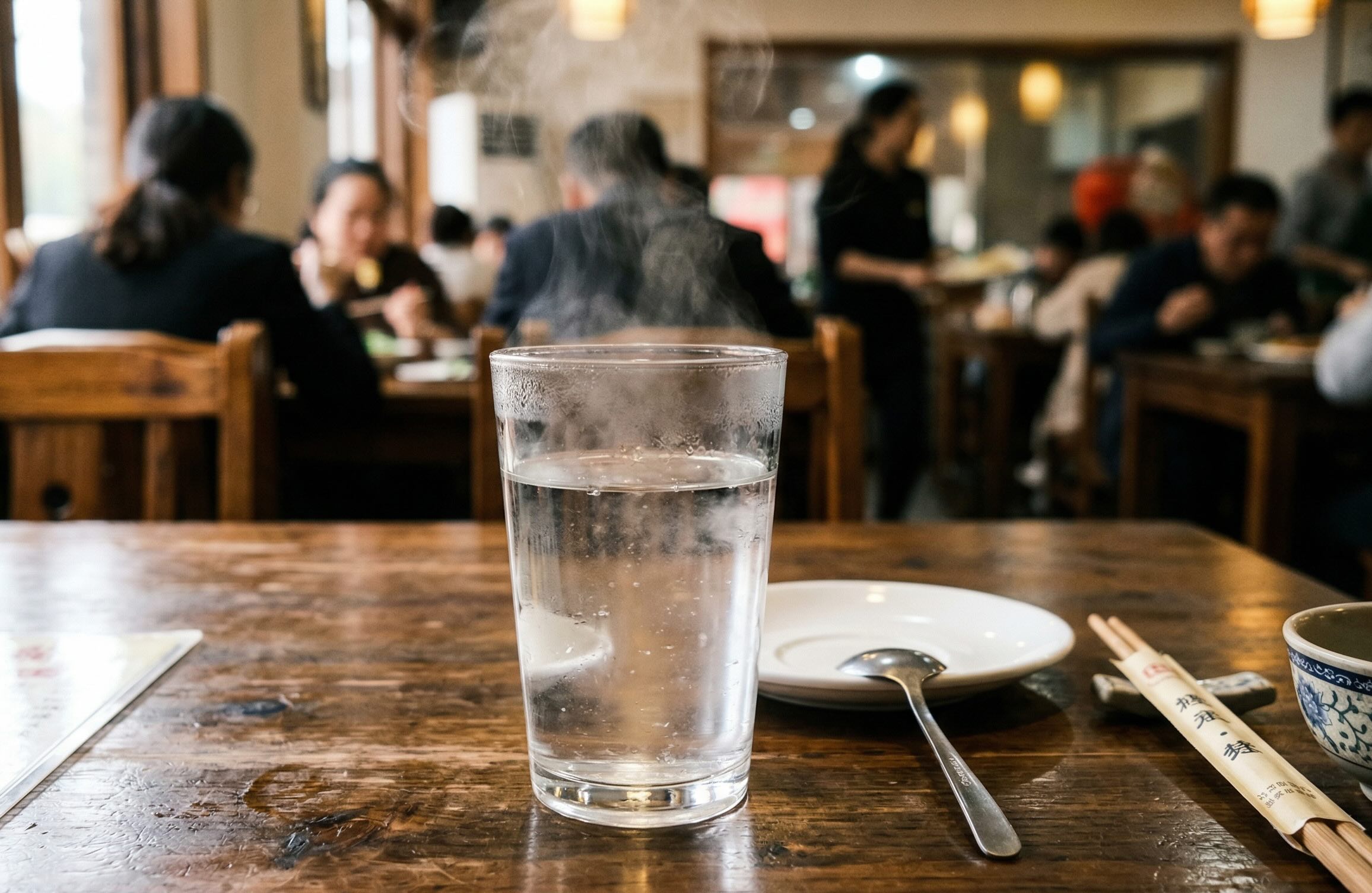
The first time a Western visitor is offered a glass of hot water in China ; plain, no tea, no lemon, just hot water ; it can feel like a mistake. Surely they meant to add something. They didn’t.
热水 (rè shuǐ) ; hot water ; is one of the most quietly revealing windows into Chinese culture. Understanding why it’s offered, and what refusing it communicates, is the kind of thing that doesn’t make it into business guides but absolutely shapes how you’re perceived.
Why Hot Water?
The practice is rooted in Traditional Chinese Medicine (TCM) and centuries of practical wisdom. In TCM, cold water is believed to disrupt the body’s balance ; shocking the system, slowing digestion, weakening qi. Hot water, by contrast, is seen as warming, cleansing, and restorative.
But it’s more than medicine. Before reliable water purification, boiling water was also the safest way to drink it. The habit became cultural, then generational. Today, even young Chinese people raised in modern cities who have no particular interest in TCM will still default to hot or warm water ; and will find cold water slightly alarming, especially in winter or when someone isn’t feeling well.
What It Means in a Business Context
When you arrive at a Chinese office or home and are immediately offered hot water, you’re receiving a gesture of welcome and care. It says: you are a guest here, and we are looking after you.
Refusing it ; especially bluntly ; can land awkwardly. Not offensively, but it registers. A better approach: accept the cup, hold it, take a polite sip. You don’t have to drink it all. The acceptance itself is the social signal.
This matters more than it sounds. Chinese business culture places enormous weight on 面子 (miànzi) ; face ; and the small rituals of hospitality are part of how respect and goodwill are communicated. These dynamics come into sharp relief at formal dinners: the Chinese business banquet operates by a set of social rules that extend well beyond what appears on the menu. Engaging with them, even minimally, tells your host that you’re paying attention.
Hot Water Beyond the Office
You’ll see thermoses everywhere in China ; on desks, in meeting rooms, on trains. Flight attendants on domestic Chinese flights hand out cups as a matter of course. Hospital patients are given it regularly. Elderly people carry personal thermoses the way Westerners carry coffee cups.
There’s a running joke among expats that Chinese parents solve everything with hot water: tired? Hot water. Headache? Hot water. Heartbroken? Hot water. It’s affectionate and a little true.
The Practical Upshot for Business Visitors
Accept this greeting when offered. If you genuinely can’t stomach it, ask politely for room temperature water (常温水, cháng wēn shuǐ) ; this reads as health-conscious rather than rude. Avoid asking for ice water in a traditional business setting; it can come across as tone-deaf to the context.
Better yet, offer hot water to your Chinese guests when they visit your office. That small gesture ; the thermos, the cup, the care ; communicates more cross-cultural fluency than any business card translation ever will. Pair this kind of awareness with thoughtfulness in the art of gift-giving in China, and you signal a level of cultural intelligence that most foreign visitors never achieve.
The handshake that lasts is built on exactly these details.