
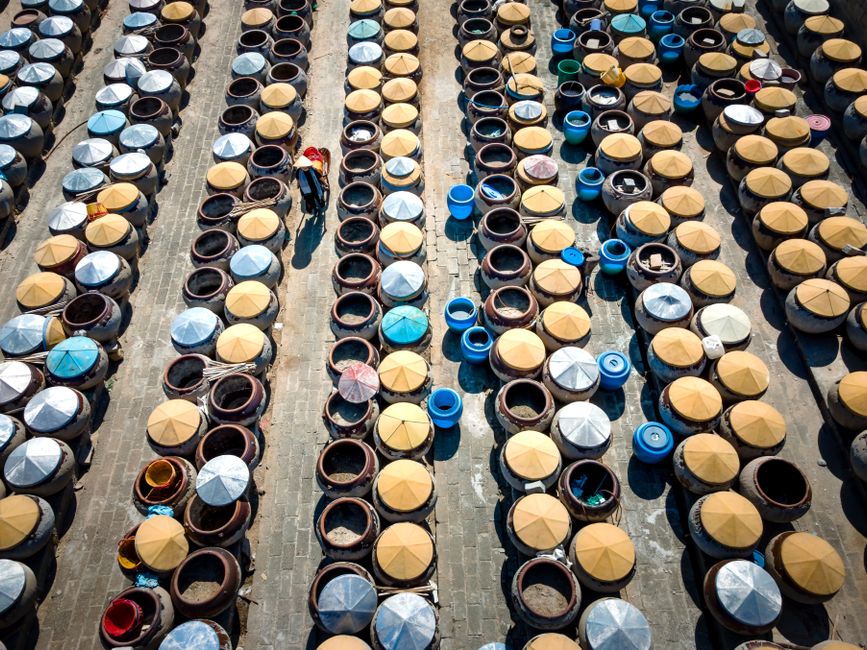
China is the world’s largest food producer, largest food consumer, and increasingly, one of its largest food exporters. The country’s food processing industry has undergone a structural transformation over the past three decades — moving from small-scale, fragmented operations supplying domestic markets to vertically integrated industrial giants commanding significant share in global export trade. For Western importers, food retailers, and ingredient buyers, understanding how this industry works is no longer optional. It is a prerequisite for competitive sourcing.
The Scale That Shapes Global Markets
China’s food and beverage processing industry generates annual output exceeding 15 trillion yuan (approximately $2.1 trillion USD), making it one of the largest manufacturing sectors in the country. According to China’s National Bureau of Statistics, food processing accounts for roughly 11% of total industrial output value. The industry employs more than 20 million workers directly.
On the export side, China ships processed food products to over 200 countries. The country is the world’s largest exporter of vegetables, aquatic products, and several processed ingredients including citric acid, MSG, ascorbic acid (Vitamin C), and lysine. In 2023, China’s agri-food exports exceeded $90 billion, with processed and semi-processed goods representing a growing share of that total.
Any food manufacturer operating at scale — whether in North America, Europe, or Southeast Asia — almost certainly relies on Chinese inputs at some point in their supply chain, whether they track it directly or not.
The Key Sectors Driving Export Volume
Aquatic Products
China is the world’s largest producer and exporter of seafood. Provinces like Shandong, Fujian, and Guangdong operate industrial-scale aquaculture and processing facilities. Companies such as Zoneco Group and Haid Group represent the institutional players in this space. Processed products include frozen fish fillets, shrimp, crab meat, and dried seafood. The United States, Japan, and the EU are among China’s largest seafood export destinations.
Grain and Oilseed Processing
China’s grain processing industry is anchored by state-owned COFCO Corporation (中粮集团), China’s largest food and agriculture company with annual revenue exceeding 500 billion yuan. COFCO operates across the entire value chain — from raw grain procurement to branded consumer products sold under names including Great Wall Wine and Fulinmen cooking oil. On the private side, New Hope Group has expanded processing and export operations significantly since 2015.
Food Ingredients and Additives
China dominates global production of food ingredients that rarely appear on finished product labels but are present in nearly everything. In Vitamin C, China accounts for approximately 90% of global production capacity, with Shandong-based manufacturers like Northeast Pharmaceutical Group and Aland (Jiangsu) Nutraceutical at the forefront. Citric acid production is similarly concentrated, with Weifang-area producers setting effective global reference prices.
This concentration has real strategic implications for Western buyers. Price volatility in these categories is often driven by Chinese domestic energy costs, environmental enforcement cycles, and raw material availability in Shandong, Anhui, and Hebei provinces — not global demand shifts.
Instant and Ready-to-Eat Foods
The global market for instant noodles, frozen dumplings, and packaged snacks with Chinese origins is now worth tens of billions of dollars annually. Master Kong (康师傅), listed in Hong Kong, has expanded international reach through distributors in over 60 countries. Want Want Holdings exports across Asia, the Middle East, and North American retail chains serving Asian diaspora communities.
What Made China’s Food Industry So Competitive
Several structural factors combined over two decades to build a cost and scale advantage that remains difficult to replicate elsewhere.
Agricultural consolidation has enabled more mechanized farming, reducing raw material input costs. Government investment in cold chain logistics infrastructure — spearheaded through the State Council’s 2017 Opinions on Accelerating the Development of the Cold Chain Logistics Industry — triggered hundreds of billions in infrastructure spending and significantly reduced post-harvest losses.
Industrial clustering plays an equally important role. Fujian’s Zhangzhou region is known globally for canned mushrooms and processed vegetables. Shandong’s Qingdao and Yantai areas concentrate seafood processing. Henan’s Zhengzhou is a hub for flour milling and baked goods manufacturing. These geographic clusters allow suppliers to share infrastructure, workforce, and quality systems.
Foreign direct investment brought global quality systems into the sector early. Multinationals including Nestlé, Mars, and Tyson Foods established Chinese manufacturing operations in the 1990s and 2000s, transferring HACCP and ISO 22000 frameworks to local partners — many of whom later became independent global competitors.
The Regulatory Framework: Both Sides of the Transaction
Any honest analysis of China’s food processing industry must address food safety. The 2008 melamine scandal involving Sanlu Group caused six infant deaths and triggered sweeping reforms. China’s Food Safety Law, significantly amended in 2015 and 2021, now imposes liability across the full supply chain. The State Administration for Market Regulation (SAMR) operates tiered inspections with rigorous third-party audits required for export-licensed facilities.
Exporters operating from China must obtain registration with the General Administration of Customs of China (GACC), which maintains a database of approved production facilities. The GACC official portal is the authoritative registry of export-eligible establishments by product category — an essential verification step for serious buyers.
On the import side, the U.S. FDA’s Foreign Supplier Verification Program (FSVP) — fully in effect under FSMA since 2018 — places compliance responsibility squarely on U.S. importers. American buyers cannot rely on Chinese export documentation alone; they must conduct hazard analysis and supplier audits. The FDA’s FSMA framework is the definitive compliance reference.
Strategic Implications for Western Buyers and Partners
For Western food companies sourcing from China, the strategic picture in 2026 is more nuanced than either the optimistic framing of the 2000s or the risk-avoidance narrative that gained traction post-2018.
Ingredient-level dependence is deep and difficult to exit quickly. Reformulating products away from Chinese citric acid, Vitamin C, or seafood inputs takes 12 to 36 months even with full management commitment. Understanding where your supply chain touches Chinese production — often several tiers below your Tier 1 suppliers — is essential for resilience planning. Our coverage of US-China supply chain risk management explores this framework in detail.
The regulatory compliance burden is also shifting. Under FSMA and equivalent EU regulations, Western importers bear primary responsibility for supplier qualification. Chinese processors who invest in international certifications (SQF, BRC, IFS) and English-language documentation are significantly easier to onboard — which is why the best facilities increasingly compete on compliance, not just price.
As China’s domestic food consumption continues to grow — driven by an expanding middle class — export availability for some commodity categories will tighten. COFCO and other major players are already reallocating capacity toward higher-margin domestic branded products. Western buyers who treated China as an unlimited source of cheap commodity ingredients will need to adapt their sourcing strategies accordingly. The US Census Bureau Foreign Trade data tracks bilateral agricultural and food trade volumes that are essential for strategic sourcing decisions. Our guide to the Pearl River Delta manufacturing ecosystem provides useful context on regional sourcing options in South China.
Finally, the opportunity for Western food brands entering China remains substantial — particularly in categories where consumers perceive imported products as safer or more premium. Understanding the SAMR, GACC, and MARA approval processes, as well as cross-border e-commerce channels like Tmall Global and JD Worldwide, is essential. For practical context on how Chinese consumers have evolved their purchasing behavior, our analysis of China’s central domestic economy shows the scale of inland consumer demand that is reshaping food sector strategy.
The Bottom Line
China’s food processing industry is a stratified ecosystem ranging from world-class export facilities that rival the best in Europe to informal processors with limited quality infrastructure. The task for Western professionals is to navigate that spectrum intelligently: qualifying the right partners, understanding regulatory obligations on both sides of the transaction, and building supply chain visibility down to the ingredient level.
The companies that do this well — treating Chinese food suppliers as strategic partners rather than interchangeable commodity vendors — consistently achieve better costs, fewer compliance incidents, and more stable supply. In food processing, as in most China business, the quality of your relationships and due diligence determines the quality of your outcomes.