
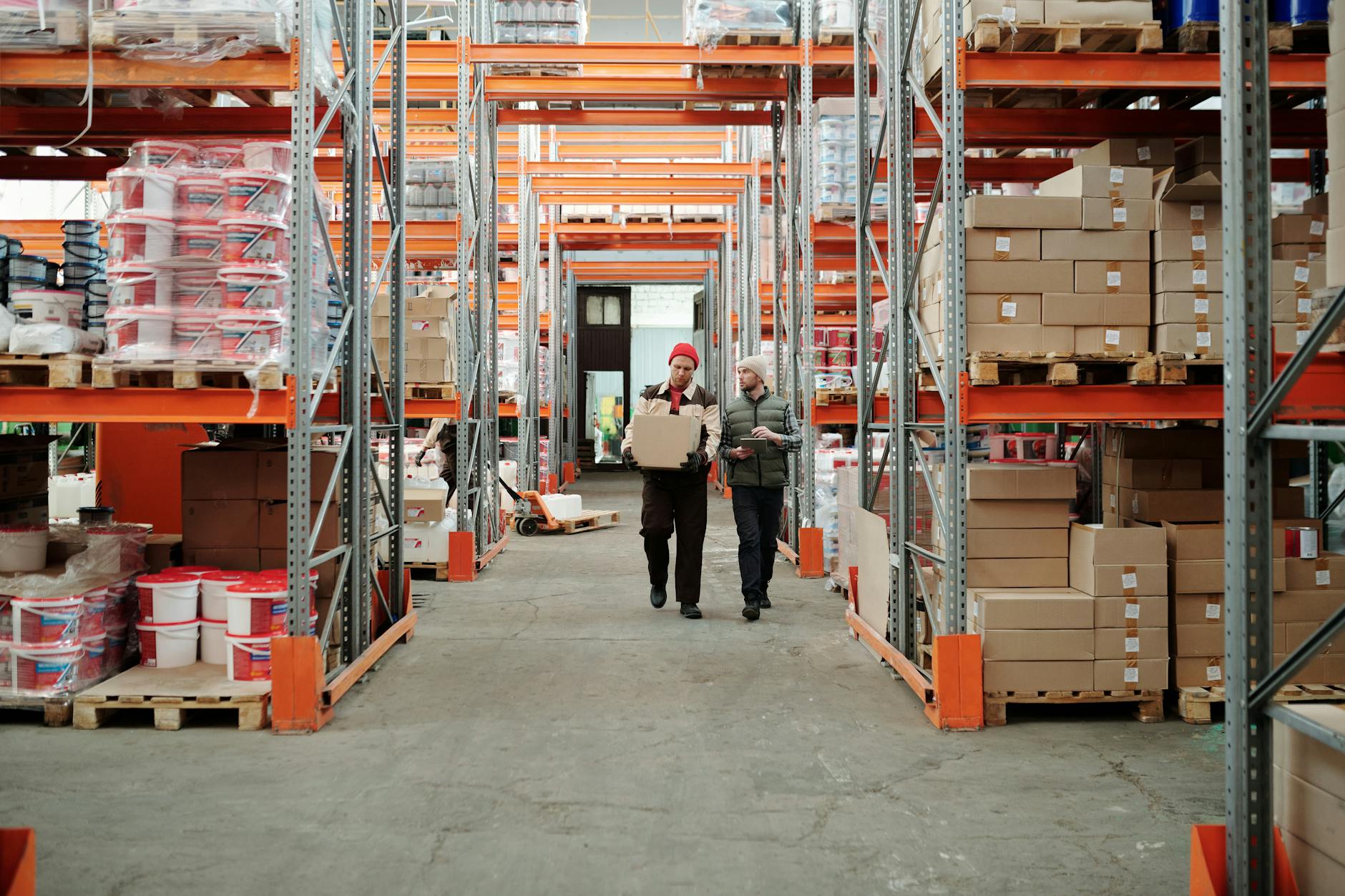
For the past two decades, “China-plus-one” was a boardroom buzzword. Today, it is a survival strategy. Escalating tariffs, geopolitical friction, pandemic-era port shutdowns, and tightening export controls have forced companies to rethink a supply chain model that was built almost entirely around lowest-cost manufacturing in a single country. The goal is no longer to exit China — it is to build a chain resilient enough to keep operating no matter what China policy looks like in any given quarter.
Why “Leaving China” Is Not the Answer
Despite years of headlines about factory migrations to Vietnam, Mexico, and India, China still accounts for roughly 28% of global manufacturing output. The tooling depth, logistics infrastructure, skilled labor concentration, and supplier ecosystems that took 30 years to build simply do not exist elsewhere at scale. Apple still assembles the majority of its iPhones in China. Even companies that have shifted final assembly offshore often still source 60 to 80% of components from Chinese factories.
Resilience, therefore, is not about abandoning China. It is about reducing single-point dependency — while keeping China as a core node in a more distributed network.
Step 1: Map Every Tier of Your Supply Chain
Most companies know their Tier 1 suppliers. Far fewer know who supplies those suppliers. A “China-proof” chain starts with full visibility — down to raw materials and specialty components.
Practical steps include:
- Conduct a supply chain audit. Use a spreadsheet or a platform like Resilinc or Sourcemap to list every supplier, their country, concentration risk, and lead time.
- Identify single-source dependencies. Any input that comes from only one supplier — especially one in a high-risk geography — is a liability. Flag it for dual-sourcing.
- Assess tariff exposure by HS code. Run your bill of materials against the current Section 301 tariff schedule and any pending modifications. The U.S. International Trade Administration publishes ongoing updates that procurement teams should track closely.
Step 2: Adopt a China-Plus-One (or Two) Model
The “plus-one” model means qualifying a secondary manufacturing base alongside China — not instead of it. The secondary location handles surge capacity, politically sensitive categories, or tariff-exposed SKUs while China continues producing the bulk of volume at competitive cost.
Popular plus-one destinations in 2026 include:
- Vietnam: Strong for electronics assembly, apparel, and footwear. Labor costs remain competitive, and bilateral trade agreements with the EU and ASEAN are a bonus.
- Mexico: Nearshoring for U.S. companies. Advantages include USMCA duty benefits, same time zones, and significantly shorter ocean freight times — often 5 to 7 days versus 21 to 25 from Chinese ports.
- India: Strong in pharmaceuticals, chemicals, and increasingly electronics. The government’s Production Linked Incentive (PLI) scheme offers direct subsidies for qualifying manufacturers.
- Indonesia and Thailand: Growing capacity in machinery and automotive components, with improving port infrastructure.
The key is to fully qualify the alternative supplier — not just sign an MOU and file it away. Run trial production runs, audit quality systems, and lock in capacity before a crisis forces your hand.
Step 3: Build Strategic Inventory Buffers
Just-in-time inventory made balance sheets look good for 20 years. COVID-19 exposed its catastrophic downside. The new model — sometimes called “just-in-case” — accepts slightly higher carrying costs in exchange for resilience.
For components that are China-exclusive or have long lead times, consider holding 90 to 120 days of safety stock for critical inputs, versus the 30-day norm of the JIT era. For finished goods, regionalized distribution centers — one in North America, one in Europe, one in Southeast Asia — reduce the impact of any single shipping route disruption.
Step 4: Understand the “Origin” Rules Before You Move
One critical mistake companies make when reshoring or nearshoring is assuming that assembling in a third country automatically avoids tariffs. U.S. Customs and Border Protection applies “substantial transformation” tests — if the core manufacturing still happens in China and a foreign factory is simply doing final assembly or repackaging, CBP will likely still treat it as a Chinese-origin product and apply Section 301 tariffs.
Before restructuring your supply chain around tariff avoidance, get a formal binding ruling from CBP or consult a licensed customs attorney. The WTO’s rules of origin framework provides a useful baseline, but U.S., EU, and other national rules each have specific standards.
Step 5: Develop Deeper Supplier Relationships in China
Paradoxically, building resilience often means investing more — not less — in your existing Chinese suppliers. Companies that treat Chinese factories as interchangeable commodities are the first to lose capacity when demand surges, the last to get allocation during shortages, and the least likely to receive early warning when problems arise.
Best practices include embedding your own quality engineers at key factories, offering multi-year volume commitments in exchange for preferred pricing and priority allocation, and building personal relationships with factory owners — not just procurement contacts. As discussed in our post on China’s manufacturing shift, the factories that survive global disruption tend to be those with strong, trusted customer relationships.
Step 6: Digitize and Monitor in Real Time
Supply chain resilience is not a one-time project — it is an ongoing operational discipline. Leading companies are investing in platforms that provide real-time visibility across multi-tier supplier networks, including AI-driven risk alerts tied to geopolitical events, weather disruptions, financial stress signals from suppliers, and shipping route anomalies.
Even without enterprise-grade software, basic improvements — shared dashboards with key suppliers, weekly check-in calls during high-risk periods, and clearly documented escalation procedures — can dramatically reduce response times when disruption hits. You can also cross-reference our guide on China’s social credit system to understand how regulatory compliance flags can affect your suppliers’ operational status.
The Bottom Line
A China-proof supply chain is not one that excludes China. It is one that can absorb disruption — whether from tariffs, regulatory changes, logistics bottlenecks, or geopolitical tension — without collapsing. That requires full visibility across all tiers, qualified alternative suppliers, strategic inventory buffers, legally sound origin structures, and strong on-the-ground relationships in China itself.
Companies that invest in this kind of resilience now will be far better positioned when the next disruption arrives — and history suggests it is only a matter of when, not if.