
When Western analysts talk about Chinese e-commerce, Alibaba tends to dominate the conversation. Yet standing firmly in second position — and in several crucial metrics, arguably first — is JD.com (京东, Jingdong). With annual revenues exceeding ¥1 trillion (approximately $140 billion USD), a self-operated logistics network spanning every province in China, and a growing international footprint, JD.com is one of the most consequential retail and technology companies the world has ever produced. For any business professional operating at the intersection of China and global commerce, understanding JD.com is not optional.
From DVD Retailer to E-Commerce Titan
JD.com was founded in 1998 by Liu Qiangdong (Richard Liu) as a brick-and-mortar electronics retailer in Beijing’s Zhongguancun technology district. The pivot to e-commerce came in 2003 during the SARS outbreak, when physical retail became untenable and Liu moved the entire business online. That crisis-born decision turned out to be transformative for China’s retail landscape.
The company went public on the Nasdaq in May 2014, raising $1.78 billion in its IPO — one of the largest US-listed IPOs by a Chinese company at that time. By 2020, JD.com had listed its logistics subsidiary, JD Logistics, separately on the Hong Kong Stock Exchange, raising approximately HK$26.7 billion ($3.4 billion). In 2023, JD.com reported total net revenues of ¥1.08 trillion — making it one of only a handful of Chinese companies to cross the trillion-yuan revenue threshold.
What makes JD.com genuinely different from Alibaba is its business model. Alibaba operates primarily as a marketplace, connecting third-party sellers with buyers and taking commissions. JD.com, by contrast, sources and sells products directly — similar to Amazon’s retail model — while also hosting third-party merchants. This distinction has profound implications for quality control, counterfeit prevention, and customer trust. JD.com has consistently positioned itself as the platform where consumers can be confident they are buying authentic goods.
The Logistics Moat: Why JD Built What Others Outsource
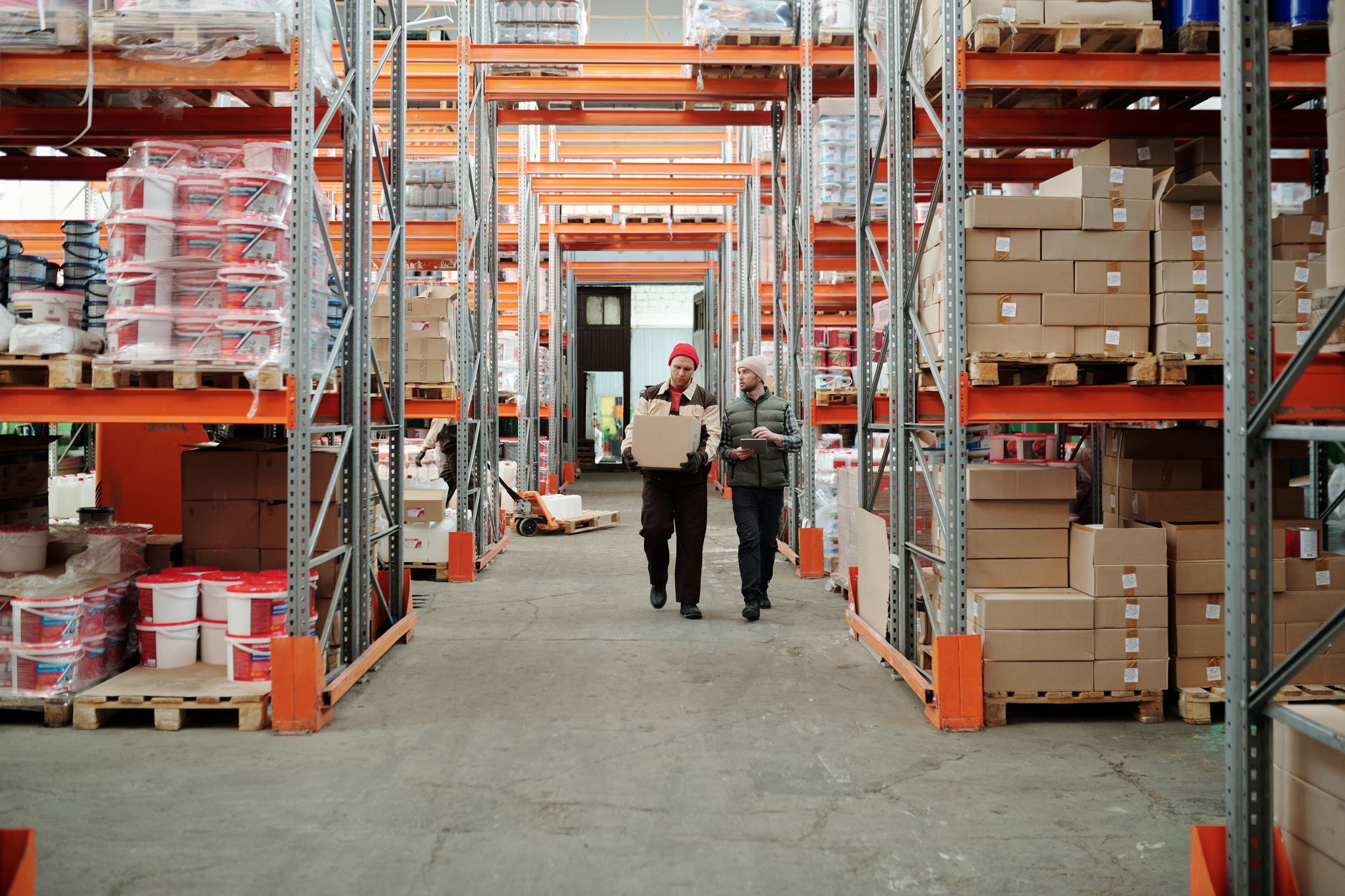
The most striking strategic decision in JD.com’s history is also its most expensive: building its own logistics infrastructure from scratch rather than relying on third-party carriers. By 2024, JD Logistics operated over 1,600 warehouses totaling more than 32 million square meters of floor space across China — a figure that dwarfs the logistics capacity of most national postal services.
The network includes ambient warehouses, cold-chain facilities, bonded import warehouses, and specialty storage for bulky goods. JD deploys a fleet of over 70,000 delivery vehicles and employs more than 300,000 couriers directly. Crucially, JD couriers are salaried employees with social insurance and benefits — a deliberate contrast to the gig-economy models used by most competitors. Liu has repeatedly cited this as both an ethical commitment and a competitive advantage in service reliability.
The result is same-day and next-day delivery coverage that reaches over 90% of Chinese counties. During the 2023 Singles’ Day (11.11) shopping festival, JD processed and fulfilled orders at a pace that saw over 80% of orders delivered the same day or next day. For comparison, Amazon Prime’s two-day delivery — once considered revolutionary — is a standard JD.com has exceeded in its home market for years.
JD Logistics has now externalized this capability, offering fulfilment services to brands that sell through Alibaba’s Tmall or even independent channels. This third-party logistics (3PL) business generated ¥87 billion in external revenue in 2022, transforming what was once a cost center into a profit engine.
Technology, Drones, and the Future of Delivery
JD.com has invested aggressively in logistics automation. Its Asia No. 1 smart warehouses, the largest of which cover over 100,000 square meters, operate largely without human labor on the warehouse floor. Automated guided vehicles (AGVs), robotic picking arms, and AI-driven inventory management systems have cut per-order fulfilment costs substantially while improving accuracy rates to above 99.99%.
JD was also among the first companies globally to deploy commercial drone delivery at scale. Since 2016, JD drones have made deliveries in rural Sichuan, Shaanxi, and other hard-to-reach provinces — reducing delivery times from days to hours in areas where road infrastructure is poor. By 2023, JD’s drone fleet had completed over 1.5 million commercial deliveries, with individual drones capable of carrying loads up to 30 kilograms and covering distances of 15 to 100 kilometers per route.
These investments are relevant well beyond China. JD Logistics signed a strategic cooperation agreement with the Chinese government-affiliated logistics research body to help standardize smart warehouse protocols — a move that positions JD’s operational model as a template for China’s broader logistics modernization agenda, as detailed by the National Development and Reform Commission.
The Product Mix: Electronics, Fresh, and Healthcare
JD.com’s product DNA is rooted in consumer electronics. The company remains China’s largest online retailer of 3C products (computers, communications devices, and consumer electronics), accounting for an estimated 30 to 35% of China’s online electronics sales by volume. Brand relationships with Apple, Huawei, Sony, Samsung, and domestic manufacturers like Xiaomi and HONOR give JD a depth of authorized inventory that third-party marketplace platforms struggle to match.
The company has diversified aggressively into fresh food (JD Fresh), pharmaceuticals (JD Health, listed in Hong Kong in 2020 at a valuation exceeding HK$250 billion), and industrial procurement (JD Industrial). JD Health processed over 400 million healthcare consultations in 2022, demonstrating the degree to which JD has evolved from a product retailer into a service ecosystem.
JD Industrial, the business-to-business arm targeting factory procurement, achieved revenues of ¥107 billion in 2022, serving over 1.3 million enterprise clients. This segment competes directly with Alibaba’s 1688 platform and traditional industrial distributors, using JD’s logistics infrastructure as a differentiator for guaranteed delivery timelines that matter enormously in just-in-time manufacturing environments.
International Strategy and Cross-Border Commerce
JD’s international ambitions have evolved through several phases. The company operates JD Worldwide, a cross-border import platform that allows foreign brands to sell directly to Chinese consumers without establishing a local entity in China. Categories including imported food, cosmetics, infant formula, and luxury goods have found strong demand through this channel.
JD has also invested in or partnered with regional e-commerce players across Southeast Asia. Its strategic investment in Indonesian e-commerce platform JD.ID (later restructured) and its ongoing operations through JD Central in Thailand reflect a broader effort to export the JD logistics-first model into emerging markets where reliable fulfilment is a competitive advantage.
For Western brands seeking to enter China, JD Worldwide offers a genuine alternative to Tmall Global. The US-China Business Council has noted that JD’s direct sales model tends to generate higher per-unit prices and better brand control than marketplace models, at the cost of requiring deeper cooperation with JD’s category teams. The US Trade Representative’s annual report on China trade regularly references JD as a key platform for market access discussions, given its role in facilitating both import and export commerce.
What Western Businesses Should Understand About JD
For importers, exporters, and brands with China exposure, several practical dimensions of JD.com deserve close attention.
Brand Authorization and Counterfeit Control
JD’s direct sourcing model means that brands can enter into formal authorization agreements that give JD the right to source and sell genuine inventory. This “flagship store” model on JD, combined with the company’s anti-counterfeiting technology, has made JD a preferred platform for high-value brands in sectors like luxury goods, infant care, and pharmaceuticals where counterfeit risk is reputationally catastrophic. Nike, L’Oréal, Nestlé, and Abbott have all built significant JD presences for this reason.
The Logistics Partnership Opportunity
JD Logistics now offers its infrastructure as a service to brands selling through any channel — including Alibaba’s platforms. Western companies establishing physical distribution in China can use JD Logistics for bonded warehouse services, last-mile delivery, and cold-chain solutions. This is a meaningful development for food exporters, pharmaceutical companies, and consumer goods brands that previously had to build or contract their own China distribution from scratch.
The B2B Angle
JD Industrial is one of the least-discussed but potentially most important JD business units for Western industrial suppliers. Chinese factories and enterprises sourcing components, MRO supplies, and equipment through JD Industrial represent a distribution channel that bypasses traditional intermediary layers. Western manufacturers of specialized equipment, safety products, or industrial consumables would be well-advised to explore JD Industrial as a China market entry route.
Understanding how JD.com’s ecosystem connects with China’s manufacturing heartlands is critical context — for more on that geography, see our coverage of Guangzhou and the Pearl River Delta and Hangzhou: China’s E-Commerce Capital. For companies assessing how JD’s logistics network integrates with China’s port infrastructure, our piece on China’s Ports and Logistics Infrastructure provides essential context.
Competitive Landscape and the Road Ahead
JD.com faces intensifying competition on multiple fronts. Pinduoduo’s parent company PDD Holdings has emerged as China’s most valuable listed e-commerce company by market capitalization, driven by its ultra-low-price model. Douyin (TikTok China) has built a formidable live-streaming commerce ecosystem that pulled significant GMV away from traditional platforms. Alibaba continues to invest in logistics through its Cainiao network.
Yet JD’s structural advantages — owned logistics infrastructure, enterprise procurement relationships, and the brand trust built through authentic product guarantees — give it durable competitive positioning that pure marketplace models cannot easily replicate. CEO Sandy Xu (who succeeded Richard Liu in 2023) has prioritized cost efficiency and margin expansion, producing meaningful profitability improvements through 2024 and 2025.
For those tracking the evolution of China’s digital commerce ecosystem more broadly, JD.com stands as proof that the Chinese tech sector can produce companies with genuine operational depth — not just platform-driven network effects. The logistics infrastructure JD has built over 15 years is perhaps the most valuable physical asset in Chinese e-commerce, and it will remain a competitive moat for years to come. For a complementary perspective on how Alibaba shaped the broader landscape, our analysis of Alibaba’s global e-commerce transformation provides valuable comparison.