
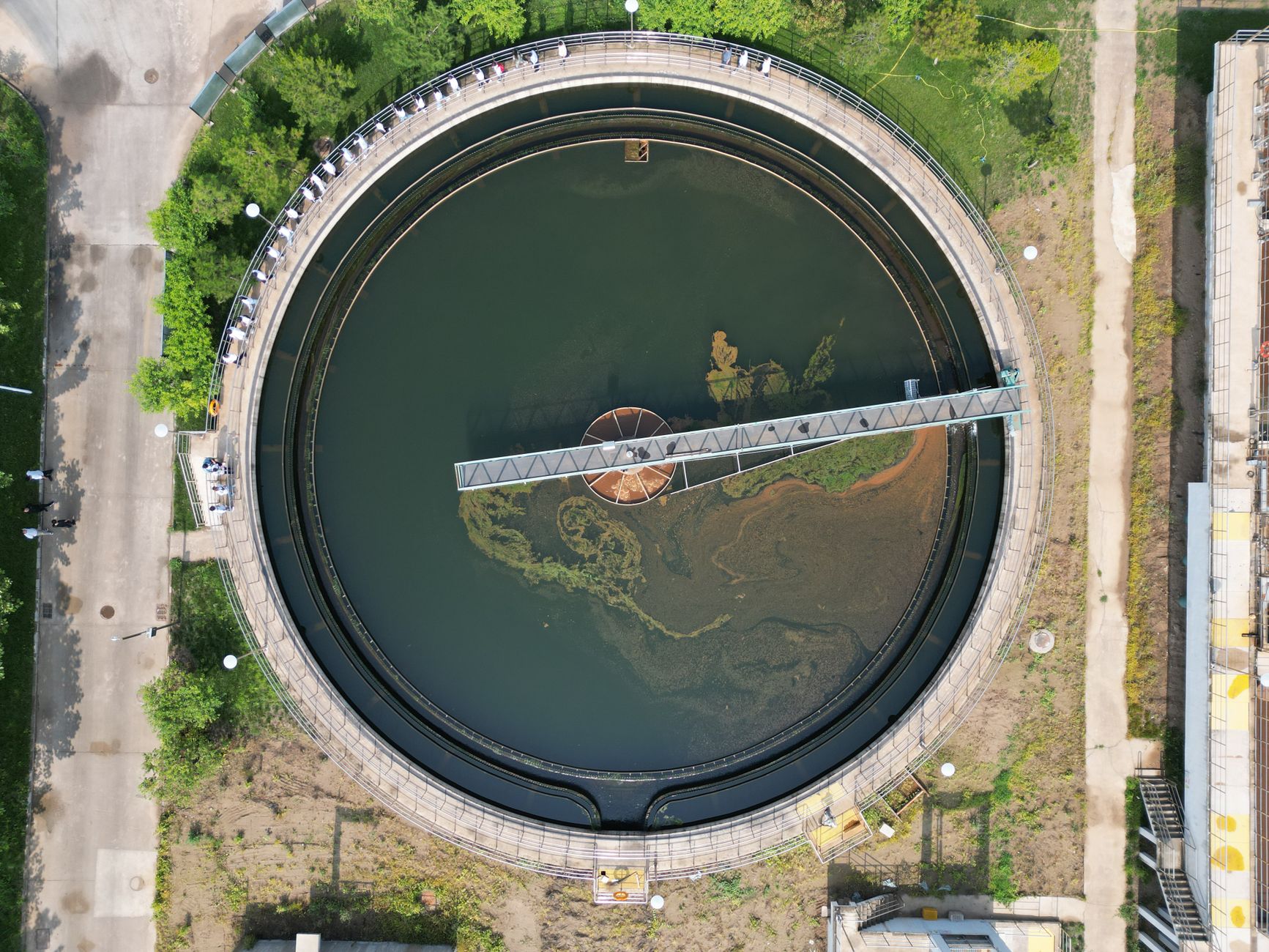
When water scarcity and pollution became existential threats to China’s economic miracle in the early 2000s, Beijing made a decisive bet: build a world-class environmental engineering industry from scratch. Two decades later, Chinese companies treat more municipal wastewater, desalinate more seawater, and build more membrane filtration plants than any country on earth. Originwater, Beijing Enterprises Water Group (BEWG), Guangdong Grandblue Environment, and CITIC Envirotech have collectively processed billions of cubic meters of water annually — and are now exporting that expertise across Southeast Asia, the Middle East, and Africa.
For foreign businesses — whether sourcing technology, seeking infrastructure partners, or evaluating supply chain risk in Belt and Road markets — understanding China’s water and environmental engineering sector is no longer optional.
The Scale Problem That Built an Industry
China’s water crisis reached a tipping point in the mid-2000s. Rapid industrialization had contaminated an estimated 60% of underground water sources. More than 300 million rural residents lacked access to safe drinking water. The economic cost of water scarcity was estimated by the World Bank at roughly 1-2% of GDP annually.
The government’s response was sweeping. The Water Pollution Prevention and Control Action Plan — released in April 2015 and known as the “Water Ten Plan” — set legally binding treatment targets for all major river basins, required municipal governments to achieve 95% wastewater treatment rates by 2020, and mobilized an estimated 4.6 trillion yuan ($640 billion) in total investment. That single policy document transformed environmental services from a niche government contractor market into one of China’s most competitive and technologically intensive industries.
The Major Players: Who Built What
Originwater (碧水源)
Founded in 2001 by Wen Jianping — a water treatment engineer who returned from academic research in the United States — Originwater became China’s leading membrane technology company. Its core product, the MBR (Membrane Bioreactor) system, combines biological treatment with ultrafiltration membranes to produce reclaimed water clean enough for industrial reuse. By 2023, Originwater had installed MBR systems at more than 1,500 projects across China, with a cumulative processing capacity exceeding 35 million cubic meters per day. Listed on the Shenzhen Stock Exchange in 2010, the company’s technology is now exported to projects in Singapore, Indonesia, Malaysia, and several African nations.
Beijing Enterprises Water Group (BEWG)
BEWG is a large-scale concession operator — the company that actually owns and runs wastewater treatment plants under long-term public-private partnership contracts with municipal governments. Backed by Beijing Enterprises Holdings, a state-owned enterprise listed in Hong Kong, BEWG manages water treatment assets across more than 50 Chinese cities, plus concession projects in Portugal, New Zealand, Malaysia, and multiple African countries. Its total treatment capacity exceeds 30 million cubic meters per day. BEWG’s model — raise capital in Hong Kong, bid aggressively for BOT (Build-Operate-Transfer) contracts, then operate them profitably for 25-30 years — has become the template for Chinese environmental firms going global.
Guangdong Grandblue Environment
Guangdong Grandblue handles industrial wastewater, hazardous waste, and solid waste management across the Pearl River Delta — the manufacturing heartland that generates some of China’s most complex industrial effluents. Operating more than 70 environmental service facilities in Guangdong, the company processes over 10 million tons of industrial waste per year. For foreign manufacturers operating in or sourcing from Guangdong, Grandblue is frequently the unseen partner ensuring production facilities meet increasingly stringent discharge standards.
CITIC Envirotech
CITIC Envirotech, a Singapore-listed subsidiary of CITIC Group, has deployed its proprietary MIBR (Membrane Integrated Biological Reactor) technology in projects across India, Southeast Asia, and the Middle East. Its position — state-owned parentage, offshore listing, international technology deployment — illustrates how China’s largest conglomerates are using environmental services as both a domestic revenue base and a geopolitical soft-power instrument.
Technology: How China Moved From Importer to Innovator
In the 1990s and early 2000s, China’s water treatment sector was almost entirely dependent on foreign technology. Veolia, Suez, and GE Water (now Xylem) licensed membrane technology and biological treatment processes to Chinese partners. That dependency has substantially reversed.
Chinese firms now manufacture hollow-fiber ultrafiltration membranes and reverse osmosis desalination systems at costs 40-60% below equivalent Western products. Originwater’s proprietary MBR membranes, developed over 15 years of in-house R&D, now compete directly with GE and Siemens-branded systems in third-country tenders. Desalination is the next frontier: China’s largest facility — the Tianjin Dagang plant — handles 200,000 cubic meters per day, and state-owned engineering groups are now winning desalination contracts in Saudi Arabia and the UAE, competing head-to-head with Israeli and Spanish firms.
The Belt and Road Water Opportunity
Infrastructure investment under China’s Belt and Road Initiative has created major export channels for environmental technology. According to China’s Ministry of Ecology and Environment, Chinese firms signed overseas environmental contracts worth approximately $18 billion in 2023. The standard model: Chinese policy banks (the China Development Bank and China Export-Import Bank) provide concessional financing; Chinese engineering firms win construction contracts; and Chinese operators take long-term management agreements. For Western water technology firms and infrastructure investors, this creates both competitive displacement and genuine partnership opportunities in markets where Chinese project finance enables infrastructure that could not otherwise be funded.
For more on China’s infrastructure financing architecture, see our analysis of China Development Bank and the Export-Import Bank of China and the broader strategic context in China’s Belt and Road Initiative in 2026.
What Foreign Businesses Need to Know
Technology Partnerships Still Work
Western water technology companies — particularly those holding IP in advanced membrane filtration, UV disinfection, and IoT-based monitoring — continue to find willing partners in China. Xylem’s historical partnerships with Chinese utility operators, Veolia’s long-running JVs in Shanghai and Tianjin, and Grundfos’s cooperation with Chinese pump manufacturers all demonstrate that the sector remains open to bilateral collaboration. The critical structuring point: foreign IP must be ring-fenced in joint venture agreements from the outset — a point Chinese counterparts increasingly accept because foreign brand equity remains valuable in international contract competitions.
Compliance Risk Is a Supply Chain Risk
China’s environmental regulations have tightened consistently since 2015. Ultra-low emission standards for industrial wastewater, the Soil Pollution Prevention Law (2019), and the expansion of the national pollutant discharge permit system have dramatically increased compliance costs for manufacturers in China. Foreign manufacturers sourcing from Chinese factories should treat supplier environmental compliance as a direct supply chain risk: facilities failing discharge standards face production shutdowns that can ripple through global supply chains within days. The US Environmental Protection Agency’s Office of International Affairs maintains comparative regulatory resources for companies navigating cross-border compliance: EPA International Cooperation Overview.
The Investment Case
China’s environmental services market is projected to reach 4 trillion yuan ($560 billion) by 2030, according to the China Association of Environmental Protection Industry. Publicly listed vehicles — Originwater (300070.SZ), BEWG (0371.HK), CITIC Envirotech (CEI.SI), and Grandblue Environment (600388.SH) — offer foreign investors direct exposure to a high-growth, policy-supported sector. China’s Ministry of Ecology and Environment publishes approved technology catalogs and investment policy guidance that serve as a reliable forward indicator: Ministry of Ecology and Environment — Environmental Economy Division.
The Carbon-Water Nexus: The Next Competitive Wave
Water treatment is energy-intensive: a conventional activated sludge plant consumes 0.3-0.6 kWh per cubic meter processed. China’s expansion of carbon accounting across industrial sectors — including water utilities — is driving rapid innovation in energy recovery from wastewater. Anaerobic digestion of sewage sludge for biogas, algae-based nutrient recovery, and AI-optimized aeration systems are all moving from pilot to commercial scale in China faster than in most Western markets, thanks to enormous domestic test beds and relatively streamlined procurement processes. This connects directly to the broader environmental transition analyzed in our coverage of China’s National Carbon Market in 2026.
The Strategic Takeaway
China’s water and environmental engineering sector is a $200+ billion annual market, a growing export industry, and an increasingly formidable competitor in global infrastructure procurement. The companies that built it — Originwater, BEWG, Grandblue, CITIC Envirotech, and dozens of regional specialists — are bidding against, partnering with, and in some cases acquiring Western environmental technology firms. For executives sourcing from China, manufacturing in China, or competing with Chinese firms in global infrastructure markets, understanding how this industry works — its financing structures, its technology trajectory, and its key corporate actors — is part of doing business in the 21st century.