
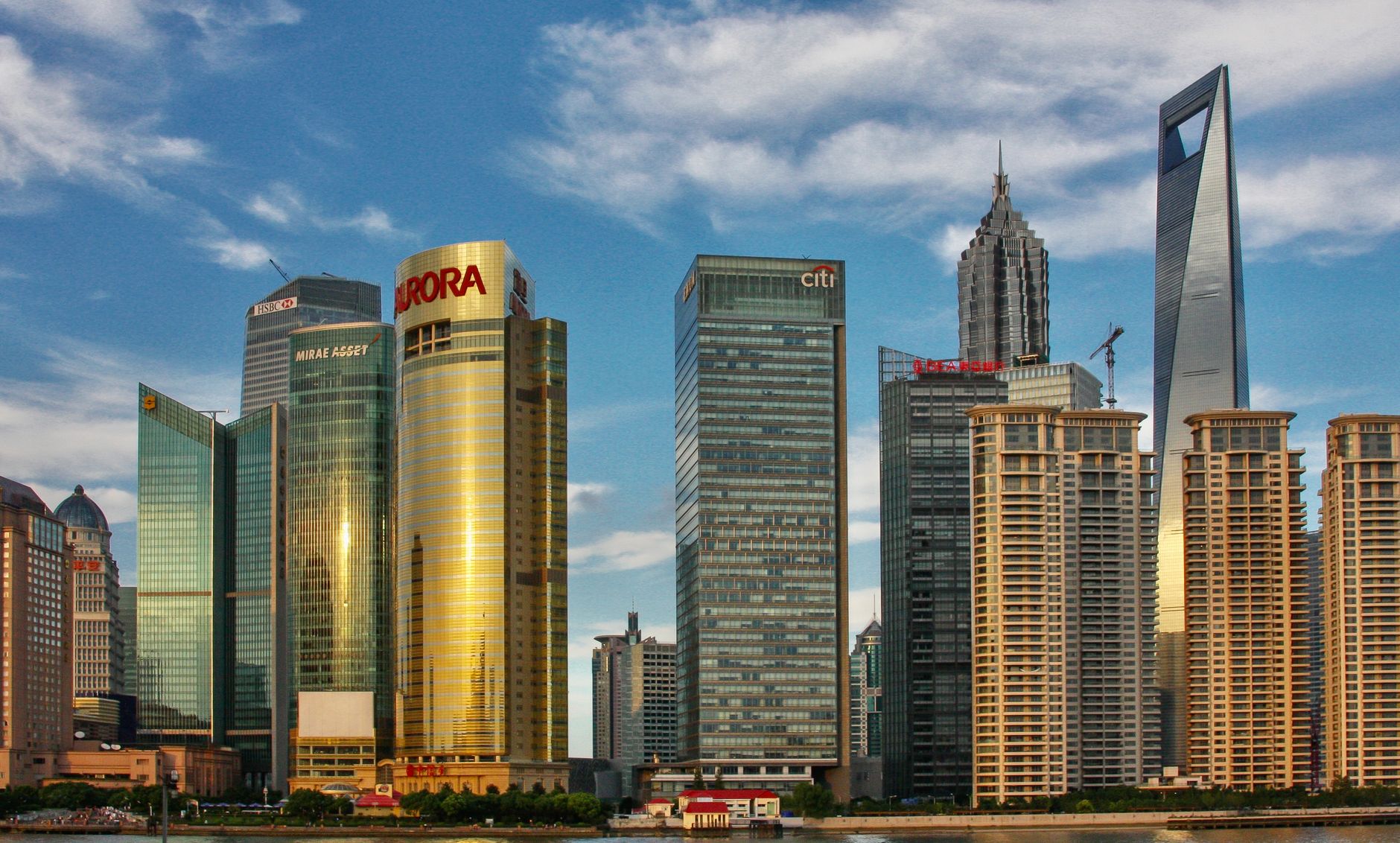
When global banks decide where to plant their Asia-Pacific headquarters, the answer is almost always the same: Shanghai. When a Chinese company prepares for an overseas IPO, it typically books its first roadshow meetings there. When a Western asset manager wants exposure to China’s capital markets, the license it needs is administered from Shanghai. The city is not simply China’s largest metropolis — it is the country’s undisputed financial capital and the single most important gateway for foreign businesses seeking a foothold in the world’s second-largest economy.
Understanding how Shanghai works — its institutions, its districts, its regulatory environment, and its relationship with Beijing — is not optional for any serious participant in US-China commerce. It is table stakes.
A City Built on Commerce
Shanghai’s commercial identity predates the People’s Republic by more than a century. Opened as a treaty port in 1843 following the First Opium War, the city rapidly became East Asia’s dominant trading hub. By the 1920s and 1930s, Shanghai was home to the Far East’s largest stock exchange, dozens of foreign bank branches, and a cosmopolitan business culture that attracted entrepreneurs from London, New York, Paris, and Bombay. The Bund — the waterfront promenade lined with neoclassical bank buildings — was the physical symbol of that era.
The founding of the People’s Republic in 1949 interrupted Shanghai’s role as a financial center. State planning replaced market mechanisms, and the city’s private banking infrastructure was dismantled. But the reform era, launched by Deng Xiaoping after 1978, began restoring Shanghai’s commercial relevance. The decisive turning point came in 1990, when the central government announced the development of Pudong — the agricultural flatland east of the Huangpu River — as a special economic zone. Within two decades, Pudong’s skyline of supertall towers had become one of the most recognizable urban panoramas on earth.
The Financial Infrastructure: What Actually Lives in Shanghai
Shanghai’s financial dominance rests on a concentration of institutions that exists nowhere else in China.
The Shanghai Stock Exchange (SSE), established in 1990, is Asia’s second-largest equity market by market capitalization, trailing only Tokyo. As of 2025, the SSE listed more than 2,200 companies with a combined market cap exceeding $7 trillion. The exchange operates two primary boards — the Main Board for large-cap established firms, and the STAR Market (科创板), launched in 2019 specifically to list technology and innovation-driven companies under a registration-based IPO system modeled loosely on NASDAQ. Foreign companies cannot currently list directly on the SSE, but institutional foreign investors access it through the Stock Connect program linking Shanghai with Hong Kong and, via those rails, with global capital.
The Shanghai Futures Exchange (SHFE) trades commodities including copper, aluminum, gold, crude oil, and rubber. The SHFE’s crude oil contract, launched in 2018 and denominated in yuan, was a deliberate policy step toward internationalizing the renminbi and reducing dollar dependence in global commodity pricing. International traders can participate directly — a relatively rare concession for a Chinese financial market.
The People’s Bank of China’s Shanghai Head Office and the State Administration of Foreign Exchange (SAFE) maintain significant operations in the city. The Shanghai branch of SAFE is the practical administrator for most cross-border capital transactions involving foreign enterprises operating in China — which means that any multinational with a China entity will deal with Shanghai’s regulatory apparatus regardless of where its offices are located.
Lujiazui Finance and Trade Zone, in Pudong, functions as China’s equivalent of Canary Wharf. It houses the China headquarters or major regional offices of JPMorgan, Goldman Sachs, HSBC, Citibank, Deutsche Bank, BlackRock, Fidelity, and virtually every other major Western financial institution active in China. The Shanghai Municipal Finance Bureau administers preferential tax treatment and licensing for financial firms operating within the zone.
The Shanghai Free Trade Zone: Foreign Business’s Most Important Address
In September 2013, the China (Shanghai) Pilot Free Trade Zone (SHFTZ) was established, covering roughly 28 square kilometers in Pudong. Since then it has expanded to encompass four sub-zones: Waigaoqiao, Waigaoqiao Port, Yangshan Port, and Pudong Airport. The SHFTZ was designed as a regulatory testing ground — a place where Beijing could experiment with liberalization measures before rolling them out nationally.
For foreign businesses, the SHFTZ’s most consequential features include: a shorter Negative List specifying which sectors remain restricted (as opposed to requiring approval for everything), simplified company registration procedures, relaxed foreign exchange controls for cross-border transactions, and piloting of full foreign ownership in sectors — including financial services and professional services — that still require joint ventures or minority caps elsewhere in China. The SHFTZ was also where China first permitted wholly foreign-owned banks and insurance companies to operate without local partners, a precedent that later expanded nationally.
The official SHFTZ website publishes the current Negative List and the Special Administrative Measures for foreign investment — essential reading for any company evaluating a China entity structure. The US-China Business Council also tracks SHFTZ regulatory developments and publishes analysis at uschina.org.
Headquarters City: Why Global Companies Choose Shanghai Over Beijing
Beijing is China’s political capital. Shanghai is where most multinationals choose to base their China operations — and the reasons are substantive, not sentimental.
First, talent availability. Shanghai’s universities produce a dense pipeline of bilingual professionals. Fudan University, Tongji University, and Shanghai Jiao Tong University are among China’s top five institutions, and their proximity to the city’s commercial core means that recruiting English-speaking finance, legal, and management professionals is substantially easier than in most other Chinese cities.
Second, legal environment. Shanghai’s courts have a stronger track record of enforcing commercial contracts — including contracts with foreign parties — than courts in most other jurisdictions in China. The Shanghai International Arbitration Center (SHIAC) handles thousands of international commercial disputes annually and is generally regarded as a credible alternative to Hong Kong arbitration for disputes with a China nexus.
Third, infrastructure. Pudong International Airport is China’s second-busiest international hub, with direct routes to over 100 international destinations. The Port of Shanghai has been the world’s busiest container port every year since 2010, handling approximately 47 million TEUs annually. For companies managing global supply chains, the logistics infrastructure around Shanghai is unmatched within China.
Fourth, regulatory proximity. Despite being the political capital, Beijing is not where many of the most important regulatory agencies for commerce operate on a day-to-day basis. The China Securities Regulatory Commission (CSRC) and the National Financial Regulatory Administration (NFRA) maintain substantial operational presences in Shanghai, as do the customs and SAFE offices that process most inbound foreign investment documentation.
Key Industries Concentrated in Shanghai
Shanghai’s economy is heavily weighted toward services — financial services account for roughly 18% of the city’s GDP, making it the largest sector. But the broader industrial picture is worth understanding for foreign business planners.
Automotive: Shanghai is the headquarters city for SAIC Motor, China’s largest automaker by volume (which produces Buick, Volkswagen, and GM vehicles under joint venture agreements), as well as the manufacturing home of Tesla’s Gigafactory Shanghai. The Tesla facility, which began production in late 2019, now produces more than 750,000 vehicles annually — roughly half of Tesla’s global output. It represents one of the largest single foreign direct investment projects in Chinese manufacturing history.
Pharmaceuticals and Biotech: The Zhangjiang Hi-Tech Park in Pudong has become China’s most concentrated pharmaceutical and biotech cluster, housing R&D centers for Roche, Pfizer, AstraZeneca, and Novartis alongside hundreds of domestic biotech startups. The National Medical Products Administration (NMPA) — China’s FDA equivalent — processes many drug approval applications through its Shanghai offices.
Technology: While Shenzhen dominates hardware and Beijing leads in consumer internet, Shanghai has built a strong position in enterprise software, artificial intelligence, and semiconductor design. Companies including SAP, Oracle, and IBM maintain major China engineering centers in the city. Domestic AI firms including SenseTime (商汤科技) were founded and remain headquartered in Shanghai.
Luxury and Consumer Goods: Shanghai is China’s luxury retail capital. Nanjing Road and Huaihai Road host the flagship stores of virtually every major European and American luxury brand. For consumer goods companies, Shanghai functions as both the primary sales market and the test bed for China product strategy — what works in Shanghai typically propagates to Tier 2 and Tier 3 cities over the subsequent two to three years.
Practical Considerations for Foreign Businesses Entering Shanghai
Setting up a legal entity in Shanghai typically means choosing between a Wholly Foreign-Owned Enterprise (WFOE), a Joint Venture (JV), or a Representative Office. The SHFTZ’s simplified registration process has reduced incorporation timelines to as little as three to five business days for standard WFOEs, versus the four to eight weeks typical in most other Chinese jurisdictions a decade ago.
Banking is a consistent friction point. Foreign-invested enterprises in Shanghai must open a capital account at a licensed bank to receive registered capital and conduct foreign exchange settlement. HSBC, Citibank, and Standard Chartered all offer established foreign enterprise banking services in Shanghai, though account opening timelines have lengthened in recent years due to enhanced KYC requirements under China’s anti-money laundering framework.
For companies already active in US-China trade, understanding how Shanghai’s role intersects with your supply chain is equally important. As covered in our analysis of COSCO Shipping and global maritime trade, the Port of Shanghai is the terminal or transshipment point for a substantial share of US-bound Chinese exports. Disruptions at Shanghai — whether from regulatory shifts, COVID-era lockdowns, or port congestion — cascade through global supply chains within days.
Companies navigating China’s complex financial regulatory environment should also review our breakdown of Ping An Insurance’s fintech architecture, which was largely developed in Shanghai and provides insight into how China’s digital finance infrastructure operates at the institutional level.
The US Commercial Service’s China portal at the International Trade Administration maintains updated market research, trade event listings, and matchmaking services for US companies entering or expanding in the Chinese market — including Shanghai-specific resources through the US Consulate General in Shanghai.
Shanghai’s Position in US-China Relations
Shanghai occupies a particular symbolic and practical role in the US-China relationship. The 1972 Shanghai Communique — signed during President Nixon’s historic China visit — established the foundational framework for US-China normalization. The document was drafted and signed in Shanghai deliberately, signaling the city’s status as a site of pragmatic engagement rather than ideological confrontation.
That spirit continues to define how Shanghai functions in the bilateral relationship. The US Consulate General in Shanghai is the largest American consulate in China and one of the busiest in the world, processing tens of thousands of visa applications and supporting American businesses across eastern China. The American Chamber of Commerce in Shanghai (AmCham Shanghai) represents over 1,500 member companies and publishes annual surveys of the business climate for foreign-invested enterprises — widely regarded as among the most reliable data sources on operating conditions in China.
For foreign businesses building or deepening their China strategy, Shanghai remains the essential starting point. Its institutions, infrastructure, talent pool, and regulatory environment create conditions for commercial engagement that exist at no comparable scale anywhere else in mainland China. For executives who have not yet visited — understanding Shanghai firsthand is not a luxury. It is a professional requirement for anyone serious about US-China business.
For further reading on related topics, explore our guide to Alibaba and China’s e-commerce ecosystem and our analysis of China’s industrial sector dynamics.