
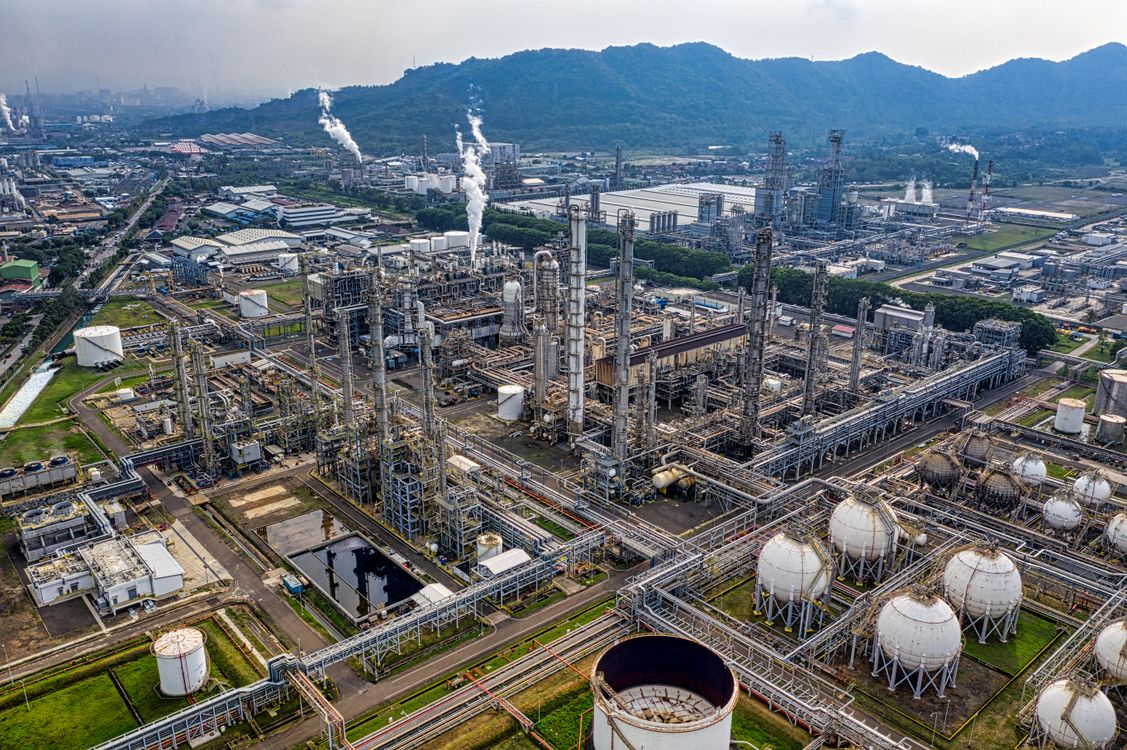
China Petroleum and Chemical Corporation — universally known as Sinopec — is one of those companies that most Western professionals have heard of but genuinely underestimate. With revenues exceeding $470 billion in 2023 and operations spanning 68 countries, it is not simply an oil major. It is a vertically integrated energy and chemicals colossus that shapes global refining capacity, chemical feedstock pricing, and energy security calculations from Beijing to Brussels to Houston.
For any executive involved in energy, petrochemicals, plastics, fertilizers, or industrial supply chains, understanding what Sinopec is, how it became dominant, and what it wants next is not optional background knowledge. It is operational intelligence.
From State Consolidation to Global Scale: The Sinopec Origin Story
Sinopec was formally established in 1998 as part of a sweeping reorganization of China’s oil and gas sector under Premier Zhu Rongji. The 1998 reform split the sector into three vertically integrated giants — Sinopec (focused on downstream refining and chemicals), CNOOC (offshore exploration), and PetroChina/CNPC (upstream production). Sinopec inherited China’s vast refinery network, most of the country’s chemical plants, and a distribution system reaching every province. It was listed simultaneously on the Hong Kong, New York, and London stock exchanges in 2000, raising approximately $3.5 billion in one of the largest IPOs of that year.
What followed over the next two decades was a methodical expansion that combined aggressive upstream acquisition overseas with continued domestic infrastructure buildout. To understand the broader context of how Chinese state-owned enterprises operate globally, see our analysis of China’s State-Owned Enterprises Go Global.
The Numbers That Define Sinopec’s Dominance
In 2023, Sinopec ranked third on the Fortune Global 500, behind only Saudi Aramco and Amazon. Its refining capacity exceeds 7 million barrels per day, making it the world’s largest refining company by throughput. Its retail network of over 30,000 petrol stations is the largest single-brand fuel network globally.
The chemicals division produces over 80 million tons of chemical products annually, including ethylene, propylene, synthetic fibers, and plastics. Sinopec is China’s largest ethylene producer and one of the top five globally. Its annual capital expenditure has consistently exceeded $20 billion, directed toward refinery modernization, chemical complex expansion, and green hydrogen infrastructure.
Internationally, Sinopec holds upstream equity interests in oil and gas fields across Angola, Saudi Arabia, Russia, Brazil, Canada, Kazakhstan, and Iraq. Its 2012 acquisition of a 49% stake in Talisman Energy’s North Sea assets for $1.5 billion, and its 2013 purchase of a 33% stake in Apache’s Egyptian assets for $3.1 billion, marked a period of accelerated outbound investment under China’s “Going Out” policy. The Office of the US Trade Representative’s China trade policy page provides useful context for how US policymakers have assessed Chinese energy sector investment over this period.
The Strategic Logic: Why Sinopec Invested Overseas
China went from being broadly oil self-sufficient in the 1990s to importing over 70% of its crude requirements by 2020. For Sinopec’s refinery system, which processes roughly 2.8 billion barrels annually, securing diverse crude supply at predictable costs was an existential commercial necessity.
The partnership with Saudi Aramco is particularly instructive. Their joint venture, the Yanbu Aramco Sinopec Refining Company (YASREF) in Yanbu, Saudi Arabia, processes 400,000 barrels per day and was one of the largest greenfield refinery investments of its era. The project deepened Saudi-China energy ties in a way that complemented diplomatic channels — a pattern characteristic of how Chinese SOEs function as instruments of strategic economic statecraft while still pursuing legitimate commercial returns.
Sinopec’s Chemical Empire: The Business Most Foreigners Miss
The segment of Sinopec’s business least understood outside China is its chemicals operation. Sinopec is the dominant supplier of polyester fiber precursors (PTA and MEG) that underpin China’s textile and apparel manufacturing sector. Its polypropylene and polyethylene output feeds packaging manufacturers across Asia. Its synthetic rubber production supports tire makers including Bridgestone, Michelin, and Continental.
The company’s Zhenhai refinery-chemical integrated complex in Zhejiang province is now one of the world’s largest single-site integrated refinery-petrochemical facilities, with crude throughput of 800,000 barrels per day feeding directly into ethylene crackers and downstream polymer units. Its scale means it can produce chemicals at unit costs that most standalone chemical plants cannot match. For Western companies, this connects directly to the broader story covered in our deep dive on China’s petrochemical industry.
The Green Pivot: Hydrogen, EVs, and Sinopec’s 2035 Strategy
Any serious analysis of Sinopec in 2026 must account for its strategic pivot toward clean energy. The company committed to becoming China’s largest hydrogen energy company and has built over 1,100 hydrogen refueling stations as of early 2026 — more than any other organization globally. This is not purely marketing. Sinopec’s refinery network produces substantial byproduct hydrogen from existing operations, which can be captured and distributed at lower marginal cost than electrolytic green hydrogen.
Sinopec has also begun converting underutilized petrol station forecourts into combined fuel, EV charging, and hydrogen refueling hubs under its “Yijia” brand — a repositioning of stranded retail assets at a scale no pure-play EV charging company can match in China. The company has pledged to install 20 GW of solar capacity by 2025 to power its own industrial operations. According to Sinopec’s official sustainability disclosures published on sinopecgroup.com, the company’s green energy investment exceeded RMB 50 billion in the 2021-2025 planning period.
What Sinopec Means for International Businesses
For foreign companies in energy and chemicals, Sinopec presents specific strategic realities. As a procurement counterpart, Sinopec buys crude oil from every major producing region and is one of the largest single buyers from Saudi Arabia, Russia, Angola, and Iraq. Energy trading desks at Vitol, Trafigura, and Glencore treat Sinopec’s buying signals as market-moving indicators.
As a chemical market force, Sinopec’s capacity expansions directly affect global price discovery for bulk polymers, aromatics, and synthetic fibers. Companies sourcing these feedstocks need to model Sinopec’s expansion timelines as part of market outlook. As a joint venture partner, Sinopec has demonstrated the ability to execute large-scale technical projects — including long-running JVs with Shell and BP inside China, some operating profitably for over two decades.
Western companies entering China’s downstream chemicals or energy retail market will almost invariably encounter Sinopec — as a required partner, a competitor for permits and feedstock access, or a pricing reference. This connects to the broader due diligence landscape explored in our analysis of The Role of State-Owned Enterprises in China’s Economy.
Governance, Transparency, and the Investor Perspective
Sinopec’s dual listing structure — A-shares on the Shanghai Stock Exchange and H-shares on Hong Kong — means its financials must meet multiple disclosure regimes. The company publishes quarterly operating statistics and annual reports prepared under Hong Kong regulatory standards. Revenue, refinery throughput, crude purchase volumes, and chemical output are reported with specific numbers.
This transparency matters for foreign analysts and compliance teams, but it does not eliminate the fundamental governance reality: SASAC (the State-owned Assets Supervision and Administration Commission) remains the controlling shareholder, and major capital allocation decisions require state-level approval. That institutional structure is not inherently obstructive for commercial engagement, but it is relevant for compliance frameworks that are standard practice for US and European multinationals in the current trade environment.
The Strategic Takeaway
Sinopec is the world’s largest refiner, a top-five global chemicals producer, an active outbound investor in energy assets across six continents, and now the world’s leading hydrogen infrastructure operator. Its commercial footprint touches plastics packaging in your products, the synthetic fibers in your supply chain, the petrochemical inputs to your industrial materials, and potentially the crude oil markets that set your energy costs.
Understanding how Sinopec operates — its commercial priorities, its strategic constraints, its technical capabilities, and its government relationship — is foundational knowledge for any executive navigating the US-China commercial interface in energy, chemicals, or industrial supply chains. The company’s trajectory over the next decade will reshape multiple global markets simultaneously. That makes it one of the most consequential companies in the world that most Western professionals have never taken the time to study carefully.