

Digital commerce between the United States and China has evolved far beyond early export listings on Alibaba or brand pages on Amazon. It is now a dense ecosystem of platform giants—Alibaba, JD, PDD Holdings (Temu), and ByteDance (TikTok / Douyin)—plus social-first retail spaces such as Xiaohongshu and WeChat Channels, where creators and communities generate sales in real time. In 2025, success means building for two internets at once: one optimized for Google, Amazon, and TikTok Shop in the West, and another tuned for Baidu SEO, mini-programs, Douyin Live, and Xiaohongshu notes in China.
Platform gravity is shifting—and speeding up
On the Chinese side, social commerce has overtaken traditional marketplaces. Reuters reported that Beijing’s 2024 draft rules to expand cross-border e-commerce and overseas warehouses show the government now treats digital exports as a national growth pillar. At the same time, Reuters also noted that Alibaba, JD.com, and Meituan are making multibillion-yuan investments in ultrafast delivery networks to protect market share. According to Statista, Douyin and Kuaishou now account for the majority of China’s live-commerce GMV, signaling that discovery has permanently shifted from keyword search to algorithmic video feeds.
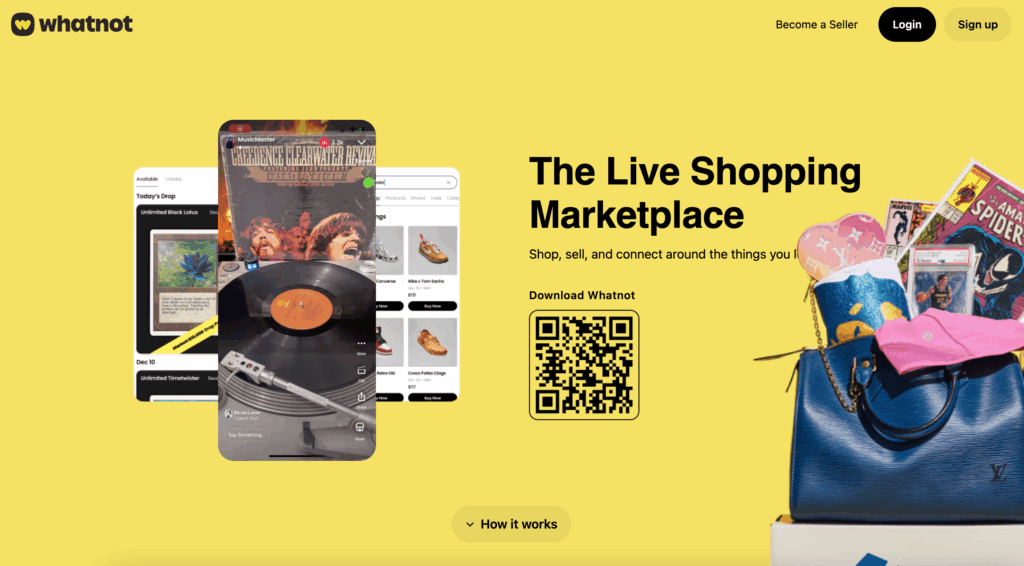
In the United States, TikTok’s official newsroom confirmed more than $100 million in Black Friday 2024 sales, a milestone that cemented live shopping as mainstream. TechCrunch later reported that Los Angeles-based Whatnot raised $265 million at a $4.97 billion valuation in January 2025, citing company data that livestream GMV in 2024 exceeded $3 billion. Meanwhile, Temu’s filings analyzed by Backlinko estimated global GMV around $70 billion last year, and Reuters coverage of Shein’s pre-IPO documents underscored how its social-driven DTC model continues to scale globally.
Live Shopping Goes Global: From China’s Dominance to the U.S. Creator Boom
Live shopping has become the defining bridge between entertainment and e-commerce. According to McKinsey & Company’s China Consumer Report, China remains the global benchmark, with Douyin, Taobao Live, and Kuaishou transforming the act of discovery into a real-time retail experience. Statista data show that these platforms together account for the vast majority of China’s live-commerce GMV, a market worth hundreds of billions annually. What began as a marketing gimmick has evolved into an indispensable sales channel—entire product categories now launch through live events, and top Key Opinion Leaders (KOLs) command audiences larger than television networks.
In the United States, the trend is accelerating fast. TikTok’s newsroom confirmed that TikTok Shop surpassed $100 million in Black Friday 2024 sales, proving that live shopping has crossed into mainstream behavior. Meanwhile, TechCrunch reported that Los Angeles-based Whatnot raised $265 million at a $4.97 billion valuation, with internal data showing over $3 billion in livestream GMV during 2024. Vogue Business highlighted that Whatnot users now spend an average of 80 minutes per day on the app—attention levels that rival premium entertainment.
Other U.S. platforms are following suit. Amazon Live has built a native livestreaming ecosystem where influencers host shoppable shows within Amazon’s trusted environment, while YouTube Shopping and Instagram Shop let creators tag products directly inside videos and broadcasts. Together these ecosystems are producing a domestic live-shopping market that, according to Statista, reached approximately $35 billion in 2024, triple its 2021 size.
The creative model has also shifted. In both China and the U.S., the most successful operators treat live commerce like scheduled programming rather than ad hoc content. They build recurring show formats, clip and repost highlights for algorithmic discovery, and use creators as long-term merchandising partners instead of one-off media buys. The result is the same insight on both sides of the Pacific: media planning is now merchandising, and the future of retail belongs to those who can produce, entertain, and sell simultaneously.
Cross-border flows keep expanding—even as rules tighten
According to China’s General Administration of Customs, cross-border e-commerce exports grew 16.9 percent year-over-year in 2024 to roughly RMB 2.15 trillion, bringing total CBEC trade to RMB 2.7 trillion. Despite geopolitical friction, digital trade remains resilient thanks to bonded-warehouse logistics and platform rails. On the policy front, China Daily reported that the new National Standard on Cross-Border Processing of Personal Information will take effect March 1 2026, requiring clear consent and localization of sensitive data. Parallel to that, U.S. export-control and data-protection updates continue to shape how technology moves between markets. Any firm planning a market-entry strategy must now account for tariffs and data law.
Owning Private Traffic in China’s Closed Internet
According to Tencent’s 2025 digital economy briefing, WeChat Channels now connects over 800 million monthly active users, linking video, e-commerce, and customer CRM inside one super-app. Unlike Western platforms, where algorithms control visibility, WeChat lets brands build “private traffic”—direct customer networks that no competitor can algorithmically throttle. Burberry, for instance, has used mini-program loyalty programs to run limited-edition drops, while Starbucks China leverages its WeChat ecosystem for digital gifting and pre-orders. In China’s walled internet, private traffic is not a luxury; it’s survival. For Western firms entering the market, understanding WeChat’s hybrid of CRM and content is equivalent to understanding email marketing in the early 2000s—it’s the foundation of repeat business.
Digital Real Estate: The New Frontier of Cross-Border Commerce
If WeChat is where Chinese consumers live, domains are where global consumers find you. Owning strategic domains is the digital equivalent of holding property at a trade crossroads—finite, discoverable, and appreciating in value as online territory becomes scarcer. According to ICANN and Verisign data, keyword-based and geo-targeted domains have seen consistent appreciation since 2020 as organic search once again outpaces paid social in ROI, a trend confirmed by Ahrefs’ 2024 Search Report.
The last decade offers a clear blueprint. Visionaries like Michael Mann and Andrew Rosener built multimillion-dollar portfolios by anticipating search trends before brands did—snapping up assets like Software.com, CryptoWorld.com, and Zoom.com years before those categories peaked. In China, 35.com and 4.cn became institutional players in the domain-trading ecosystem, specializing in bilingual and numeric domains that match both Pinyin and English intent. Those early movers understood what most founders still overlook: in a globalized internet, the address is the moat.
Great Handshake and its partners are applying this same logic with a modern twist—acquiring undervalued bilingual domains and transforming them into micro-hubs for education, consulting, and lead generation that serve both English and Mandarin audiences. For example, a strategic domain acquisition could evolve into a knowledge hub for bilateral trade compliance; or might even become a data platform tracking e-commerce flows between Shenzhen and Los Angeles.
The opportunity isn’t just SEO—it’s asset control. Domains tied to trade corridors, export categories, or bilingual search intent can be developed, leased, or syndicated much like commercial property. As GoDaddy’s 2025 Market Insights report highlights, premium keyword domains are outperforming traditional asset classes on annual ROI in specific niches such as finance, logistics, and AI.
For investors and founders alike, this is the digital land grab of the next decade—and the smartest players aren’t just buying traffic; they’re buying territory.
Infrastructure as the Invisible Moat
E-commerce empires rise and fall on infrastructure. Alibaba’s Cainiao Network reports that its cross-border logistics corridors now deliver to major U.S. cities in as little as 5–7 days, while Amazon Global Logistics has expanded pre-clearance services to Shenzhen and Ningbo, cutting delivery costs by up to 30 percent for exporters. On the financial side, Alipay+ and Stripe Cross-Border enable multi-currency settlement with localized KYC compliance, removing one of the largest historical bottlenecks for small exporters. For brands on either side of the Pacific, the new competitive edge is operational transparency—real-time logistics, multi-rail payments, and trusted delivery windows. These systems are the picks and shovels of the modern gold rush, and those who invest early in infrastructure partnerships will own the rails of global commerce.
Building the Modern Commerce Stack: Where East Meets West
For U.S. founders entering the global market, the digital stack is no longer a single storefront—it’s a constellation of ecosystems, each serving a different function in the conversion chain. TikTok Shop provides velocity—the ability to test, scale, and sell through content faster than traditional advertising cycles. Amazon and Walmart Marketplace offer institutional trust, backed by review systems and logistics infrastructure that reassure customers in an age of counterfeits. Shopify, still the backbone of independent retail, delivers brand control and ownership of customer data—an asset more valuable than inventory. And Whatnot has proven that community-led verticals, built on culture and conversation, can drive higher retention and lifetime value than any paid campaign.
According to Insider Intelligence, more than 47 percent of U.S. consumers purchased through a social-commerce platform in 2024—a figure projected to exceed 60 percent by 2026. The playbook is clear: use fast-moving social channels for discovery and immediate sales, then route loyal buyers into owned ecosystems like Shopify or private Discord and WhatsApp groups. This mirrors China’s own evolution from Taobao to WeChat—a transition from public traffic to private networks that brands control.
On the China side, the stack functions differently but follows the same logic. Douyin is the front line—a hybrid of entertainment and retail where the algorithm rewards watch time and live engagement over follower count. Successful brands build vertical storytelling series, drop calendars, and data-driven influencer rotations to stay visible. Xiaohongshu (Little Red Book) serves as China’s answer to Pinterest-meets-Reddit, a trusted space for peer reviews, product diaries, and “authentic discovery.” It’s where Gen Z and urban professionals vet purchases before ever visiting a store. Meanwhile, WeChat Channels and mini-programs are the retention engine. As Tencent’s own data shows, users spend over four hours a day inside WeChat’s ecosystem, making it the ideal environment for loyalty programs, clienteling, and repeat sales.
Great Handshake’s consulting framework defines this as the “bifocal model”—brands must operate with two lenses simultaneously: one optimized for Western discovery algorithms (Google, TikTok, Amazon) and one for China’s closed-loop ecosystems (Baidu, Douyin, WeChat). The key isn’t simply mirroring content—it’s adapting the narrative and infrastructure for each side. Western audiences respond to transparency, storytelling, and speed. Chinese audiences prioritize trust, community endorsement, and customer service continuity.
Technically, this means aligning your digital real estate with strategy. Western operations should control their own .com domains, track first-party analytics, and integrate multilingual SEO architecture for scale. In China, establishing or acquiring .cn or bilingual keyword domains and integrating them with verified brand mini-programs allows for full compliance and localized trust signals. From an SEO standpoint, this cross-domain structure allows both ecosystems to rank independently while feeding authority to your global parent brand.
Creatively, short-form and live video must move from the periphery to the core of go-to-market planning. The new CMO isn’t the storyteller alone—it’s the producer. Brands should think like content studios, generating serialized storylines, cross-platform live schedules, and community micro-events that collapse awareness and conversion into the same moment. In this new commerce era, creators are not media buys—they are co-founders of merchandising systems, shaping demand in real time and sharing in the economics they help generate.
What this means for investors and operators
For founders on either side of the Pacific, mastering this duality—speed and trust, virality and infrastructure—is the true differentiator. The companies that thrive in 2025 and beyond will not be those that sell the most products, but those that build the most interconnected ecosystems across borders, platforms, and cultures.
Operational excellence is the moat. Investors are backing creators who deliver consistent live GMV, brands that integrate domain / CDN architecture into go-to-market, and operators who reconcile payments, taxes, and data control without delay. With platforms like TikTok Shop, Douyin, Whatnot, and Amazon Live now offering end-to-end commerce rails, the advantage no longer lies in owning a store—it lies in orchestrating a system that spans platforms and jurisdictions.