
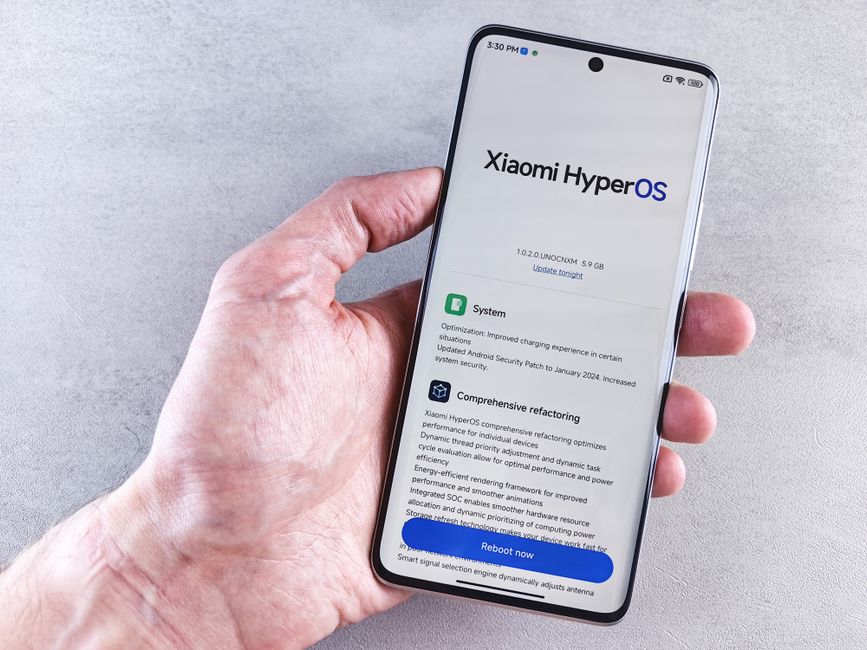
When Lei Jun founded Xiaomi in April 2010, the conventional wisdom was that a Chinese startup had no business competing with Apple and Samsung at the high end of the global smartphone market. Sixteen years later, Xiaomi is the world’s third-largest smartphone vendor by shipments, operates one of the most sophisticated connected-device ecosystems on the planet, and has transformed itself from a hardware company into a lifestyle brand with annual revenue exceeding $45 billion. How it got there is a masterclass in ecosystem strategy, capital discipline, and the specific advantages that China’s manufacturing environment confers on companies willing to use them fully.
The 2010 Founding Logic: Software Margins on Hardware Economics
Lei Jun, already a billionaire from his early investment in the e-commerce platform Joyo.com (later acquired by Amazon), conceived Xiaomi not as a device company but as a software-first business that happened to sell phones. The original Xiaomi MIUI operating system launched in August 2010 before any phone shipped. Within the first year, MIUI had attracted 300,000 users downloading and flashing the ROM onto existing Android devices. That installed base was the asset Lei Jun intended to monetize.
The Xiaomi Mi 1, launched in August 2011 at 1,999 yuan (roughly $310 at the time), was priced near the bill-of-materials cost. The phones sold out within minutes on Xiaomi’s online-only flash sale model. Lei Jun had borrowed directly from Amazon’s playbook: sell the hardware near cost, capture value through software, services, and recurring ecosystem engagement. The approach required one critical enabling factor that China uniquely provided: a world-class contract manufacturing base in the Pearl River Delta willing to accept thin margins on high-volume orders. Foxconn and later contract manufacturers operating at Foxconn’s scale gave Xiaomi access to the same production infrastructure Apple used, without the overhead of building its own factories.
Building the Ecosystem: The 100-Company Investment Strategy
The moment that defined Xiaomi’s long-term strategy came in 2013, when Lei Jun articulated a vision for an Internet of Things (IoT) ecosystem built around Xiaomi’s smartphone as the control hub. Rather than building every connected product in-house, Xiaomi would invest in and incubate dozens of partner companies, each focused on a single product category, all of which would connect seamlessly to Xiaomi’s MIUI platform and be sold through Xiaomi’s channels.
The first major incubatee was Huami, which launched the Mi Band fitness tracker in 2014 at 79 yuan (approximately $13). It became the world’s second-bestselling wearable within a year. A year later came Ninebot (electric scooters), iHealth (connected health devices), and Viomi (smart appliances). By 2020, Xiaomi had invested in or incubated more than 100 companies spanning air purifiers, electric toothbrushes, robot vacuum cleaners, smart locks, rice cookers, and e-bikes. Each operated with significant autonomy but shared Xiaomi’s supply chain relationships, distribution channels, and the Mi Home app ecosystem.
The financial mechanics of this model are worth examining precisely. Xiaomi typically takes a minority equity stake of 10 to 30 percent in its ecosystem partners rather than acquiring them outright. This preserves the entrepreneurial urgency of the founding teams while giving Xiaomi a return on capital if the venture succeeds. By 2025, Xiaomi’s equity stakes in ecosystem companies were valued collectively at over $5 billion on its balance sheet, a portfolio built largely through operational relationships rather than pure financial investment.
The International Expansion Playbook
Xiaomi’s first major overseas push came in 2014 with entry into India, a market it approached with the same online flash-sale model that had worked domestically. The partnership with Flipkart, India’s dominant e-commerce platform at the time, gave Xiaomi a distribution channel with minimal upfront investment in physical retail. By 2018, Xiaomi held a 28 percent share of the Indian smartphone market, displacing Samsung from the top position for the first time.
The India model established a template: enter via e-commerce, build volume at competitive price points, use the resulting brand awareness to move upmarket, then layer in IoT products as smartphone penetration deepens. Spain followed in 2017 as Xiaomi’s first European market, with Germany, France, and the UK following in 2018. In Europe, Xiaomi opened Mi Stores in major cities while maintaining its online-primary distribution model. By the second quarter of 2021, Xiaomi briefly became the number-one smartphone brand in Europe by shipments, overtaking Samsung for a single quarter during a period when Samsung faced component shortages.
This global expansion ran on a principle Lei Jun described as triathlon strategy: hardware, software, and internet services working in combination. Xiaomi does not profit heavily on individual device sales but captures margin across the service layer. In the third quarter of 2025, Xiaomi’s internet services revenue, including advertising on MIUI, membership subscriptions, and app store commissions, reached 8.5 billion yuan, representing approximately 9.2 percent of total quarterly revenue. For a company with over 650 million monthly active MIUI users globally, this is a growing and high-margin stream.
AIoT: From Devices to Data Infrastructure
By 2019, Xiaomi had rebranded its strategic direction as AIoT, combining artificial intelligence with its Internet of Things platform. The rebranding was more than semantic. Xiaomi had by then connected over 235 million smart devices (excluding smartphones and laptops) to its platform, and the behavioral data flowing through that network was becoming valuable in its own right.
The Mi Home app, which serves as the central management interface for all Xiaomi ecosystem devices, had over 80 million monthly active users. Xiaomi’s in-house AI lab, founded in 2016, began applying machine learning to energy management in smart home devices, predictive maintenance in appliances, and personalization in its content recommendation systems. The company partnered with Amazon Alexa and Google Assistant for voice integration in international markets, while building its own Xiao AI assistant for China, which had accumulated over 100 million monthly active users by 2024.
The AIoT platform also gave Xiaomi a structural advantage in cross-category sales. A customer who purchases a Xiaomi phone has a statistically higher likelihood of purchasing a Xiaomi smart TV, air purifier, or robot vacuum than a customer of a competing phone brand, because the Mi Home integration makes each additional Xiaomi device more useful. This network effect is difficult for competitors without comparable IoT ecosystems to replicate, a dynamic similar to what ByteDance engineered with its content recommendation algorithms: each additional user interaction makes the system more valuable for every other user.
The Premium Pivot: Leica, Xiaomi 14, and the Race Upmarket
Xiaomi’s Achilles heel for much of its first decade was brand perception. In China, it was known as a value brand. In Europe and Southeast Asia, it was often dismissed as a cheap alternative to Samsung or Apple. The company’s own data showed that customers who could afford more expensive phones were not choosing Xiaomi despite the improving quality of its hardware.
The response came in 2022 with the announcement of an exclusive optical partnership with Leica, the German camera maker synonymous with photographic prestige. The Xiaomi 12S Ultra, launched in China in July 2022 with a Leica-branded camera system, was priced at 5,999 yuan (approximately $870) and generated significant positive press coverage. The Xiaomi 14 series, launched globally in early 2024, continued the Leica partnership and sold over 10 million units in its first year.
The premium pivot parallels the strategy employed by Lenovo after acquiring IBM’s PC division: use a credible Western brand association to reposition a Chinese product line upmarket. In Xiaomi’s case, the Leica partnership also functions as a proof point to the global developer and business community that Xiaomi is capable of managing complex cross-cultural technology partnerships, a signal relevant to enterprise customers evaluating Xiaomi devices for corporate deployment.
The EV Bet: Why Xiaomi Entered the Automobile Industry
In March 2021, Xiaomi announced it would enter the electric vehicle market, committing $10 billion over ten years to the effort. The announcement was widely interpreted as confirmation that the boundaries between consumer electronics and automotive were dissolving. Xiaomi’s existing platform of 650 million MIUI users represented a pre-qualified customer base for a connected, software-driven vehicle, and Lei Jun argued that the integration of the car with the smart home and smartphone ecosystem was the logical next frontier for AIoT.
The Xiaomi SU7 sedan, launched in March 2024 at 215,900 yuan (approximately $29,700 for the base model), received over 88,000 orders within 24 hours of opening, a figure that surprised even optimistic analysts. As explored in detail in our piece on Xiaomi’s electric car gamble and what the SU7 signals for China’s auto industry, the speed of the launch was enabled by Xiaomi’s manufacturing relationship with BAIC Group and by the same fan community that had driven early smartphone adoption.
By the end of 2024, Xiaomi had delivered approximately 135,000 SU7 vehicles and was ramping toward an annual production capacity of 300,000 units. The car division is not yet profitable, but it gives Xiaomi a platform for subscription software revenue (navigation, advanced driver assistance systems, over-the-air software updates) that carries margins structurally superior to hardware alone.
What International Partners and Competitors Need to Understand
For foreign companies evaluating Xiaomi as a competitor, partner, or distribution channel, several structural characteristics deserve specific attention.
First, Xiaomi’s business model is deliberately loss-tolerant at the device level. The company’s public commitment to holding net hardware margins at or below 5 percent means foreign competitors who price for normal hardware returns will consistently find themselves uncompetitive on price. The correct competitor benchmark for Xiaomi’s hardware is Amazon’s Kindle or Google’s Chromecast, not Samsung’s Galaxy line.
Second, the ecosystem lock-in Xiaomi creates through Mi Home is real and growing. Users who have invested in multiple Xiaomi ecosystem devices are significantly less likely to switch phone brands than single-device users. Enterprises seeking to sell connected devices in markets where Xiaomi has strong smartphone presence need a clear answer to the question of Mi Home integration.
Third, Xiaomi’s brand evolution is ongoing and cannot be dismissed. The BBK Electronics group, which includes OPPO, vivo, and OnePlus, and whose global smartphone strategy is examined in our analysis of how BBK built a $60 billion smartphone empire, represents the most direct competitive comparison: both companies use China’s manufacturing base to compete globally at multiple price tiers. The key differentiator is that Xiaomi owns the ecosystem layer in a way BBK does not yet match.
For the US market, Xiaomi’s smartphone presence remains limited by regulatory scrutiny and carrier exclusions. But its IoT devices, sold under the Mi, Redmi, and ecosystem-partner brands, circulate widely. Understanding the company’s architecture helps US technology companies, retailers, and investors make more accurate assessments of where Chinese consumer technology is headed.
The Chinese government’s official statistical releases from the Ministry of Industry and Information Technology (MIIT) document the regulatory framework within which Xiaomi and its IoT ecosystem operate, including smart device security standards that apply to cross-border shipments. On the US side, the US Department of Commerce Trade Enforcement resources provide current guidance on technology trade policy affecting Chinese consumer electronics companies, an increasingly relevant reference for any partner or importer working within Xiaomi’s supply chain.
Conclusion
Xiaomi’s trajectory from a Shenzhen software startup to a $45 billion global technology conglomerate in sixteen years is not primarily a story about phones. It is a story about the deliberate construction of an ecosystem in which each additional product makes every existing product more valuable, about using China’s manufacturing cost advantages not to compete on price but to fund a service business, and about the patient accumulation of brand equity in markets that initially dismissed the company as a budget option.
Lei Jun’s bet is that the future of consumer technology is a unified platform spanning home, pocket, and car, and that the company that controls that platform in the world’s largest consumer markets will generate returns that dwarf the margins available on any single device category. Whether Xiaomi ultimately prevails against Apple, Google, and Samsung in the premium segment remains to be seen. What is already clear is that it has built a model the rest of the industry cannot afford to ignore.