
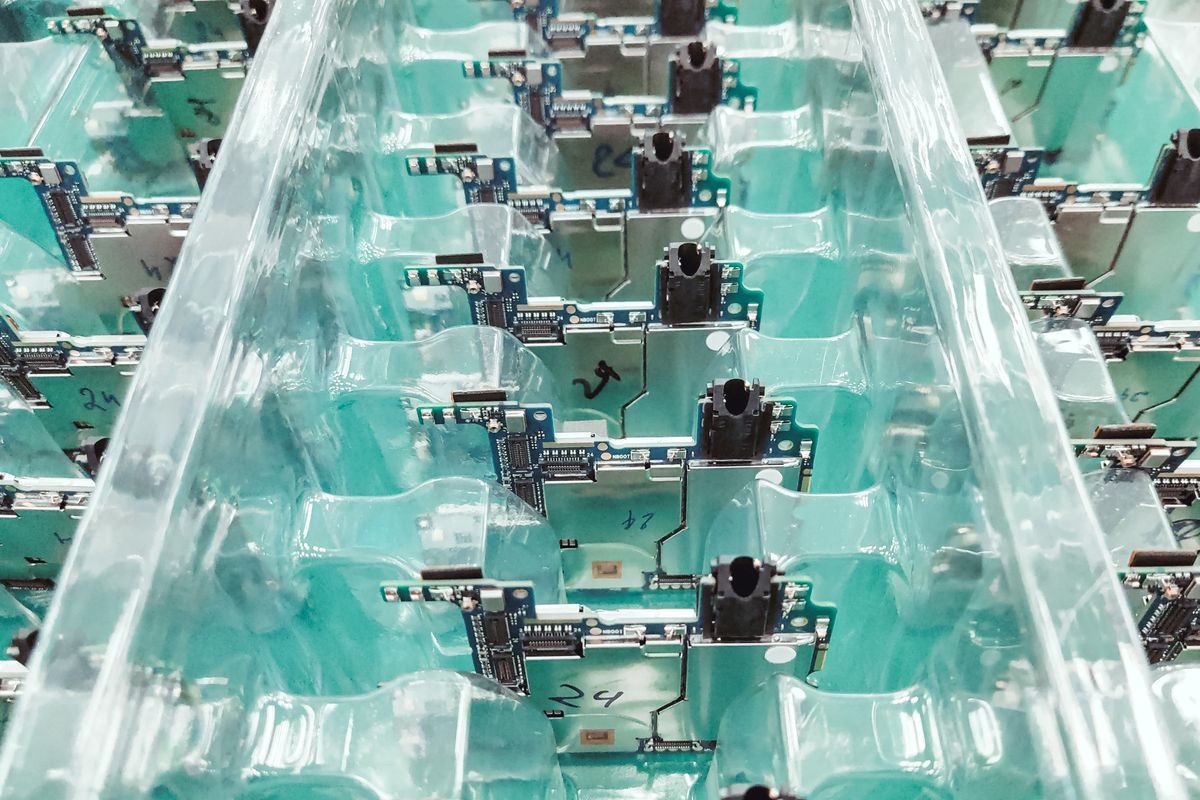
When most people picture the city that makes the iPhone, they imagine a coastal metropolis with direct port access. The reality is stranger and more instructive: the world’s largest iPhone assembly complex sits in Zhengzhou, the capital of Henan province — a landlocked city in central China better known for wheat farming than consumer electronics. How a city of 13 million people, far from any seaport, came to produce more than half of the world’s iPhones is a story about deliberate industrial policy, a massive labor reservoir, and the extraordinary logistics infrastructure China built in under two decades.
The Foxconn Gigafactory That Changed a Province
The pivot point was 2010. Foxconn Technology Group, the Taiwanese contract manufacturer that assembles iPhones, iPads, and devices for dozens of global brands, was under pressure to move capacity away from its Shenzhen facilities following a series of incidents that generated intense international scrutiny. Foxconn chairman Terry Gou negotiated a deal with Henan provincial authorities: the company would build a massive production campus in Zhengzhou’s Xinzheng district, and the government would provide land, infrastructure, labor recruiting support, and preferential tax arrangements.
The result was the Zhengzhou Technology Park — now commonly called “iPhone City” by supply chain professionals — which covers roughly 3 square kilometers and, at peak employment, houses approximately 350,000 workers on site, many living in dormitories within the campus perimeter. The facility produces an estimated 500,000 iPhones per day during peak production windows. According to the Henan provincial statistics bureau, Foxconn’s Zhengzhou operations accounted for more than 80 percent of the province’s total exports across several years in the 2010s, transforming a predominantly agricultural economy into a critical node in global technology supply chains.
For foreign businesses sourcing consumer electronics or seeking to understand China’s manufacturing geography, Zhengzhou demonstrates a fundamental truth: location logic in Chinese manufacturing is driven by policy incentives and labor access, not port proximity. Foxconn’s broader contract manufacturing model is explored in depth in our dedicated analysis of the iPhone supply chain — the Zhengzhou campus is its most important single node.
How Henan Solved the Logistics Problem
Being landlocked in China does not mean being disconnected from global trade the way it might in other regions. Chinese infrastructure investment resolved the logistics challenge through two parallel investments that are now studied as a model for industrial development globally.
First, the central and provincial governments upgraded Xinzheng International Airport from a regional hub into one of China’s major cargo airports. Dedicated air freight lanes were established to handle the billions of dollars in iPhone shipments annually. By 2019, Xinzheng was processing over 500,000 metric tons of air cargo annually, ranking among the top ten busiest cargo airports in China — a transformation achieved in under a decade specifically to support Foxconn’s export logistics needs.
Second, Zhengzhou was designated as a node in China’s national rail freight network, with direct China-Europe Railway Express connections to Rotterdam, Hamburg, and other European terminals. The corridor, running through Kazakhstan and Russia, reduces transit time for non-time-sensitive electronic components from 35 days by sea to approximately 18 days by rail. This infrastructure serves not just Foxconn but the broader manufacturing ecosystem that has grown around it. Foreign companies evaluating inland Chinese manufacturing locations should understand this infrastructure template is being actively replicated across other landlocked provincial capitals as China’s development focus continues shifting inward.
The Labor Pool Strategy: Why Henan Specifically
With a population of approximately 99 million people, Henan is China’s most populous province, and in 2010 it still had tens of millions of rural agricultural workers representing the country’s largest untapped manufacturing labor reserve. Foxconn’s labor recruiters worked directly with county-level governments across the province, using the administrative apparatus of a province-sized government to supply workers to a single campus — an approach that is difficult to replicate outside of China’s unique political economy.
The arrangement delivered benefits at every level. Workers received stable manufacturing employment without the disruption of migrating to Guangdong; the provincial government received employment data, tax revenue, and GDP growth; Foxconn received a reliable, proximate, politically supported labor supply that competitors could not easily access. This labor-state-manufacturer triangle is a model that foreign companies should understand when evaluating Chinese manufacturing partners. Coastal manufacturing heartlands like Guangdong have grown tighter labor markets and sharply rising wages, making interior provinces like Henan increasingly competitive for labor-intensive assembly work.
Supply Chain Concentration Risk: The 2022 Lesson
The Zhengzhou model’s vulnerabilities became visible in November 2022. COVID-19 lockdowns at the Foxconn campus disrupted production severely, reducing iPhone output by an estimated 6 million units during the critical pre-holiday period. Workers left the campus rather than submit to on-site quarantine, with the episode circulating globally and forcing Apple to accelerate supply chain diversification planning it had previously deferred.
The crisis generated two strategic responses. Apple pushed Foxconn and other contract manufacturers to expand assembly capacity in India — Foxconn subsequently opened facilities in Tamil Nadu and is expanding in Telangana — and in Vietnam. Simultaneously, Foxconn invested in automation at Zhengzhou itself, reducing headcount dependency while maintaining throughput. Our comprehensive US-China supply chain guide covers supplier diversification strategies in detail. The core lesson: no single geography, no matter how capable, should represent an unhedged existential dependency for a global product line.
Beyond Foxconn: Zhengzhou’s Broader Industrial Ecosystem
iPhone City is the headline, but Zhengzhou’s industrial story extends well beyond a single tenant. Component suppliers to Foxconn — producing display assemblies, connectors, battery packs, and packaging materials — established nearby facilities to reduce intra-supply-chain logistics costs. This supplier clustering mirrors the pattern that made Shenzhen a global electronics hub in the 1990s and reflects deliberate policy from the Henan government to maximize the multiplier effect of the anchor investment.
Beyond electronics, Zhengzhou is a significant hub for automotive manufacturing, hosting facilities for Nissan, Yutong Bus (one of the world’s largest electric bus manufacturers by unit volume), and a growing cluster of EV-adjacent component suppliers. Henan province accounts for approximately one-third of China’s aluminum output, feeding both domestic construction and international manufacturing. The city is also designated as one of China’s national comprehensive bonded zones, allowing imported materials to be processed and re-exported with preferential customs treatment — a structure that makes it attractive for assembly operations serving both domestic consumption and export markets from a single location.
Policy Framework: How Foreign Investors Can Access Henan’s Incentives
The Henan provincial government offers a structured incentive package including corporate income tax rates reduced to 15 percent for qualifying high-tech enterprises (versus the standard 25 percent), accelerated VAT export rebates, subsidized land-use rights, and direct labor recruitment assistance through the provincial employment service network. The central government’s “Rise of Central China” initiative provides additional layers of preferential treatment for qualifying investments.
Foreign companies establishing manufacturing operations in Henan can engage directly with the provincial investment promotion bureau, which maintains English-language materials and dedicated liaison staff for foreign investors. The official entry point is the Henan provincial government portal at www.henan.gov.cn. US companies can additionally reference the US Department of Commerce’s trade.gov/china resource for current guidance on regulatory requirements, tariff classifications, and risk assessment tools specific to inland Chinese provinces.
What Zhengzhou Means for Your Business
For Western buyers and importers, Zhengzhou demonstrates that cost-competitive, large-scale manufacturing exists well beyond the coastal provinces, with logistics infrastructure adequate for both time-sensitive air freight and cost-sensitive rail or sea routing. Companies sourcing electronics, automotive components, or food products should include central Chinese suppliers in their evaluation process rather than defaulting to coastal-only strategies.
For supply chain risk managers, the Foxconn experience provides a clear template: understand concentration exposure at the facility and city level, not just the country level. A portfolio distributed across Zhengzhou, Chengdu, and coastal Guangdong is structurally more resilient than one concentrated in a single campus, regardless of that campus’s capabilities. China’s semiconductor industrial policy follows a similar state-led playbook applied to a different technology sector — understanding the pattern across industries makes the logic more predictable.
Zhengzhou will not be the last landlocked city to reshape global supply chains. As Chinese policy continues redirecting investment toward interior provinces and global buyers seek to reduce coastal concentration risk, the Zhengzhou model — state-backed infrastructure calibrated to specific industrial needs, labor reserve access, and logistics investment that compensates for geography — will appear in new cities and new sectors. Understanding how it was assembled in Henan is the most practical preparation for recognizing where it emerges next.