
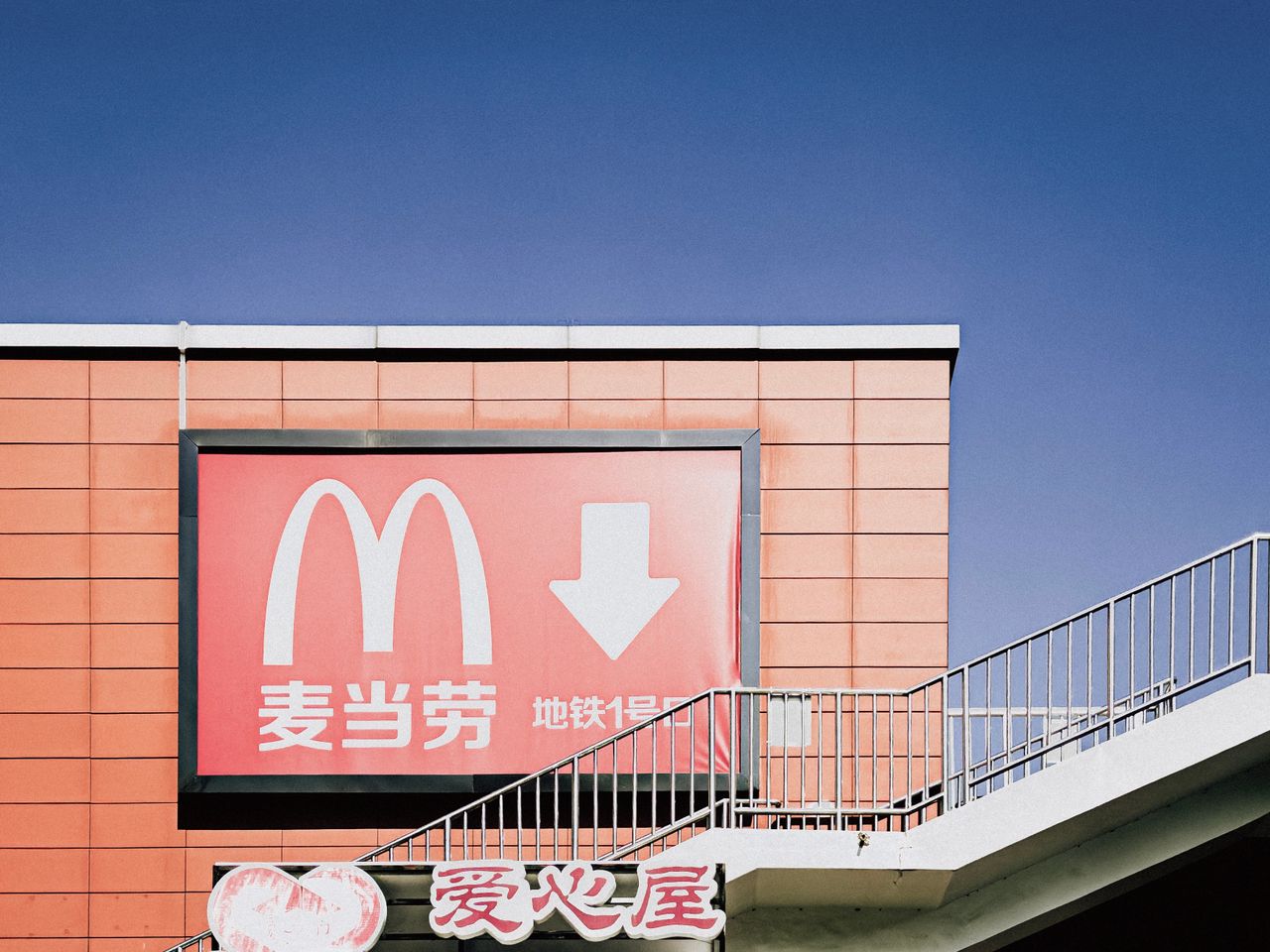
Most Western brands entering China underestimate the depth of adaptation required. They translate their taglines, swap out a few images, and call it localization. Then they wonder why Chinese consumers scroll past their products without a second glance. Real localization in China is not cosmetic — it reshapes your brand name, your pricing architecture, your color palette, your campaign calendar, and even your product formulations. Done right, it is one of the highest-ROI investments a foreign brand can make in the China market. Done wrong, it signals cultural illiteracy to exactly the consumers you need to impress.
Why Localization in China Is Different From Everywhere Else
China’s consumer market is not simply a large emerging market that plays by familiar rules. It operates on a distinct cultural logic, a proprietary digital ecosystem, and a regulatory framework that actively shapes how foreign brands are permitted to communicate. Three forces make China localization uniquely demanding:
The digital environment is entirely separate. Google, Facebook, Instagram, YouTube, and WhatsApp do not exist in China. The platforms your global marketing team knows — and that your brand guidelines were built around — are irrelevant. WeChat, Douyin (TikTok’s domestic counterpart), Xiaohongshu (RED), Weibo, and Tmall are the actual battleground. Each has its own content format, advertising policies, and audience expectations.
Consumer identity is collectivist but aspirational in specific ways. Chinese consumers, particularly in tier-one and tier-two cities, are highly brand-literate and associate luxury or premium Western brands with status. But the aspiration is filtered through Chinese cultural values: family harmony, national pride, auspicious symbolism, and face (mianzi). A campaign that resonates in Paris or New York can feel tone-deaf or even offensive in Shanghai.
The regulatory environment governs what you can say. China’s Advertising Law (广告法), enforced by the State Administration for Market Regulation (SAMR), prohibits superlative claims (“best,” “number one,” “most advanced”) without verifiable certification. The Cybersecurity Law and the Personal Information Protection Law (PIPL) impose strict rules on data collection and consumer profiling. Before any campaign goes live in China, it needs legal review — not just creative review.
Step One: Get Your Chinese Brand Name Right
Your brand name is the most important localization decision you will make. Chinese consumers predominantly think, search, and share in Chinese characters — a phonetic transliteration that sounds close to your English name but carries no meaning is a wasted opportunity.
There are three main approaches to Chinese brand naming:
Phonetic transliteration (音译, yīnyì): The brand name is rendered in characters that approximate the English sound. Coca-Cola (可口可乐, Kěkǒu Kělè) is the canonical success story — it not only sounds similar but means “delicious, joyful.” McDonald’s (麦当劳, Màidāngláo) works because the characters feel natural even if the meaning is abstract. BMW (宝马, Bǎomǎ) means “precious horse” — aspirational and memorable. The risk is choosing characters that sound right but carry negative or absurd connotations.
Semantic translation (意译, yìyì): The name is translated based on meaning rather than sound. Carrefour (家乐福, Jiālèfú) means “family happiness and fortune” — no phonetic connection to the French, but perfectly aligned with Chinese consumer values. This approach works well for brands whose English names carry strong conceptual meaning.
Hybrid approach: Apple (苹果, Píngguǒ) simply means “apple” — a clean semantic translation that works because the brand’s visual identity is so strong. Microsoft (微软, Wēiruǎn) translates as “micro-soft,” matching the literal meaning.
Once you select a name, register it as a trademark through the China National Intellectual Property Administration (CNIPA) before you launch. China operates a first-to-file trademark system — if someone else files your Chinese name first, you may need to purchase it back or rebrand. This has happened to Apple (iPad), Tesla, and New Balance, each of which faced costly disputes over Chinese-market IP.
Color, Symbol, and Aesthetic Adaptation
Chinese visual culture carries deep symbolic associations that foreign creative teams frequently ignore. Red (红, hóng) is the color of luck, celebration, and prosperity — it dominates packaging for premium gifting, New Year campaigns, and auspicious product lines. White and black are funeral colors in traditional Chinese culture and should be used with care in consumer-facing contexts, particularly in gift packaging or healthcare marketing.
The number 4 (四, sì) sounds like the word for death (死, sǐ) and is considered deeply unlucky. Pricing at ¥44 or products packaged in sets of four is a subtle but real error. The number 8 (八, bā) sounds like prosperity (发, fā) — pricing at ¥88, ¥888, or ¥8,888 is a deliberate sales tactic used by brands from Listerine to luxury watchmakers. The number 6 signifies smooth progress; 9 symbolizes longevity.
Visual compositions that feature family groups, multigenerational settings, or imagery tied to Chinese festivals — Spring Festival, Mid-Autumn Festival, Singles’ Day (双十一) — outperform generic “lifestyle” imagery in Chinese digital advertising. Campaigns built around the lunar calendar rather than the Gregorian one signal cultural intelligence and consistently generate higher engagement.
Platform-Specific Localization: Where Chinese Consumers Actually Are
Your China localization strategy must be platform-native, not platform-adapted. Each major channel requires a distinct content approach:
Tmall Global / JD Worldwide (cross-border e-commerce): Product pages on these platforms are not simple listings — they are scrollable landing pages that combine video, lifestyle imagery, ingredient or technology explainers, and social proof in the form of KOL endorsements and verified purchase reviews. A product page that converts well in China typically takes a Chinese e-commerce creative agency 40–80 hours to build. The investment is justified: Tmall’s conversion rates for optimized flagship stores routinely exceed 5–8%, compared to 1–2% industry averages in Western markets.
Xiaohongshu (RED / Little Red Book): This platform is now the primary discovery engine for beauty, fashion, food, and lifestyle products among Chinese women aged 18–35. Unlike Weibo, RED content is search-indexed and evergreen — a well-written product review or tutorial posted by a mid-tier KOL (Key Opinion Leader) with 50,000 followers can drive sustained sales for 12–18 months. Brands that succeed on RED treat it as a content library, not a broadcast channel. As discussed in our guide to using Daigou and KOLs to enter the Chinese market, the KOL ecosystem on Chinese platforms operates differently from Western influencer marketing — relationships, exclusivity, and platform-specific format matter enormously.
Douyin (TikTok China): Short-form video with integrated live-commerce has transformed how Chinese consumers discover and purchase products. The algorithm is highly responsive to product-specific content: unboxings, “before and after” demonstrations, and live-stream selling events tied to platform discount campaigns. Brands that allocate 30–40% of their China digital budget to Douyin live commerce are consistently outperforming those relying on static content.
WeChat: For B2B and high-consideration consumer purchases, WeChat’s Official Account ecosystem functions as the brand’s owned media hub in China. Mini Programs allow brands to build full e-commerce experiences inside WeChat without redirecting users to external sites. WeChat CRM — building and segmenting subscriber lists through Official Accounts — is the equivalent of email marketing in China.
Product Adaptation: When Localization Goes Beyond Marketing
Some of the most successful Western brands in China did not simply repackage their existing products — they reformulated or reengineered them for Chinese consumer preferences.
KFC and McDonald’s both introduced rice dishes, congee, and locally-sourced ingredients early in their China expansion. Häagen-Dazs built an entire premium gifting line with mooncake-flavored ice cream for Mid-Autumn Festival — a product line that now generates a significant portion of their China revenue. Oreo launched green tea, tiramisu, and blueberry flavors specifically for the Chinese market. These are not concessions — they are revenue strategies.
In the beauty and personal care sector, formulations frequently need adjustment: Chinese consumers prefer lighter textures, faster absorption, and products that address specific concerns (whitening, anti-pollution, and oil control) that are less prominent in Western product lines. The National Medical Products Administration (NMPA) also requires pre-market safety registration for cosmetics, meaning product formulation changes must go through a regulatory process before sale — plan for a 6–12 month registration timeline for new SKUs.
Understanding how China’s middle class is reshaping consumer demand is essential context here: the fastest-growing consumer segments are demanding premiumization, not just price competitiveness. A product that positions itself as “affordable” in the Chinese market may actually be leaving margin on the table with the consumers who matter most.
Advertising Compliance: What the Advertising Law Prohibits
China’s Advertising Law (2015, amended 2021) is enforced actively by SAMR and its provincial counterparts. Foreign brands have been fined and forced to pull campaigns for violations that would be legal in their home markets. Key prohibitions relevant to localization teams:
Superlative language: Any claim using terms like “最” (most/best/top), “第一” (number one), “极致” (ultimate), or “领先” (leading) requires official certification or independent third-party verification. Unsubstantiated superlatives can result in fines of up to ¥1 million and mandatory public corrections.
National symbols and state imagery: The use of the Chinese national flag, national emblem, national anthem, or imagery evoking state authority in commercial advertising is prohibited. Several Western brands have faced backlash — and regulatory action — for campaigns that were perceived as co-opting national identity for commercial ends.
Health and medical claims: Food products, supplements, and cosmetics face strict limitations on health-related claims. The phrase “功效” (efficacy) in cosmetics advertising, for example, must be supported by clinical data filed with NMPA. Claims that a product “treats,” “prevents,” or “cures” any condition — even implicitly — can trigger enforcement action from both SAMR and the National Health Commission (NHC).
As covered in our detailed breakdown of China’s advertising regulations, the compliance landscape extends beyond what you say to how your campaigns are structured, who you partner with, and how your endorsements are disclosed.
Pricing Localization: The Architecture of Status and Value
Pricing in China is not simply a function of cost-plus-margin adjusted for local purchasing power. It is a brand signal. Luxury and premium brands that enter China at prices below their home-market positioning frequently struggle to recover brand equity after the fact. Chinese consumers, particularly in tier-one cities, interpret deep discounting as a signal of declining quality or lack of confidence in the product.
The prevailing framework among successful premium Western brands in China is price parity or a modest premium versus their home market, combined with localized gifting sets, travel retail exclusives, and festival-edition packaging that create additional purchasing occasions without eroding the core price point.
For mass-market brands, the elasticity calculation is more nuanced: competition from domestic Chinese brands (which have closed the quality gap significantly in categories from consumer electronics to cosmetics to athletic wear) means price positioning must be backed by a clear differentiation narrative, not simply brand heritage. Foreign origin remains a quality signal in certain categories — infant formula, health supplements, premium food — but it is no longer a sufficient differentiator on its own.
Building the Right Localization Team
The single most common localization failure mode is trying to run China adaptation from headquarters. Cultural nuance, platform fluency, and regulatory knowledge cannot be effectively replicated from 10,000 miles away. The brands that consistently execute well in China share a structural commitment: a dedicated China team or China-specialist agency that has final authority over market-specific creative, copy, and campaign decisions.
This team should include native Mandarin speakers with deep consumer-facing experience — not simply translators. Translation and localization are not the same skill. A qualified China marketing lead will push back on creative that is technically correct Chinese but culturally flat, and will identify platform-specific format requirements that a global creative team would never anticipate.
For brands that are not yet at the scale to justify an in-house China team, partnering with a localization agency that specializes in a specific platform (Tmall operations, Douyin content, WeChat CRM) is often more effective than a generalist agency that claims to do everything. The lessons in how Western brands have failed in China repeatedly trace back to insufficient local expertise — either at the strategic level or in day-to-day execution.
External Resources for Brand Localization Planning
For brands undertaking a structured China market entry, the US Commercial Service China team maintains country commercial guides and can facilitate connections with local legal and marketing specialists through its network of offices in Beijing, Shanghai, Guangzhou, Chengdu, and Shenyang. Their industry-specific market research reports are a useful complement to primary research before committing to localization investment.
The US-China Business Council publishes annual member surveys tracking the most common market entry and operational challenges cited by US companies operating in China — their data on regulatory barriers, local competition, and market access is directly relevant to localization planning and helps benchmark your strategy against peers at similar stages of China expansion.
Brand localization in China is not a one-time project. It is an ongoing practice of cultural and regulatory calibration. The brands that treat it as a living process — regularly revisiting their name strategy, their platform mix, their product adaptations, and their compliance posture — consistently outperform those that localize once and consider the work done. China’s consumer landscape moves fast. Your localization strategy needs to move with it.